
-
Q&A: ‘Wladzio D´Attainville and the House of Balenciaga (1924–1948)’
Read more: Q&A: ‘Wladzio D´Attainville and the House of Balenciaga (1924–1948)’Ana Balda uncovers Wladzio D’Attainville's crucial impact on Cristóbal Balenciaga's fashion empire.


Ana Balda uncovers Wladzio D’Attainville's crucial impact on Cristóbal Balenciaga's fashion empire.

By Stefanie Van de Peer Negotiating Dissidence: The Pioneering Women of Arab Documentary is publishing this month, and it’s a significant time for a book of this nature, with today being International Women’s Day. Several of the films discussed in the book…

Sunday 19th of February 2017 saw the launch of the BBC’s most recent big budget television drama SS-GB, a dystopian vision of Britain under Nazi occupation. With it, came the re-ignition of the debate surrounding mumbling actors and unintelligible dialogue…

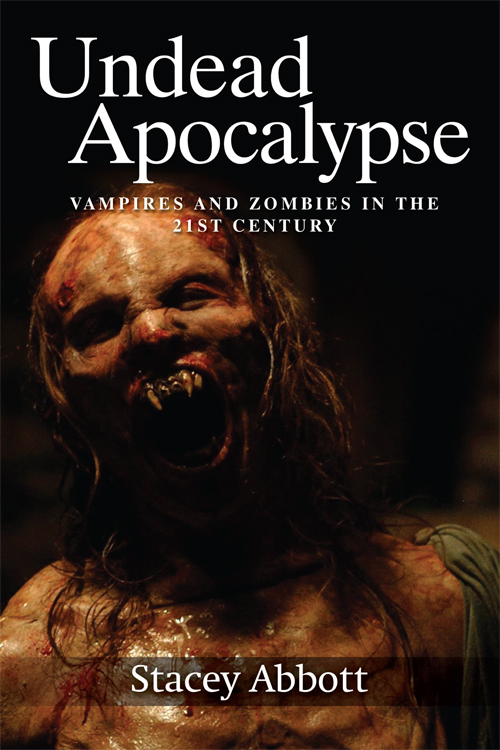
By Stacey Abbott As the evenings draw in and the temperature drops, my mind turns toward the ghostly, the ghoulish and the gruesome (‘Tis the Season to be Gruesome’). These days it also turns toward the apocalyptic, with the autumnal…

By Benjamin Poore For the uninitiated, Penny Dreadful is a genre-busting neo-Victorian fantasy horror show, set in the 1890s, in a world where Victor Frankenstein, his Creature, Professor Van Helsing, and Dorian Gray can all co-exist. It’s a world where…

By Lucyna Krawczyk-Żywko Sherlock Holmes, “the most portrayed literary human character in film and TV” (Guinness World Records News), is skilled at disguising himself and adjusting to different circumstances and yet remaining himself. Few literary characters lose so little in…
By William Brown I was delighted that Film-Philosophy recently published my essay: ‘Non-Cinema: Digital, Ethics, Multitude’. The essay is a first articulation of what I am terming non-cinema, and which is the focus of a forthcoming monograph that I am…

By Richard Wallace The work of John Cura is a fascinating side-note in the history of British television. Between 1947 and 1968 Cura made a successful business from photographing the BBC and ITV programmes broadcast to his television set and…

By David Martin-Jones At the heart of “Film-Philosophy and a World of Cinemas” is discussion of a contentious and at times heated debate between Hamid Dabashi and Walter Mignolo on the one hand, and Slavoj Žižek on the other. The…

By Christophe Van Eecke Ken Russell is often considered more or less the court jester of British film history, and his films have not always been taken quite as seriously as they deserve. This holds true even of The Devils…