
by Elaine Pratley
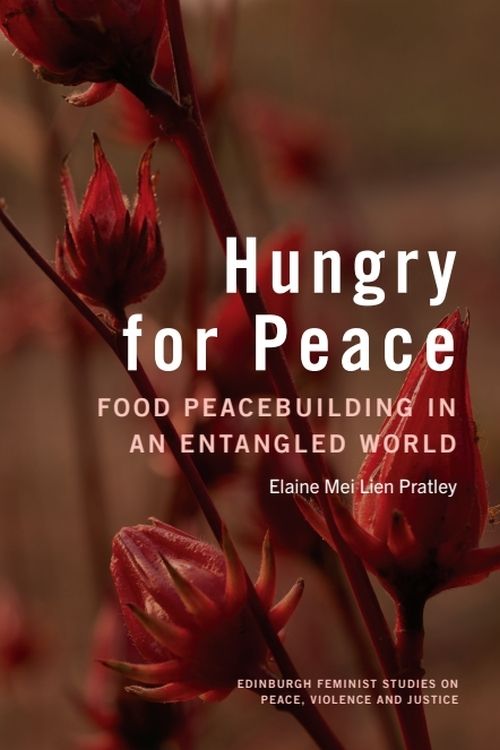
Explores how everyday food practices actively shape conflict and cultivate peace
Tell us a bit about Hungry for Peace.
Most people don’t think of dinner as peacebuilding. But many politically charged moments in our lives happen around food. Who cooks, who gets fed first, whose food is considered “smelly”, which cuisines are celebrated and which are mocked.
Hungry for Peace explores how food shapes peace, conflict, and belonging in everyday life. It looks at what happens around food when people don’t agree, don’t belong, or don’t share the same perspective.
The book starts from a simple question: what if peace and conflict are not only negotiated at peace talks or courtrooms, but also in kitchens, family dinners, supermarkets, and shared meals?
Its insights inform my work at Peace Kitchen, a social enterprise I later founded.
People often associate peacebuilding with war zones or formal negotiations. But your book seems to approach it differently. What does peacebuilding mean to you?
Peace has meant different things across cultures and throughout history. I come to this from peace and conflict studies, but also from food and youth research.
In this book, I’m not interested in peace as a final destination where conflict disappears, but as something ongoing that we practice in ordinary settings, relationships, and institutions.
I began with human relationships and ideas like empathy, belonging, connection, and dialogue. But studying food made me realise peace is much bigger than human interaction and social cohesion. Every meal pulls in animals, land, labour, waste, and the environment in ways we don’t usually see at the table.
So peace, to me, is about how we negotiate these different, sometimes competing, needs while still trying to live together well in families, communities, and institutions.
What inspired you to research this area?
I’m Malaysian, and there’s only one thing Malaysians love more than eating: talking about food!
When I began researching young people’s peacebuilding practices, I planned to use interviews and focus groups. Then I had a lightbulb moment: there’s no chance a group of teenage boys will sit in a fluorescent room unpacking “their lived experiences of food and conflict.” The same goes for socially awkward or non-English speaking young people. I’ve worked with youth before, and I knew I had to make it more FUN. For them and for me.
So I turned to embodied, participatory methods to make my facilitation more connected to their lives. I cannot sing, draw, or play sport well, so I went back to my main passion: food.
Food gave people something to do together. Conversation became less formal, more like banter. People opened up while chopping onions or arguing about durian.
What was the most exciting thing about this project for you?
Honestly, it was watching people realise their everyday food habits actually mattered.
Young people would say, “I’m not really an activist.” Then twenty minutes later, describe how they navigated cultural tensions at school through food, or how shared meals helped them survive loneliness or family conflict.
Did you discover anything strange or surprising?
They were already doing food peacebuilding but didn’t realise it.
I began assuming food was obviously a force for everyday peacebuilding. Then people quickly complicated that.
Food was linked to shame, exclusion, eating disorders, racism, religious food practices, and exhausting family expectations. Even something like a multicultural food festival could hide unpaid labour in the kitchen, usually done by women.
So food isn’t automatically peaceful. A table can hold care, but also control, silence, hierarchy, or guilt. Sometimes all at once.
Vidit, a practicing Jain, described eating out with friends in India. They would instinctively sit around the table to accommodate different fears around food: meat-eaters at one end, vegans and Jains at the other, vegetarian eaters in the middle as a buffer. A divided table trying to stay together!
Did your research take you to any unexpected places or unusual situations?
To increase the fun and novelty factor for my young collaborators, I originally introduced a video component. Plenty of youth researchers have used photo and video methods very successfully. I just wasn’t one of them! Perhaps it’s because I was working with a cohort who ranged from 16 to 25 years and many were already completely familiar with video culture anyway.
At one point, I convinced myself I needed a 360-degree camera for immersive storytelling. I had visions of immersive storytelling and ground-breaking visual methods.
But my collaborators couldn’t care less! They basically tolerated the camera so they could get back to eating. Eventually, I had to admit I was more interested in the food than the footage too.
It was a good, expensive lesson for me. Researchers often assume innovation means more technology or complexity. But what people were drawn to was much simpler: sharing food together.
Has your research in this area changed the way you see the world today?
Definitely! After spending time with vegan and vegetarian young people, I became more conscious about eating meat. I still do. But I do so more thoughtfully, more gratefully.
The research also made me realise how deeply entangled we are with each other and the more-than-human world and food systems.
Eating isn’t an isolated personal act. A single meal connects animals, ecosystems, exploited workers, transport systems, family histories, memories, rituals, and power structures.
That sounds huge, but sometimes it hits me in ordinary moments…washing rice, tasting pesticide on fruit, noticing someone left out at a table.
Perhaps the research made me slower. But I see it as being more attentive.
What’s next for you?
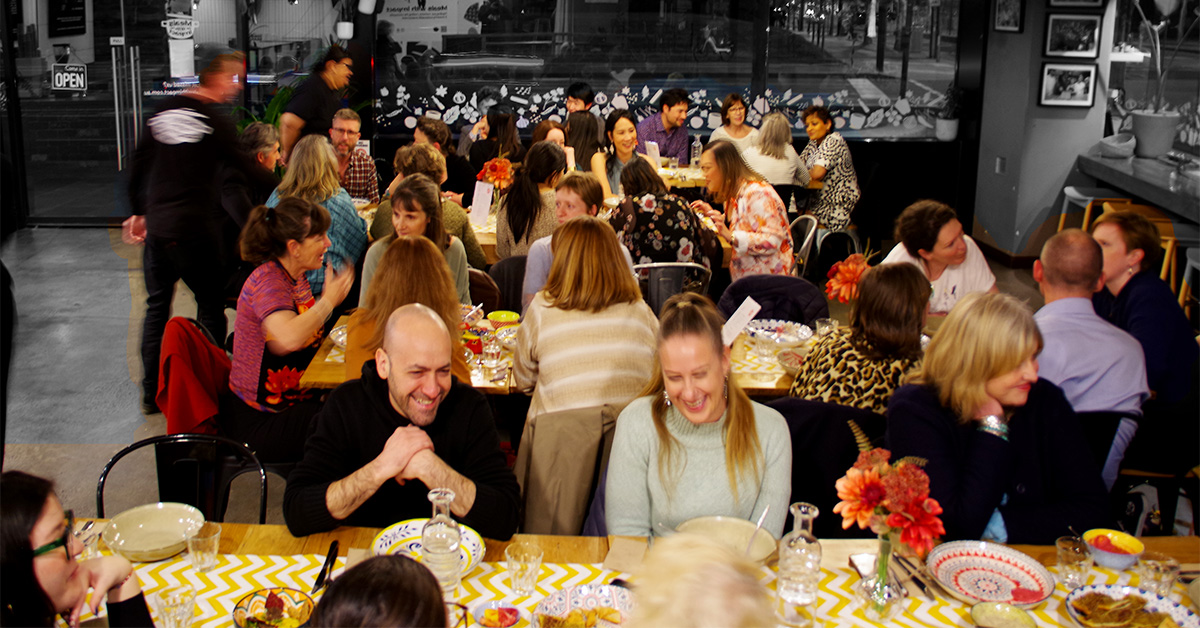
I started Peace Kitchen as a facilitation practice that creates spaces for meaningful conversations over food. The work sits between experiential learning and play because I became convinced that some conversations happen more honestly over food than in boardrooms and other formal settings.I’m often invited into workplaces, conferences, and community spaces to help people speak more openly through shared meals.
Because eating together changes something. People relax. They’re less guarded.
We’ve had strangers talk about divorce and parenting over dumplings. People from different faiths discussing belonging and exclusion over childhood meals. Conference delegates speaking about loneliness and mental health while passing bread around a table.
Food creates a different rhythm of conversation. Perhaps less performative? More honest?
So my ‘what’s next’ is continuing to create spaces where people can speak a little more honestly over food.
About the author
Dr Elaine Mei Lien Pratley is a Malaysian peace practitioner and Rotary Peace Fellow at The University of Melbourne, Australia, working with themes related to culture, food, and youth peacebuilding. She is Co-Chair of the Global Peace Conference, Founder of Peace Kitchen and advisor to Women Peace Makers, Cambodia.