
by Mark Garnett
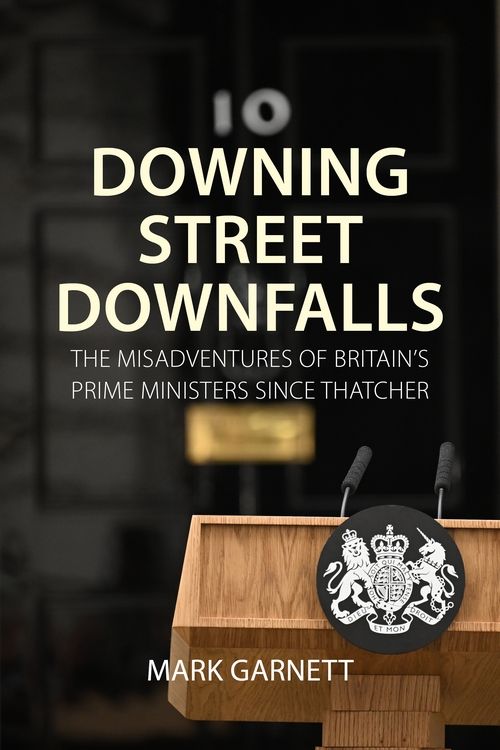
Straddles more than 30 years of prime ministerial misadventures, poses questions about the underlying factors as well as the specific circumstances for individual departures.
Why did you write Downing Street Downfalls?
I had recently written about the changing role of British prime ministers since the downfall of Margaret Thatcher in 1990. It seemed natural to follow up with a study of the ways in which she and her successors came to grief. Thanks to developments since 2016, there was no shortage of material! In some examples, such as Tony Blair, David Cameron and Thatcher herself, a premature departure can be traced back to policy decisions taken years before the end came. Liz Truss, for example, fell almost before the country had registered that she had risen.
Why has the tenancy of 10 Downing Street changed so regularly nowadays?
There’s an obvious, one-word answer to that question – ‘Brexit’. There has been a deluge of downfalls in the decade since the referendum on EU membership. The result made it impossible to David Cameron to continue in office, although he had promised to stay on regardless. Those who think the vote to leave was mistaken will argue that no prime minister could have dealt successfully with the aftermath.
An alternative view is that the next three premiers – Theresa May, Boris Johnson and (especially) Truss – only assumed the position because of Brexit, and their various inadequacies would have been exposed even in ‘normal’ circumstances. Rishi Sunak had the potential to be a capable prime minister, but the circumstances in which he reached the position denied him any chance of proving it.
But speculation about the position of British prime ministers was almost incessant long before Brexit – as far back as 1995, John Major even had to step down as leader of his party to make his critics ‘Put up or shut up’. Was the post-Brexit chaos an accident waiting to happen?
That is a good question, and it explains why Downing Street Downfalls begins with the enforced departure of Margaret Thatcher, Her admirers – who seem as numerous now as they were in her heyday of the mid-1980s – would insist that she brought to the office a clarity of thinking, and the courage of her convictions, that none of her successors have come close to matching. However, there were definite downsides for her successors:
- Her ‘presidential’ style, encouraged by her media admirers, was itself a source of instability since Britain still has a parliamentary system;
- Dismissive of ministers who did not fully share her convictions, she preferred to listen to ‘special advisers’ who were appointed precisely because they agreed with her. Subsequently the number of these unelected individuals has expanded to reflect their undue influence;
- Arguably, post-war British governments before Thatcher, assisted by senior civil servants, had been successful in overseeing ‘the civilised management of decline’. By refusing to accept that even ‘relative’ decline had been inevitable, Thatcher set up a disparity between public expectations of British global influence and the reality of a significant, but much-reduced role.
But even if Thatcher’s Conservative successors have struggled with her legacy, why have Labour prime ministers encountered so much trouble?
‘New Labour’ has a lot to answer for! It was designed to hoover up support from a volatile electorate with shallow loyalties – itself a key contextual factor for political upheavals. Tony Blair modelled his style of government on Thatcher, striking an even more ‘presidential’ pose and following her tendency to dominate foreign policy (with fateful results in Iraq). Gordon Brown (2007-10) started off with ambitions to make his role less presidential, but was quickly overtaken by events outside Britain’s control.
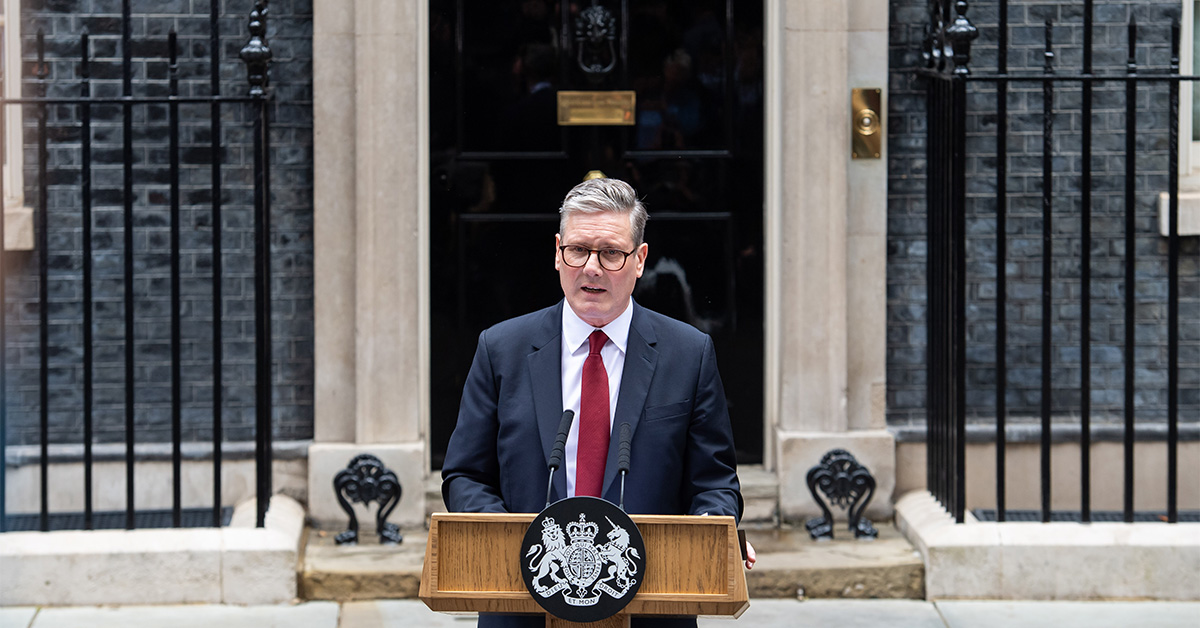
Sir Keir Starmer’s current problems – almost certain to precipitate another ‘Downing Street Downfall’ before the next general election – are more puzzling. However, no pre-Thatcher prime minister would have escaped serious criticism after implementing poorly planned and presented policies, combined with the unfathomable appointment of Lord Mandelson as Ambassador to Washington – the ghost of New Labour visiting vengeance on its political offspring.
Starmer’s internal critics focus on his lack of charisma. On one level, this is a superficial surrogate for more serious accusations about his political and personal judgements; after all, Boris Johnson was overflowing with charisma, yet he was booted out of office less than two eventful years after leading his party to a decisive electoral victory. If Labour policies were seen to be working, no one would be complaining even if the prime minister was stupefyingly dull.
However, apart from his glaring, headline-grabbing mistakes Starmer has failed to address the underlying problems affecting the prime minister’s role – not least the pestilential special advisers, and reticence about Britain’s true role in the world. Ironically, the best argument for sticking with Starmer is that Britain’s reputation has suffered from the revolving Downing Street door. His misfortunes, compared to his initial advantages, suggest that without a radical reappraisal of the role Britain’s prime ministers will continue to suffer dramatic downfalls at the hands of their own parties.
About the author
Mark Garnett is a writer and political historian who has taught at several UK universities. He has written widely on Brtitish politics, including acclaimed biographies of Tory grandees, Keith Joseph and Willie Whitelaw.