
by Maggie Humm
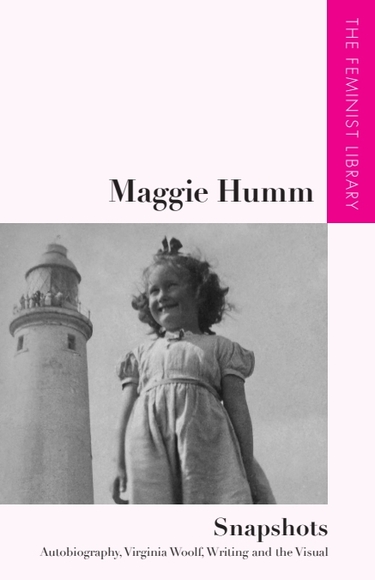
Maggie Humm – Snapshots: Autobiography, Virginia Woolf, Writing and the Visual brings together Maggie Humm’s pioneering work on feminist literary criticism, Virginia Woolf, film and visual cultures.
My multi-faceted essays show how UK feminist criticism changed across an academic career that began in 1986 with the publication of Feminist Criticism. Snapshots discusses a range of ideas including ‘the anxiety of influence’, écriture feminine, and postmodernism, as well as life-writing; all informed by my belief that subjectivity and creativity are integral to non-fiction writing. At the centre of these discussions is the work of Virginia Woolf, whose influence spans scholarly circles and popular culture, and whose legacies are in our feminisms, visual cultures, and contemporary women’s writing.
The series editors made one request: that there must be an autobiographical introduction and conclusion. I am an academic and author of two novels, not an autobiographer. Writing directly about myself was quite challenging but became revelatory in discovering how much my academic interests/research were shaped by my past, even by my childhood. Freud would not have been surprised. So, the book cover is me, aged six on my annual holiday at Whitley Bay all of ten miles from my home in Newcastle, lit up with joy at seeing a lighthouse. How was I to know then, that Virginia Woolf’s To the Lighthouse would become a major part of my adult research, and I would creatively solve the mysterious death of its main character Mrs Ramsay in my novel Talland House (Virginia Woolf’s childhood home).
Self-writing is also a moment of late-life crisis. How many more years will I realistically enjoy persistently researching and writing, bolstered by thrice-weekly gym work outs? Mine is not a progressive life, a list of increasing academic and intellectual achievements and public positions. As Virginia Woolf said in A Room of One’s Own about masculine writing ‘” I”, honest and logical, hard as a nut and polished for centuries by good teaching and good feeding’. My writing lacks that certainty. This book necessarily portrays a writing self, oscillating among and performing multiple genres, or at a critical distance from them, while simultaneously mapping my own years of feminist criticism.
Feminism teaches us to be wary of the fallacy of ‘true’ selves, but also, I have never enjoyed what we used to call in feminist workshops ‘a feminist epistemology’ or theory of knowledge. Personal criticism was always my favourite moment of feminist criticism – the writers Nancy Miller, Alice Walker, Audre Lorde, bell hooks, Cherríe Moraga, Gloria Anzaldúa and the photographer Jo Spence’s interweaving of the political and the autobiographical creating mixtures of cultural identities.
Snapshots ends with a final snapshot
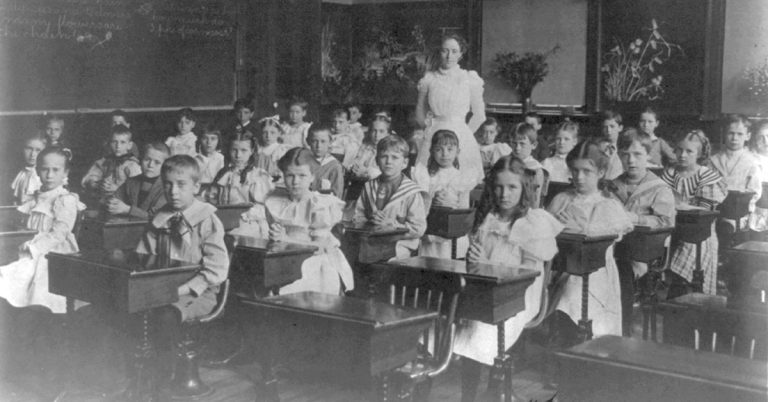
I still have my primary school English exercise book for 1954, written when I was nine. My mother saved it until she died. Reading the book again, I am amazed by the range of topics, presumably at the behest of teachers: the Queen’s visit to Newcastle, peoples of many countries, and many more. Each piece was accompanied by a carefully coloured drawing. All this in Gosforth, near Newcastle, then with predominantly working-class children as I was myself.
In ‘My Hobbies’ September 29, 1954, towards the end of the piece, I wrote in careful joined-up script ‘Another hobby is reading with books from Gosforth Public Library. I have a book called Boadicea which is very good and exciting. And my last hobby is writing. I have written many stories about the war in 1810, the Stone Age, being a Dutch girl [inevitably full of tulips and canals], witches and many more. Mummy liked every one except ‘The Brave Soldier’ [my parents were socialist pacifists, Daddy refused to fight in WW2]. I like writing compositions, and I am writing one now’.
An absurdly sententious account (1810 – really?) but it did get a gold star. The little girl of nine reveals a vulnerability to educational expectations, but importantly a belief, which I still share, that any writing is worth the risk of embarrassment. The writer Maria Stepanova once said, ‘sometimes it seems like it is only possible to love the past if you know it is definitely never going to return’. For me, the past is never past.
About the author
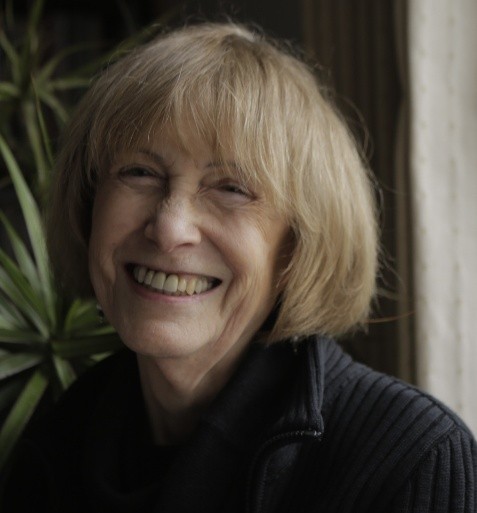
Maggie Humm is an Emeritus Professor and Vice-Chair of the Virginia Woolf Society of Great Britain whose last book was The Bloomsbury Photographs.