
By Brent Adkins and Henry Somers-Hall
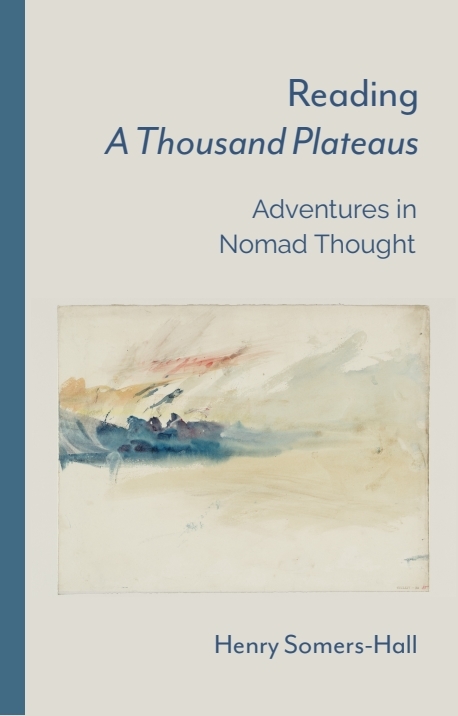
Henry Somers-Hall is author of Reading A Thousand Plateaus: Adventures in Nomad Thought. This sustained close reading gives us the deepest understanding yet of Deleuze and Guattari’s masterwork.
How does your new work on A Thousand Plateaus build on your earlier reading of Deleuze?
Reading A Thousand Plateaus began as a side project for me, but it became my longest work to date. I had finished my book on judgement in French philosophy and my next major work was going to be on the ethical implications of the new understanding of sense taken up there. The Thousand Plateaus book began as an interlude while I gathered myself for that project. It was a book I’d never really gotten to grips with. But it became apparent very quickly that doing justice to it would involve an immense amount of intellectual labour.
All of my books prior to this one were heavily indebted to German idealism. In brief, I argue that much of French philosophy returns to Kantian transcendental themes but rejects the idea that all determination operates in terms of predication (that we can say what something is purely by listing its properties). For all sorts of interesting questions around time, ambiguity and meaning, French philosophy argues that we need a pre-predicative notion of sense to explain how judgement works.
Still, I find a lot of Kant at play in ATP, particularly in the doctrine of faciality. So, Reading A Thousand Plateaus is a continuation of my work to date. But it is also a broadening-out of the scope of my work to include more ethical and political themes.
Why did you foreground ‘nomad thought’ in your subtitle? And how do you see the relation between thought and action in Deleuze and Guattari’s work?
It’s a good question. My first response is, I’m sorry to say, an argument from authority. ‘Nomad Thought’ is the title of Deleuze’s 1973 paper that sets out many of the themes of A Thousand Plateaus. He writes: ‘the nomadic adventure begins when the nomads seek to stay in the same place by escaping the codes’. Nomad thought is here opposed to sedentary thought: the way philosophy (and other disciplines) has traditionally understood the world as essentially an expression of atemporal structures, where variation is seen simply as noise and a lack of determination.
Now, pushing this further, I think we need to see the dichotomy you’ve suggested, between thought on the one hand, and action on the other, as emerging from a particular, sedentary, model of thinking that Deleuze and Guattari associate with state thought. Thinking as a nomad (and A Thousand Plateaus itself) is really an effort to think systems without relying on hierarchical unity. They take this new way of thinking itself to be a revolutionary act that brings with it new ways of living unthinkable within a hierarchical, sedentary schema of the world. It’s a way of trying to think form as emergent from a world of process, rather than as something that pre-exists the world of appearance and is merely actualised in it.
What does it mean to read a work philosophically and what do we gain by doing so?
Once again, in some ways, this is just to take seriously Deleuze’s claim that he is a ‘pure metaphysician’. He is interested in systems; albeit, as we’ve just discussed, not the hierarchical systems that have governed philosophy until now. Deleuze talks about wanting to find the metaphysics that modern science needs with the Thousand Plateaus project. It is this metaphysics that I am interested in too.
That means, for instance, that rather than see thinking as governed by the homunculus (transcendental or otherwise) of the ‘I think’, we need to take seriously the decentred model of the origin of thought as the interaction of a field of neurons that Deleuze and Guattari find in Steven Rose. Today we might see that in someone like Luiz Pessoa’s work. Deleuze and Guattari are trying to understand the model of organisation that these accounts implicitly rely on, and how this model informs other domains such as social organisation, evolutionary theory, etc. These are fascinating, and philosophical, questions.
What was your most surprising discovery in working through this source material?
I loved the work of Anne Querrien, which really shows the power of the kind of political analysis Deleuze and Guattari are developing. Pierre Clastres work on non-state societies was, I’m ashamed to say, new to me. Henri Maldiney’s work on Paul Klee provided a bridge back to the kind of phenomenological aesthetics I found in Merleau-Ponty. Gilles Châtelet’s work on fields versus predicates is incredibly insightful. There was a wealth of work on the ancient world, including François Châtelet and Jean-Pierre Vernant. As with my work on Difference and Repetition, what’s surprising is just how consistent the text that emerges is once you’ve followed up their allusions to other writings and seen how these work within their own argument.
Less surprising but more personally affecting was rereading Virginia Woolf’s The Waves for the first time since I was in my twenties. It had been recommended to me by a close friend then, and I simply wasn’t ready to encounter it. It’s a profound study of time and personhood, one of the most beautiful books I’ve read. It’s a rare feeling to find a book that goes to the heart of oneself. The epigraph that opens Reading A Thousand Plateaus is taken from it.
Has this work changed how you think about A Thousand Plateaus and its place in Deleuze’s corpus?
A Thousand Plateaus was written by Deleuze and Guattari, of course. Deleuze himself refers to Deleuze and Guattari as a rhizome. In my mind, there is a clear difference between Deleuze’s sole-authored works and his work with Guattari.
Prior to writing Reading A Thousand Plateaus, I just wasn’t that familiar with the text. I think Deleuze describes the situation well when he talks about works before ATP as Kantian, and ATP itself as post-Kantian, while resolutely anti-Hegelian. The emphasis on depth and synthesis in Difference and Repetition, even without Kant’s ‘I think’, can be felt strongly. I suspect this transcendental moment is why he writes in the conclusion that the thinker is necessarily solitary and solipsistic. A Thousand Plateaus opens this up – the multiplicity for-itself. It sets out a grand vision of metaphysics, politics, aesthetics and the philosophy of nature to rival the scope of Hegel’s system itself. In this sense, A Thousand Plateaus is the flowering of the earlier tight metaphysics of Difference and Repetition into something joyfully open to the world in all of its aspects.
About the authors
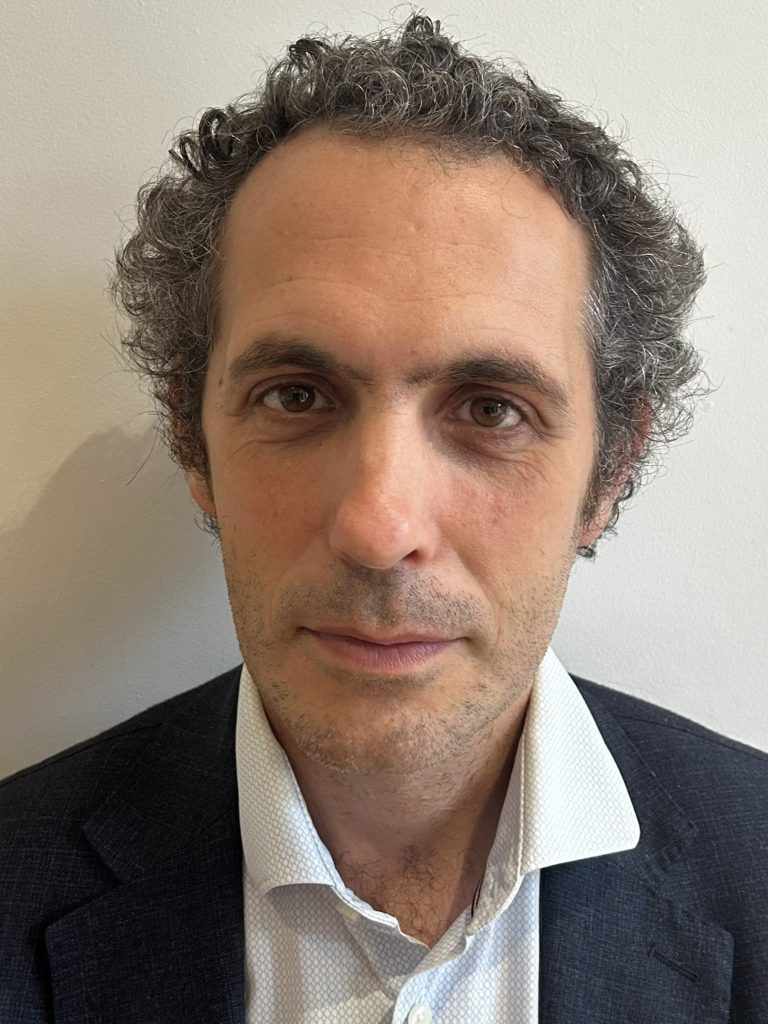
Henry Somers‑Hall is Professor of Philosophy at Royal Holloway, University of London. He has written extensively on Gilles Deleuze and the broader 20th‑century French philosophical tradition. Reading A Thousand Plateaus: Adventures in Nomad Thought publishes May 2026 from Edinburgh University Press.
His other books include:
- The Deleuzian Mind (co‑edited with with Jeffrey A. Bell, Routledge, 2025)
- Judgement and Sense in Modern French Philosophy (Cambridge University Press, 2022).
- A Thousand Plateaus and Philosophy (co‑edited with with Jeffrey A. Bell and James Williams, Edinburgh University Press, 2018)
- Deleuze’s Difference and Repetition (Edinburgh University Press, 2013)
- The Cambridge Companion to Deleuze (co‑edited with Daniel W. Smith, Cambridge University Press, 2012)
- Hegel, Deleuze and the Critique of Representation (SUNY Press, 2012)
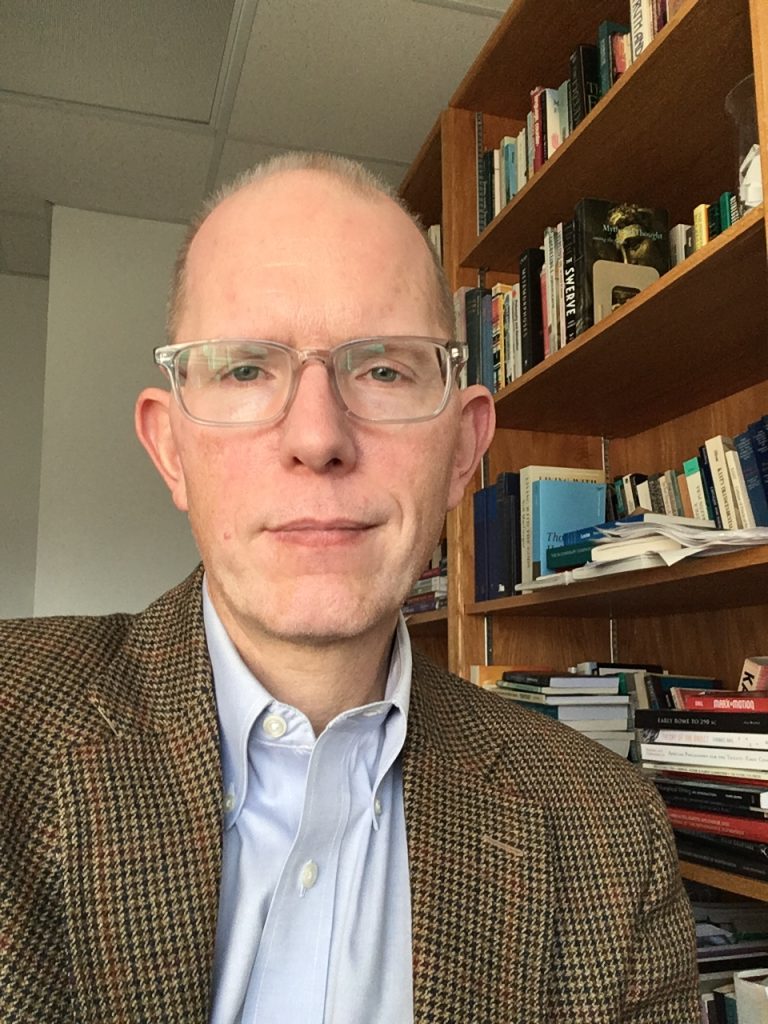
Brent Adkins is Professor of Philosophy at Roanoke College. He is author of the bestselling Deleuze and Guattari’s A Thousand Plateaus: A Critical Introduction and Guide (Edinburgh University Press, 2015).
His other books include:
- A Guide to Ethics and Moral Philosophy (Edinburgh University Press, 2017)
- Rethinking Philosophy and Theology with Deleuze: A New Cartography (Bloomsbury, 2013)
- True Freedom: Spinoza’s Practical Philosophy (Lexington Books, 2009)
- Death and Desire in Hegel, Heidegger, and Deleuze (Edinburgh University Press, 2007)
You might also enjoy…
- ‘How is this Philosophy?’ by Paul Patton
- ‘Why I read Deleuze’ by Ronald Bogue
- ‘What’s in a Moment?’ by Charles J. Stivale

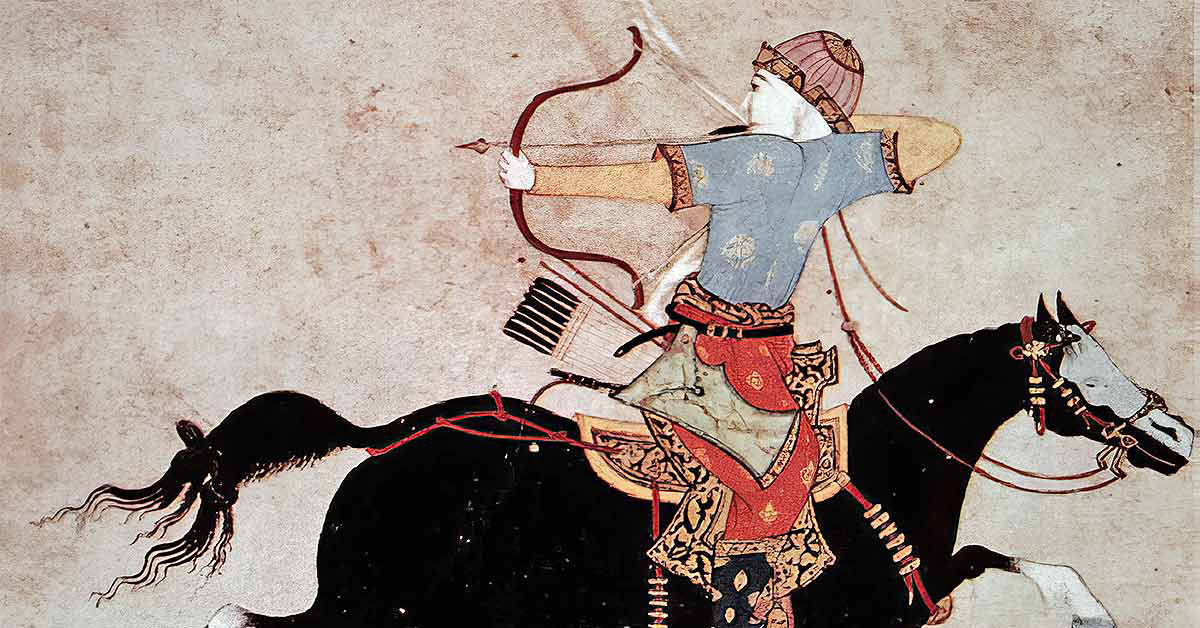
Image credit: Painting of Bamsi Beyrek, Turco-Mongolian c.1300, Cowboy Country Magazine