
By Jeremy Mennis & Nilgun Anadolu-Okur
Discover the article ‘Mapping Origins of Escape from Slavery on the Underground Railroad: The Records of Black Abolitionist William Still, 1853–1861’ in the latest issue of the International Journal of Humanities and Arts Computing.
The Underground Railroad was neither underground nor a railroad but rather a connected network of people, places, and routes that facilitated the escape of Black people enslaved in the U.S. South to the free, non-slave states in the North prior to the Civil War. Key to understanding the history of the Underground Railroad are the stories of the individuals who sought freedom. What were their names? What were their lives like? How did they escape, and where did they go after they found freedom? One of the richest sources of such information can be found in the records of Black abolitionist William Still, who served as Secretary of the Pennsylvania Anti-Slavery Society’s Vigilance Committee in Philadelphia from 1853 to 1861.
Who was William Still?
As Secretary, Still worked closely with Harriet Tubman and other abolitionists to secretly arrange escapes from slavery along the Philadelphia branch of the Underground Railroad. Despite the great risk, Still kept detailed records on each escapee who came through Philadelphia, ultimately documenting accounts of escape for more than 900 people. These accounts describe harrowing journeys to freedom by men, women, and children; by those who escaped via steamships, small boats, and over land; and from major cities, such as Washington, D.C. and Norfolk, Virginia, as well as from more rural regions.
Stories from the Underground Railroad
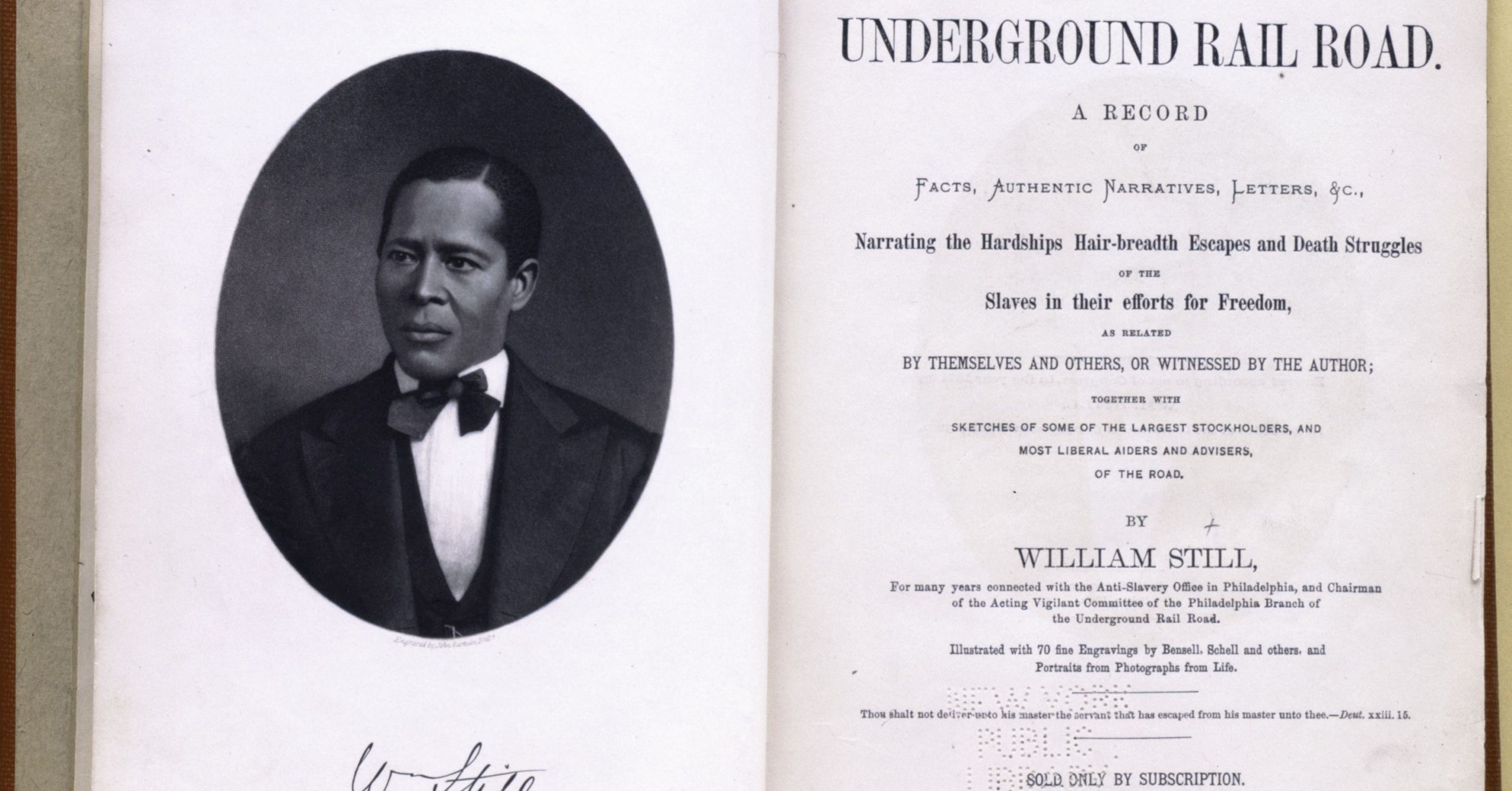
Still’s records also include biographical information on many of the abolitionists who assisted the Underground Railroad passengers, including the many free Black and White people who worked tirelessly through a loosely connected network of friends and families within the Underground Railroad system to bring justice and freedom to Black people kept in bondage. Because of the personal correspondence Still maintained with his passengers after their departure from Philadelphia, many Black families were reunited after the Civil War. Still ultimately self-published his records of the Underground Railroad in his 1872 book titled The Underground Rail Road.
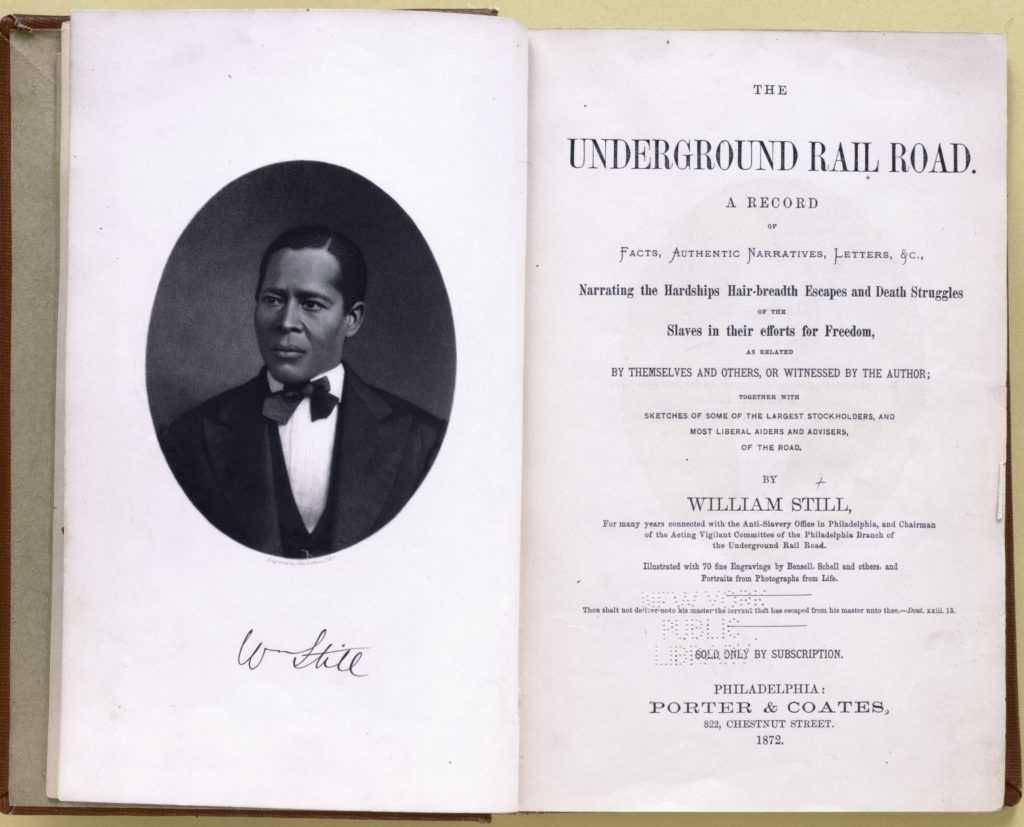
The image is in the public domain. From The New York Public Library.
Still’s book became well known during the Reconstruction period following the Civil War and was featured during the 1876 Philadelphia Centennial Exposition. The passage of the National Underground Railroad Network to Freedom Act of 1998 spurred historical scholarship around Still’s book. An original copy of the book, along with related archival material, is presently housed at the Charles L. Blockson Library at Temple University in Philadelphia.
The Digital Leap
Digital copies of Still’s The Underground Rail Road, now in the public domain, are widely available through many university libraries. Nonetheless, extracting and generalizing information on age, sex, family relationships, mode of transportation, geographic origin, and other characteristics of those escaping slavery from the book’s narrative descriptions remains a challenge. Scholars have made substantial headway in extracting and reformatting Still’s rich narrative data in digital form to facilitate analysis. This effort began in earnest with the work of scholars James McGowan and William C. Kashatus who created a table characterizing the individuals described in Still’s book, including entries describing each person’s name, age, sex, family relationships, and other information. This table appeared as an appendix in Kashatus’ biography of Still, William Still: The Underground Railroad and the Angel at Philadelphia, published in 2021. This table was later converted into a digital file by scholar Nick Sacco and published and disseminated via the journal article William Still’s Underground Railroad Data, 1853–1861. The present authors (Mennis and Anadolu-Okur) subsequently used Sacco’s file to generate digital map datasets of the place origins of those escapees described in Still’s records, which are described in the journal article Geospatial Dataset of Cities and Counties of Escape Origin as Recorded in William Still’s Records of the Underground Railroad, 1853–1861, and are made publicly available on the Harvard Dataverse along with a related geospatial dataset of Underground Railroad era landscape features.
Remembering the People of the Underground Railroad
Scholarship on the Underground Railroad owes a deep debt to the courageous efforts of William Still to document and preserve the stories of those individuals escaping slavery. It is Still’s seminal work that inspired more recent scholars, including ourselves, to leverage and transform his original text into digital formats that facilitate analyses that were likely unimaginable in the 19th century when Still originally published his book. We should remain ever vigilant that these digital data representations and the types of analyses they afford do not obscure the lived experiences and agency of those who sought freedom from slavery on the Underground Railroad. We hope, rather, that these digital data products, built on the solid foundation of knowledge that Still left us, will enhance understanding of the Underground Railroad, as well as of those who sought freedom on it.
About the author
Dr. Jeremy Mennis is a Professor of Geography, Environment and Urban Studies at Temple University with expertise in geospatial technologies and analysis and their application to health, environment, and the humanities. Dr. Nilgün Anadolu-Okur is a Professor of Africology and African American Studies, and an affiliated faculty for Gender, Sexuality and Women’s Studies, at Temple University in Philadelphia. Her research focuses on social justice, anti-racism, equity, prevention of “othering” and violence against women and children, African American and minority communities.