
-
Lessons from Scottish Schools
Read more: Lessons from Scottish SchoolsLindsay Paterson discusses Scotland’s educational decline and the social inequality of attainment.


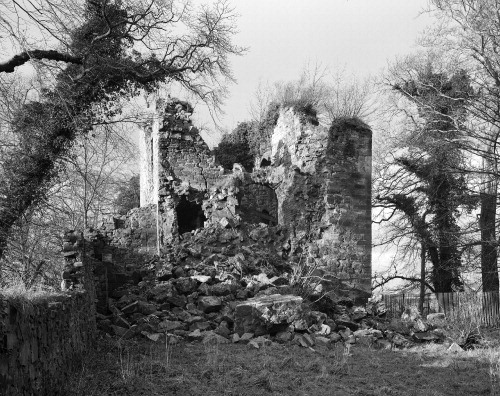
1980-81 Excavations of Cathcart Castle, Glasgow
An extract from Open Access article, Cathcart Castle, Glasgow – Excavations 1980–81, by Brian Kerr et. al. Published in the Scottish Archaeological Journal, Volume 38 Issue supplement, Page 1-100, ISSN 1471-5767 Available Online Oct 2016 ‘The castle of Cathcart is…
A century of temperance in alcohol policy and licensing law
By Stuart MacLennan “Crackdowns” on alcohol my well be de rigueur, but they are most certainly not novel. The early 20th century provides the genesis for many contemporary alcohol restrictions, with the temperance movement having achieved considerable influence over public…
When conservation is not enough
By Dominic Hinde In its nine years in power, Scotland’s Scottish National Party (SNP) government has sought to redefine many areas of how the country is governed. In many fields, from healthcare to education, the party has attempted to create…
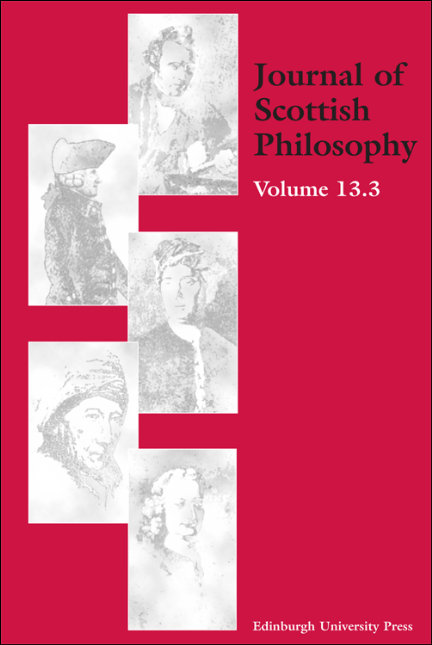
David Hume and Scottish Philosophy
By Gordon Graham Not so very long ago, it was quite widely accepted that Britain’s most significant contribution to the development of philosophy was ‘empiricism’ and that its great exponents were the Englishman John Locke, the Irishman George Berkeley, and…
The real ‘Northern Powerhouse’? Strengthening Anglo-Scottish collaboration across the Borderlands
By Keith Shaw Tucked away towards the end of the recent document announcing the ‘Devolution Deal’ between the Treasury and the seven local councils in the North East of England, is a commitment to working in collaboration with Scotland to…
The semantic dimension of Newtonian Power
By Asher Jiang The concept of physical power in its modern forms has been introduced by Sir Isaac Newton in his great work Philosophiae Naturalis Principia Mathematica. Although Newton has embedded this concept into a precise mathematical framework, the power…

Descartes in Scotland and pre-Enlightenment Scottish philosophy
By Giovanni Gellera Until recently, the question ‘What was philosophy like in Scotland before the Enlightenment?’ met a standard answer reminiscent of the famous Augustinian warning to those who dared to ask what was there before the beginning of time:…
Finding offence
How are we to assess the impact of activities (e.g. words, songs or gestures) associated with sectarianism in contemporary Scotland? In the increasing absence of easily attributable effects such as crimes or disorder, or blatant forms of discrimination in the…
Community Experiences of Sectarianism
In the August 2015 issue of Scottish Affairs, a team of researchers explore the findings of a study they carried out for the Scottish government on community experiences of sectarianism. Here, one of the authors, Kay Goodall, sets out some…