
by Elisa Antonietta Daniele
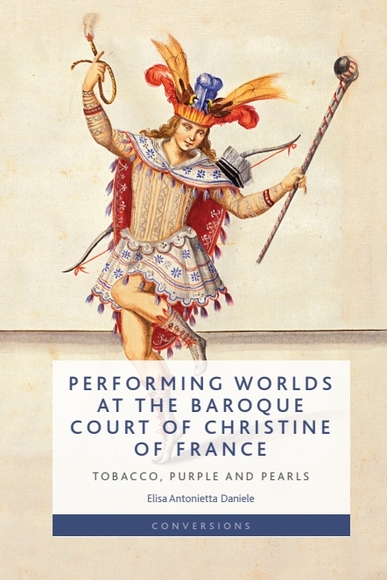
Performing Worlds at the Baroque Court of Christine of France: Tobacco, Purple and Pearls reframes Baroque performance as a critical laboratory where bodies, materials and environments negotiated global circulation, political legitimacy and ecological imagination.
Tell us a bit about Performing Worlds at the Baroque Court of Christine of France: Tobacco, Purple and Pearls.
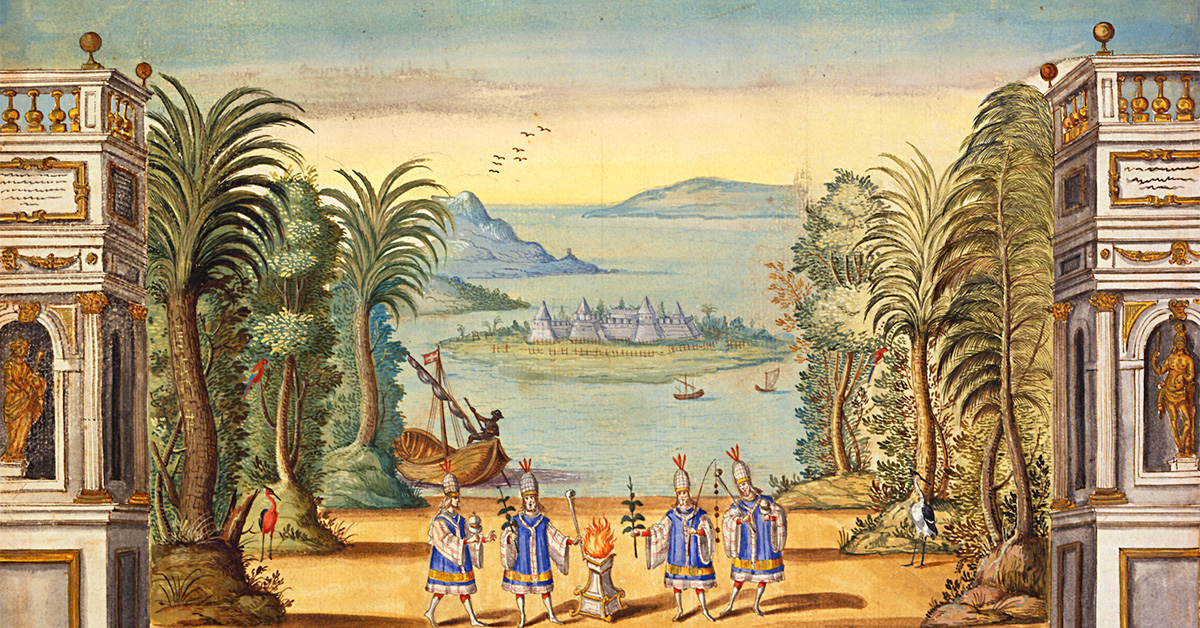
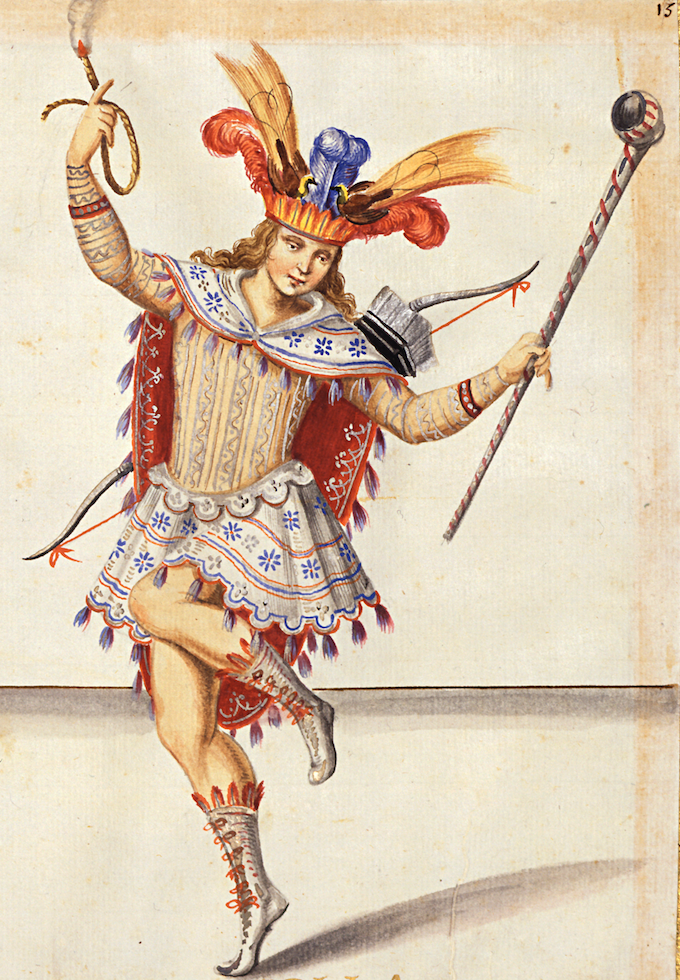
My book explores the ballets staged for the regent Christine of France at her court in Turin as laboratories of world-making. Drawing on a rich archive of 17th-century drawings by Giovanni Tommaso Borgonio, it examines how natural resources – especially tobacco, a shade of purple known as gris-de-lin, and pearls – appeared on stage and interacted with the dancers: performers simulated acts of cultivation, manufacturing, trade, and consumption while moving through sets representing different parts of the world, from the Italian Alps to the Caribbean. In doing so, these spectacles made visible how nature became commodities, and how commodities reshaped bodies, desires, and ideas.
Why these three resources in particular?
As I studied the Savoy court festivals, I was struck by how often materials and resources appeared in performance. Tobacco, the colour gris-de-lin, and pearls each structured a different ballet and gave it its title. Each carried a specific political charge: Christine used them to encourage trade, shape her sovereign persona, and project geopolitical ambition. After all, she was the daughter of Marie de Médicis, renowned for turning art into power!
What was the most exciting thing about this project for you?
What fascinated me most was how insistently these ballets staged processes rather than finished products. This emphasis on making, preparing, and bodily engagement runs counter to how we tend to think of early modern luxury goods – as static objects of display. In Il Tabacco, for example, pairs of dancers entered twisting cords of tobacco leaves while making pirouettes; others sneezed as they lifted pinches of powdered tobacco to their noses or rhythmically stamped the ground while pulverising tobacco in gold mortars; they even mimicked the wafting of smoke with serpentine movements, enveloped by the smoke rising from long silver pipes.
Did you get exclusive access to any new or hard-to-find sources?
Yes! Much of the book is based on the Borgonio manuscript albums, extraordinary volumes combining drawings of costumes and scenery with the lyrics of the ballets. They are not on public display at the National University Library in Turin, so being able to study them closely – seeing the scale of the drawings, the texture of paper and the delicate colouring – was unforgettable.
Alongside these albums, I worked with festival accounts, dyeing manuals, travel reports, and botanical and medical treatises to trace how the materials performed on stage circulated in the wider world. Presenting parts of the research was also a highlight: I discussed it at a symposium in Bodega Bay, at a marine research laboratory overlooking a protected natural reserve. Talking about Baroque spectacle in such an environmentally charged setting created conversations I had not expected.
Did your research change your perceptions about the early modern world?
The more I worked on these performances, the clearer it became that spectacle played a key role in early modern geopolitics and economy. For rulers such as Christine of France, court ballets were a powerful way to legitimise authority and make political choices visible, especially for a female and foreign regent ruling a divided court. They also helped audiences imagine distant lands, new products, and emerging patterns of consumption. I hope readers come away with a renewed sense of spectacle as a way early modern societies thought through global resources, value, and power.
Has your research in this area changed the way you see the world today?
Far from belonging only to a distant past, Baroque spectacle still speaks to present-day logics of mediation and commodification, of perception and power – and, just as urgently, to the continuing struggle over resources. Studying these performances has made me more attentive to how fluid, body-centred forms of spectacle – built on movement and porous exchanges between performers and spectators – still shape ideas and orient audiences today. Ceremonial openings, stadium shows, runway productions, and other highly choreographed events mobilise bodies in motion, music, costume, and scenographic scale to create shared imaginaries of place and belonging.

About the author
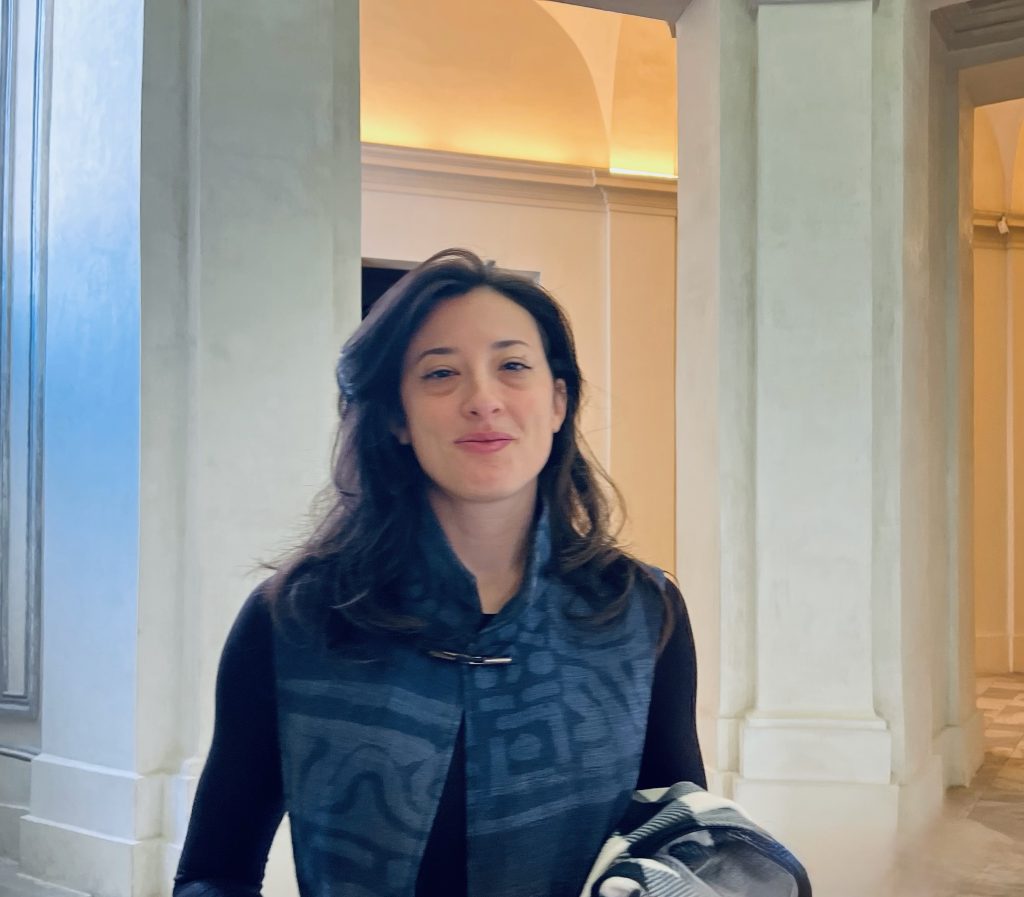
Elisa Antonietta Daniele is an early modern art historian specialising in visual culture and performance, with a focus on the intersections of ecology, commodities and transcultural exchange. She was a Marie Skłodowska-Curie Fellow in Social Sciences and Humanities at the University of California, Los Angeles, and the University of Bologna: her book with EUP is the culmination of this EU-funded project.Her research has also been supported by the Center for 17th- and 18th-Century Studies, UCLA, the Renaissance Society of America, and Harvard University.