

by Vicki Squire
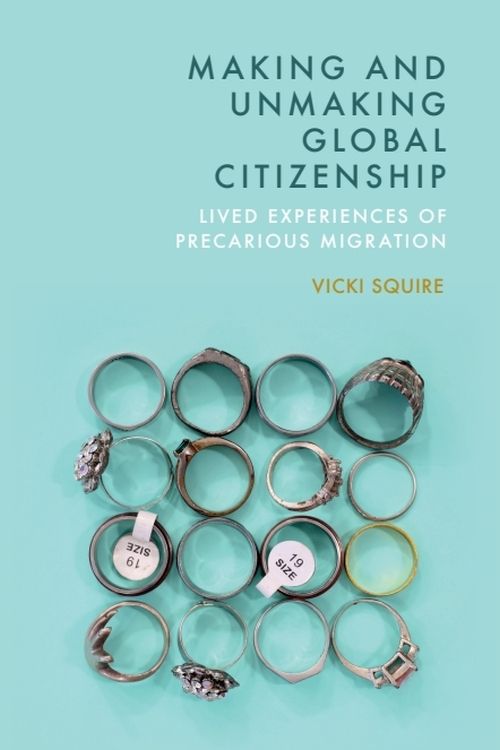
Studies how the claims of people with lived experiences of displacement refuse, disrupt and enact various alternatives to violent bordering practices
Why did you write this book?
I never planned to write Making and Unmaking Global Citizenship. My original plan was to write an article on the politics of precarious migration, before starting a big project on migrant claims. I did manage to write the journal article, but I just had too much to say!
Writing a whole book is always quite an undertaking. The prospect of doing this whilst also having teaching and departmental management commitments was quite daunting! Since I knew that this book was the next step I needed to take, I somehow managed to complete it.
Substantive empirical research has been crucial to the analysis. I worked on my new research at a slower pace, while also revisiting materials from many of my previous projects to fully unpack the questions and themes. This has been an enriching and insightful experience for me – and I hope it is for the reader too.
What did you want to achieve with this book?
My main objective has been to emphasise the importance of avoiding what I call a speculative analysis of the politics of precarious migration. By this, I mean that any political theory or interpretation of precarious migration needs to be meaningfully grounded in the claims of people who have lived experiences of precarity. But I also highlight how accessing and representing these claims or the political perspectives of people in situations of precarious migration is far from simple.
The active delegitimisation – indeed, the outright hostility and violence towards people with precarious migration backgrounds – means that there are not established mechanisms for the safe expression or meaningful resolution of claims such as the right to migrate. Uneven power dynamics and epistemic injustices also render academic research on migrant claims-making complex. The overarching argument of the book is that this difficult work still needs to be done – despite the difficulties and the extra care it demands.
What are the key debates you engage with?
I make interventions in three areas: in relation to debates around citizenship, the analysis of claims-making and the practice of global politics.
The book advances the concept of global citizenship in the making as an analytical framework for examining the politics of precarious migration, while assessing whether precarious migration is best theorised or interpreted as a claim to citizenship. Spoiler alert: I argue that citizenship may be a helpful analytical framework, but isn’t effective as a theory of precarious migration when engaging with claims advanced by people in situations of precarity. I also draw attention to the importance of theories of coloniality, racial capitalism and abolition.
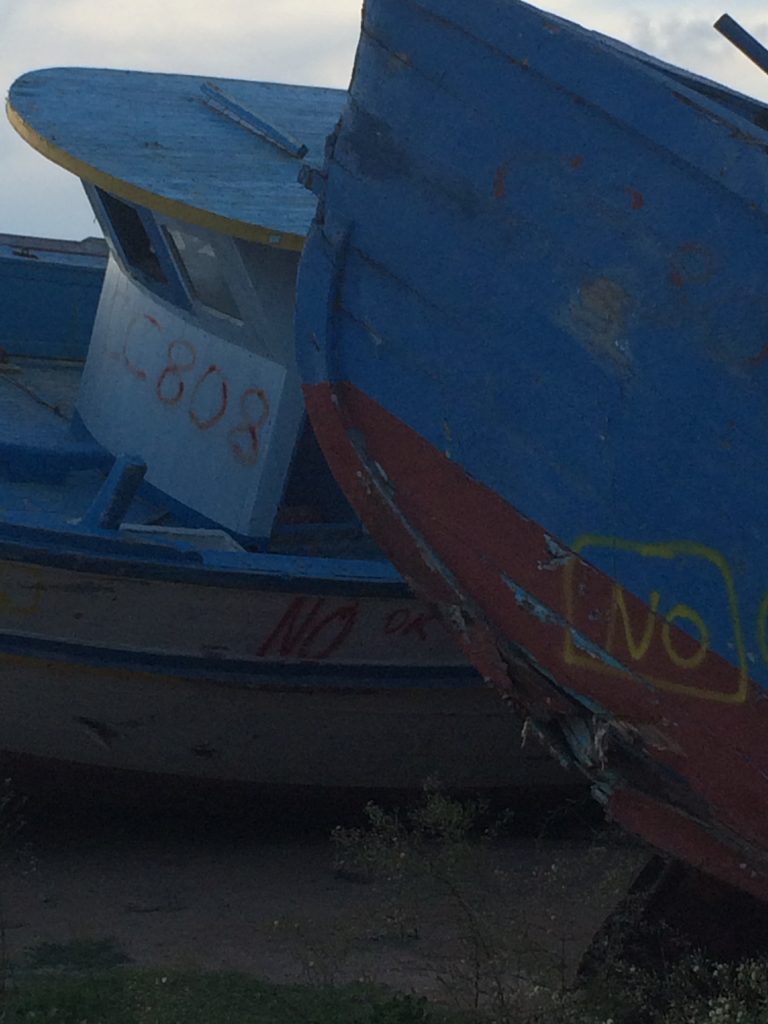
In terms of claims-making, I emphasise the need to engage with claims that are expressed implicitly and indirectly, as well as those that are more explicit. For example, I return to work that I carried out at the US-Mexico border, demonstrating how claims can be expressed through things that are left behind in the desert environment. These claims are hugely important – especially given the difficulties of expression that I noted earlier. The book seeks to develop a methodological approach by which such claims can be analysed.
The book highlights how precarious migration can be understood as challenging the statist quo – by refusing, disrupting and advancing alternatives to the dispossessive powers of capitalist extraction, unjust sovereign border controls and paternalistic practices of aid and development. I consider these in terms of ‘worldly’ interventions, which enable us to think about global politics in relation to people’s everyday struggles that speak to the wider interconnections that do not fit within a statist frame of the international.
What are your hopes for the book and the future?
I hope the book can make a meaningful contribution to the brilliant scholarship on precarious migration that has already been published. Most importantly, that it can deepen appreciation and respect for the lives and struggles of people living through situations of precarity, as that is one thing that the world really needs right now.
About the author
Vicki Squire is Professor of International Politics at University of Warwick, UK. She has over twenty years of experience in researching the politics of precarious migration, displacement and asylum, borders, humanitarianism and solidarity activism in various global contexts.