
By Lewis Ashman
Lewis Ashman is the author of ‘Two Pious Newtonians on the Concept of Gravity’ in issue 24.1 of the Journal of Scottish Philosophy,
How did eighteenth century philosophers understand God’s hand in nature?
Look for God in science and the chances are you won’t find Him. One of the defining features of the modern scientific worldview is its strict empiricism. Religion, to the modern mind, is a realm apart, a metaphysical domain governed not by evidence and rational deduction but by belief and inference from arbitrarily assumed premises.
This is not to say that faith is incompatible with physics, but that science and religion occupy different areas of the contemporary mental map. Articles of faith are not supposed to sway the scientist. The latest discoveries do not tend to dictate doctrine.
We know it was not always thus. But it was thus for a long time, and the roots of modern science lie in a pre-modern science where the divine was a legitimate part of the inquiry. So, if we want to understand the religious heritage of modern science, where should we look? Perhaps surprisingly, the Scottish Enlightenment is as good a place as any.
Is Science Truly Secular?
Across the millennia, people have configured and reconfigured science and religion in different ways. The distinction between the spiritual and the scientific is often traced back to the Scientific Revolution of the 17th century. During this period, scholars increasingly challenged superstition with scepticism and pursued certainty through experiment and mathematical rigour. They discarded old ideas and replaced them with new ones.
In the 18th century, the Enlightenment emerged, apparently seeking to remake society through reason. Science was on the up and religion knocked off its intellectual perch.
David Hume, the Scottish Enlightenment’s most famous son, perhaps best symbolises this shift.
He was notoriously impious and made razor-sharp logical arguments against philosophising about God. Even Adam Smith’s famous “invisible hand” metaphor seems to have arisen neither from personal piety nor any particular interest in religion.
Science and Religion in the Enlightenment
The Enlightenment is strongly associated with religious scepticism (the doubting of spiritual truth), deism (the view that religious truth is acquired by reason not revelation), and atheism (the denial of divinity). But these were highly controversial positions to take in the eighteenth century and far from the mainstream. Hume and the likes of the church-bashing French philosophe Voltaire have come to represent the period, but they departed from the intellectual status quo.
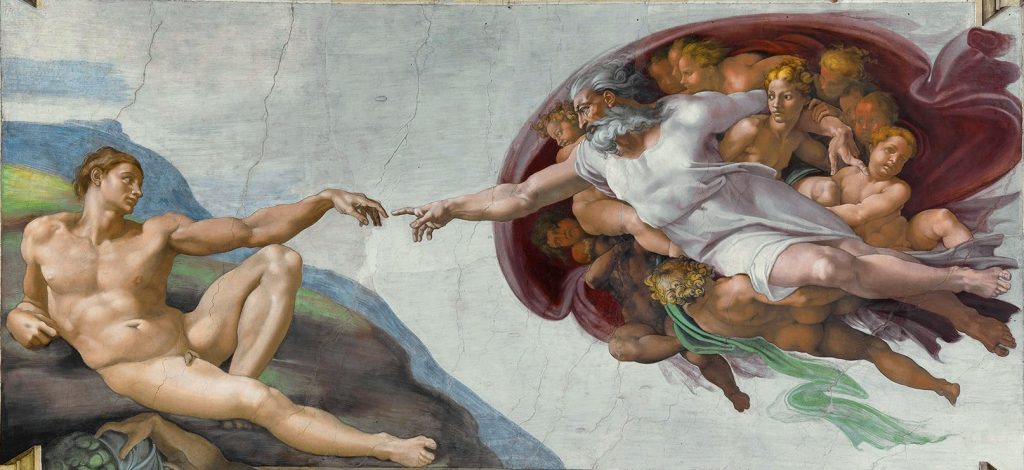
Despite the apparent revolution that occurred in science, the early modern period was one of profound religiosity. “Natural theology” grew to unprecedented heights as a means by which the “new science” could shore up rather than undermine faith. To the natural theologian, inquiry into the profoundest mysteries of nature simply revealed more of the magnificence of Creation. Nature was studied through a sacred lens.
This didn’t suddenly all change in the eighteenth century. Deists like the philosopher John Toland and materialist atheists like Julien Offray de La Mettrie caused a stir because they were radical.
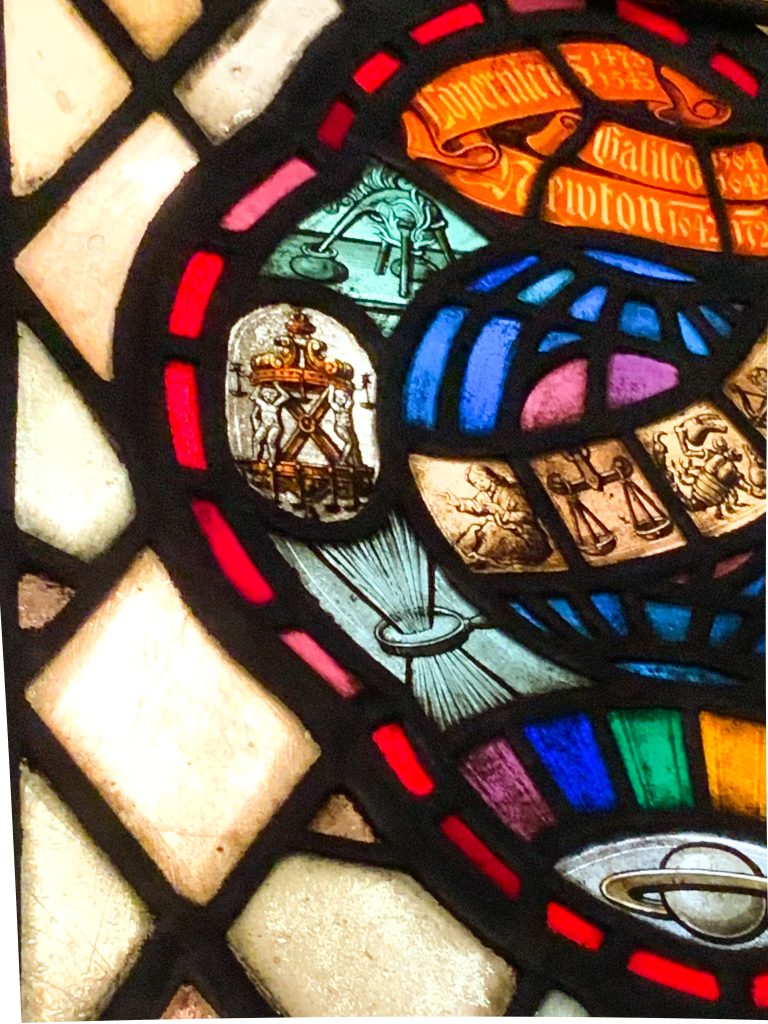
The Newtonians Who Disagreed about God
More common than deists were anti-deists who framed their work as a defence of true Christianity. In Scotland’s “Religious Enlightenment”, pious authors sought to prove the truth of Christianity against atheists (by appealing to evidence of divine design and superintendence) and deists (by showing how the “book of nature” supports the scriptural account of creation).
As I explore in a recent article in the Journal of Scottish Philosophy, they also went further. One of the best-known cases of scientific and religious thought sitting side by side is that of Isaac Newton. He was deeply immersed in Christian thought, and his natural philosophy was widely admired across Europe. “Newtonian science” is understood to have attracted loyal adherents, called “Newtonians”.
My article focuses on a disagreement between two Scottish Newtonians: Andrew Baxter, a philosopher and tutor to noble families, and Colin Maclaurin, the Edinburgh professor of mathematics. Despite their common admiration for Newton, they disagreed over the question of how God brings about gravitation.
The issue is not straightforward. Is gravity entirely separate from matter, or somehow conjoined or inherent to it? Does God power creation directly or indirectly? What kind of actor is God, and on what basis can we determine his agency?
Seeking the “Invisible Hand”
We need to understand how Newton’s admirers engaged with these questions. Newtonian science is widely seen as the vehicle by which early modern natural philosophy matured into modern science. Yet Baxter and Maclaurin did not see eye to eye, telling us much about the impact of Newton’s ideas in Scotland.
By more firmly grasping the issues uniting science and religion in the Enlightenment, we can better understand how modern science emerged and gain new insights into our own ideas about nature.
About the author

Lewis Ashman holds a PhD in History from the University of Edinburgh. He is interested in the disciplinary identity of natural philosophy in the early modern period and is currently writing a book about Isaac Newton’s reception in Scotland.
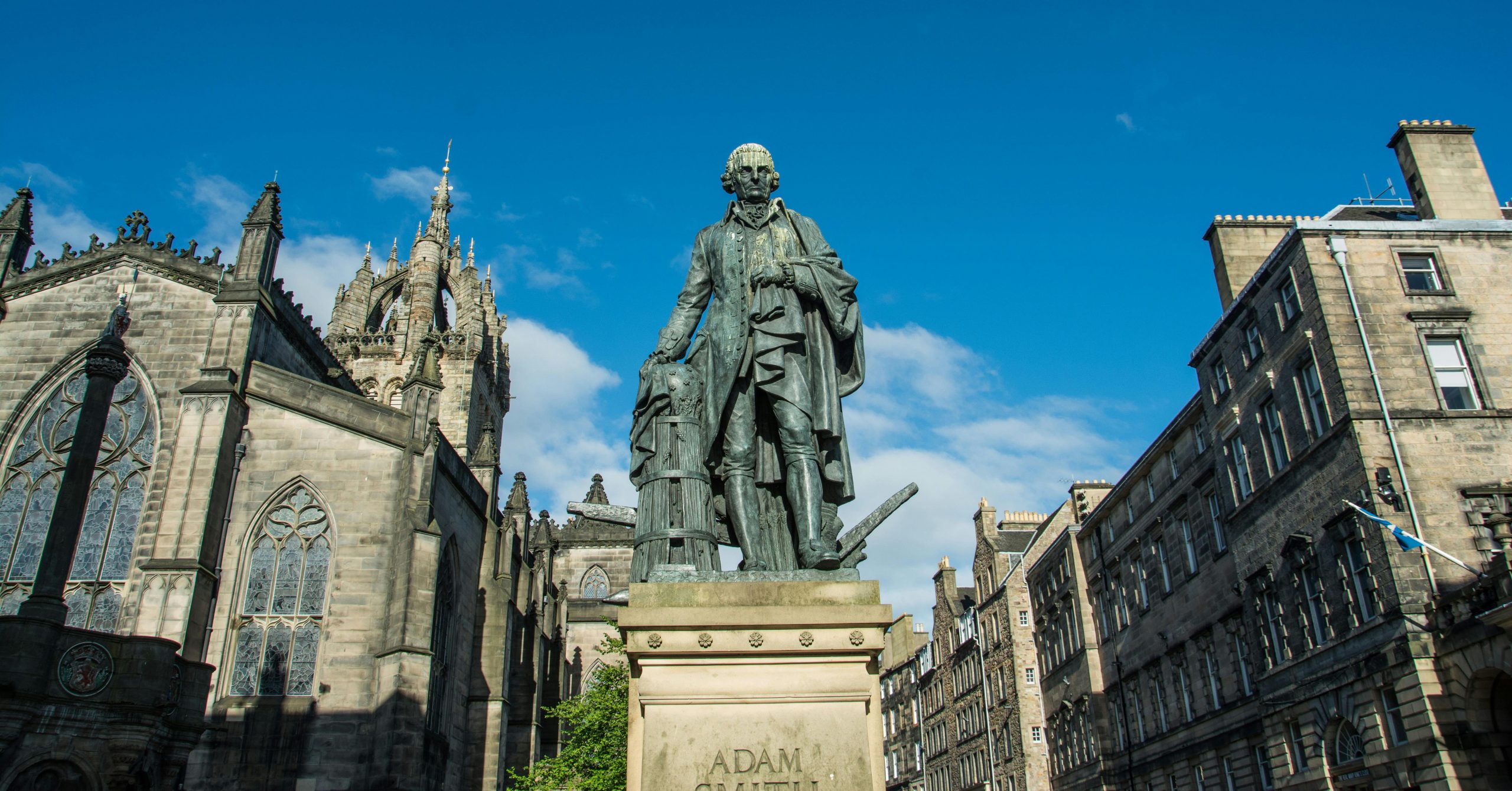
Featured image: Statue of Adam Smith by St Giles’ Cathedral, High Street, Edinburgh. Photo: Marvin Sacdalan (Creative Commons).