
by Charlie Ellis
Read the full research article: ‘Edinburgh’s Culture Conflict: The Struggle to Free the Fringe’.
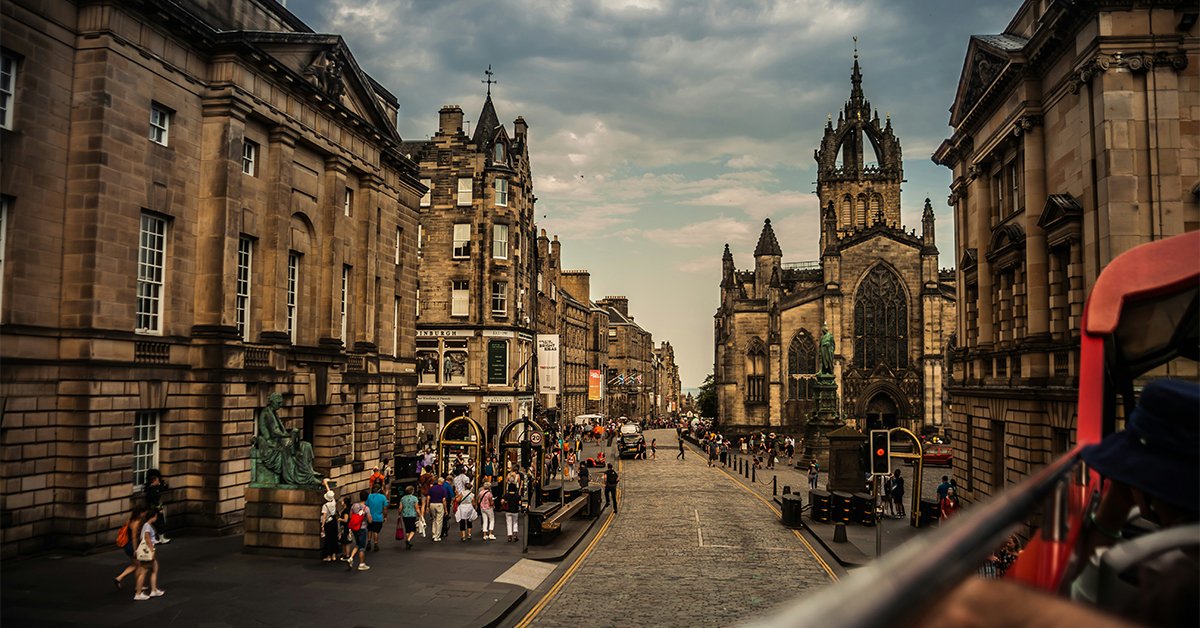
As the Edinburgh Festival and Fringe get under way, the same arguments are already resurfacing in the public conversation. Many locals will complain that their city is being taken over, with the centre and public transport left difficult to navigate, especially in the wake of the disruptive fire on Princes Street. Others will insist that Edinburgh residents are supremely lucky to have a festival of this scale and cultural richness on their doorstep. Expect both narratives, in abundance, across the usual online discussion.
There is another recurring theme too: the claim that the Fringe is no longer the open, accessible arts festival it once was. It was conceived as an open-access event, allowing all comers to present their shows. Performers could once find inexpensive accommodation and cheap venues, letting them take part without going heavily into debt. Those attending the Fringe could see a large number of performances without paying out a massive amount. That has changed.
‘What Has Changed in the Fringe Reflects What Has Changed in Society’
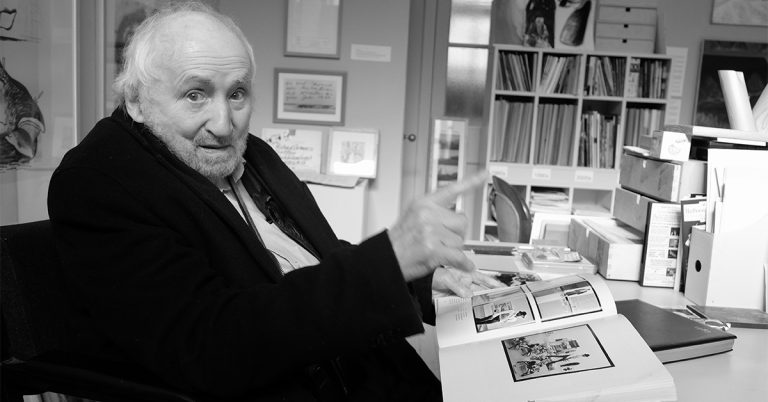
The veteran comedian Stewart Lee is among the high-profile figures concerned about this shift. For Lee, what has happened to the Fringe is part of a wider pattern, since, as he put it, ‘what has changed in the Fringe is what has changed in society and economics.’
Speaking recently on BBC Radio Scotland, Lee described the fairly basic accommodation he had in the late 1980s. In 1987, the student company he was performing with slept on the floor of a church hall that had no running water. To wash, they used the Infirmary Street Baths, now home to Dovecot Studios. Lee recently visited an exhibition at Dovecot and found it difficult to explain that history to his children.
Back then, this arrangement meant it was ‘economically viable’ for young performers to bring a show to the Fringe. These days, costs have risen considerably, and performers need ‘bankrolling in some way,’ which tends to benefit those from wealthy backgrounds, those with substantial financial support, or those who are simply ‘heroically determined.’ The Fringe, in Lee’s view, is no longer the ‘open access experiment’ it was in the 1980s.
So, What Can Be Done?
One substantial effort to address the problem of limited access, for performers and audience members alike, has been the Free Fringe. Several organisations have used that name, but the original and largest is PBH’s Free Fringe, started by Peter Buckley Hill in 1996. It has since grown into a significant part of the Fringe’s ecosystem.
In my article for Scottish Affairs, ‘Edinburgh’s Culture Conflict: The Struggle to Free the Fringe,’ I examined the Free Fringe as something of a political project, looking at its organisation and values. I also considered some of the criticisms levelled at it, including the argument that free shows dilute quality. That claim, that ‘free must be rubbish,’ is one of the key battles the Free Fringe has had to fight.
The Free Fringe certainly has a number of prominent supporters, including one of the Fringe’s best-known reviewers. Kate Copstick is a legendary figure of the Edinburgh Fringe, a doyenne of the reviewing circuit. Scribbling away busily on her notepad at the back of comedy gigs, her words have caused many comedians discomfort. In fairness, she has also lavished praise and stars on many performers, and her approval, her ‘imprimatur,’ is regarded as a significant badge of honour. Copstick has strong views on how the Fringe needs to change if it is to remain culturally vital, and she is not happy with its current state, considering it bloated and dominated by corporate values.
In recent years, Copstick has become a prominent public supporter of PBH’s Free Fringe. It has been, in her eyes, a sustained and substantial attempt to address the various challenges the wider Fringe faces, especially around access. I chatted to Copstick as we both waited to see & review Peter Buckley Hill’s own show, ‘Peter Buckley Hill and Some Comedians’ at Whistlebinkies, a basement pub typical of the Free Fringe’s unglamorous venues.
A Swirling Mess
For Copstick, the Free Fringe is a key part of the Fringe’s ecology, injecting a much-needed dose of authenticity. She sees it as representing the true values of the festival, with a focus on artistic freedom and accessibility rather than profit. It is, she believes, an important counter to the ‘swirling mess’ of the Fringe’s contemporary iteration, which she feels is now driven by ‘how much money can be made… how much people can make.’ That, for Copstick, is a perversion of what the Fringe should stand for: giving people on the margins the chance to reach an audience.
She has said the Free Fringe ought to encourage others to ‘take a stand’ against the corporate takeover of the festival. Though it is now an established part of the Fringe, the Free Fringe constantly teeters on the edge of financial collapse, and keeping it afloat is a continual struggle. It would, Copstick believes, be ‘a tragedy’ if it were to disappear. That is why she argues the Free Fringe ‘has to be a community’ of performers working together to keep the festival free.
If it instead absorbs the competitive values of the paid Fringe, it will soon collapse. This is why Buckley Hill and other senior Free Fringe figures constantly encourage performers to stick to the project’s founding principles. This includes distributing the Free Fringe’s programme, the Wee Blue Book, alongside their own flyers, and promoting the Free Fringe more broadly rather than just their individual shows. As Free Fringe CEO, Luke Meredith, puts it, ‘we stand together as a cooperative,’ a reminder that if this collaborative spirit slips, the whole enterprise could unravel.
Free Is Not Rubbish
The Free Fringe’s central battle is against the perception that ‘free equals rubbish.’ That perception is not accurate, but it lingers. Many people still treat the Free Fringe as an option rather than the real Fringe, something to dip into if they have a spare hour, or if a flyer catches their eye, rather than their first choice.
No one would deny that poorly executed shows exist on the Free Fringe. Even Meredith, concedes that ‘you might see something terrible,’ but he is quick to add that ‘you might see something terrible at a ticketed show too.’ The crucial difference, of course, is that with a free show, that terrible experience will not cost you a penny.
As Fringe 2026 gets under way, Meredith is in an optimistic mood, embracing the changes that are inevitable given the character of the organisation which draws on voluntary efforts and often finding venues at short notice.
Embracing Evolution and New Horizons
Reflecting on the perpetual reinvention that defines the movement, Luke notes, ‘Things are shaping up in a different way every year. From the huge hitters at Liquid Room this year to the newbies in Pizza Geeks Easter Road.’
This year’s footprint extends outward, creating vibrant new pockets across the city. ‘We tried to create a bit of a hub in Leith as well with lots of new venues that way, and although the tram situation will be a blow to that, we hope people will still make the effort to travel down,’ Luke explains, pointing to diverse offerings like the music shows at Bowlers Rest. With a personal background rooted in performance, he adds, ‘There’s an amazing dance piece in Diggers I want to catch, and with my background I’m just excited to have dance featured on the Free Fringe.’ Central locations are also pushing boundaries. ‘Supercube is another fresh venture that’s expanding the notion of what a Fringe show can be with a multitude of intimate rooms under one roof,’ Luke notes. ‘Great for when you fancy something a bit different in the centre of town.’
Keeping the Spirit of Experimentation Alive
Addressing the broader landscape and ongoing conversations about the festival’s ethos, Luke remains focused on the raw creativity at the heart of the organisation. ‘I haven’t read Stewart’s comments, although he’s aware of us, having kindly given his time for Free Fringe benefits in the past,’ he shares. ‘Yes we are absolutely at the forefront of keeping the spirit of experimentation alive.’ That spirit is reflected in an eclectic lineup that defies convention. As Luke highlights:
‘This year we have someone writing a new show every day from audience suggestions the day before for instance; a Samurai sword workshop; we have the cult cheese eating show trying something new this year too so keep your eyes on that.’
Ultimately, the accessibility and breadth of the programme remain its defining strengths. Encapsulating the spirit of the 2026 festival, Luke concludes: ‘There’s every kind of show at the Free Fringe, from top tier established comics to future stars dipping their toes in for the first time. It’s waiting for you and it’s all for free.’