


by Youssef A. Haddad
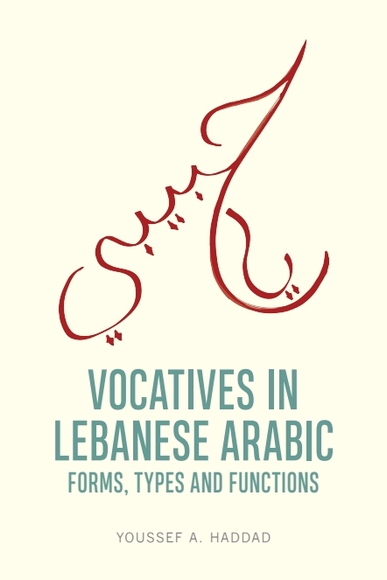
Vocatives in Lebanese Arabic: Forms, Types and Functions asks what forms and types of vocatives are used in Lebanese Arabic, and how are they employed as strategies for rapport (mis)management and relationship negotiation in social interaction?
What does it mean when someone in Beirut says ya ḥabibi—“my love”? Depending on tone and context, it can express affection, irony, annoyance, or defiance. My new book, Vocatives in Lebanese Arabic: Forms, Types, and Functions, explores how a single word of address can shape relationships and identities in conversation.
Why Vocatives Matter
Vocatives are the phrases we use to call or address others: “Your Honour,” “sir,” “bro.” They seem trivial, yet they manage power, intimacy, and emotion. In Lebanese Arabic, vocatives are omnipresent: ya ħabibi at a café, rayyis (“chief”) on a construction site, ħadirtak (“sir”) in a complaint. They reveal how people negotiate respect and closeness through language.
Linguists often describe vocatives as optional, but socially they are anything but. Including or omitting one can build rapport or trigger offense. That delicate balance is what first drew me to the subject.
Why Lebanese Arabic?
Lebanon’s multilingual, socially layered environment makes vocatives especially rich. A single expression may shift meaning across settings: affectionate between friends, patronizing among strangers, or mocking in political banter. Tone, age, and gender all matter.
To capture these nuances, I analyzed vocatives across Lebanese films, plays, and talk shows; these are media that mirror real-life interaction. These sources allowed me to examine attested exchanges that fieldwork rarely records: quarrels between spouses, arguments between politicians, or moments of tenderness amid conflict.
What the Book Uncovers
The book’s first half classifies vocatives by form and type: pronouns, kinship terms, endearments, insults, and the particles ya, wle, and ka. The second half examines their social functions: how they manage rapport, assert authority, signal affection, or express aggression.
Three moments illustrate this complexity:
In West Beirut (1998), a teenage boy greets an armed man with rayyis (“chief”), projecting street toughness. In another scene, a brothel owner explodes when called tante (“aunty”), a term that undermines her authority. And in Where Do We Go Now? (2011), a wife mocks her husband’s sudden sectarian anger by quoting his earlier vocatives, “ya ḥabibi, ya ʕayni”, to a friend he now calls an enemy.
Each choice of vocative tells a story of shifting alliances and facework.
The Pragmatics Behind the Scenes
The study builds on interpersonal pragmatics: how language reflects and reshapes social relationships. I draw particularly on Helen Spencer-Oatey’s rapport-management model, which explains how speakers use linguistic strategies to maintain, enhance, or damage social bonds. Most vocatives, after all, are not needed for grammar; they are social moves that reveal empathy, power, or resistance.
Lebanese vocatives also show optional yet multifunctional behavior. A missing ya can convey anger; an added wle can provoke confrontation. Through such choices, speakers craft and contest identities: the same person can be professor, ḥabibi, or wle within minutes.
From Page to Screen
Each chapter of Vocatives in Lebanese Arabic is paired with a YouTube playlist featuring scenes discussed in the book. These clips allow the curious and abled reader to hear intonation, laughter, and sarcasm. These are elements no transcript can capture.
- Chapter 1 – Vocatives in Action
- Chapter 2 – Forms
- Chapter 3 – Types
- Chapter 4 – Exclamatory and Non-Vocative Vocatives
- Chapter 5 – Rapport Management
- Chapter 6 – Names and Particles
- Chapter 7 – What Vocatives Can Do for You
- Chapter 8 – What Vocatives Can Do to You
- Chapter 9 – What’s in Them for Me
- Chapter 10 – Optionality and Identity
Why It Matters
Beyond Arabic linguistics, this work speaks to anyone interested in how language performs identity. Whether we say sir, sweetheart, or ya ḥabibi, we are not merely talking; we are positioning ourselves in a web of culture, emotion, and expectation. Understanding vocatives reminds us that courtesy, solidarity, and conflict all begin with the way we address one another.

About the Author
Youssef A. Haddad is Professor of Arabic Language and Linguistics at Georgetown University in Qatar. His research explores syntax, pragmatics, and the social dynamics of Arabic discourse.