-
Autopoietic Machines
Read more: Autopoietic MachinesRethinks the concept of power in relation to an emerging form - sensory power


Rethinks the concept of power in relation to an emerging form - sensory power

By Marjory Harper In February 1983, just as I was finishing my PhD, I gave my first conference paper in the slightly intimidating surroundings of Marischal College at the University of Aberdeen. The event, organised jointly by two university departments…

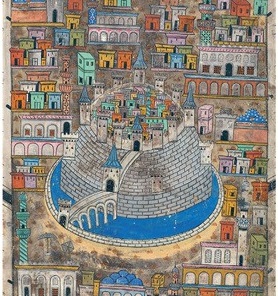
An extract from Open Access article, Cathcart Castle, Glasgow – Excavations 1980–81, by Brian Kerr et. al. Published in the Scottish Archaeological Journal, Volume 38 Issue supplement, Page 1-100, ISSN 1471-5767 Available Online Oct 2016 ‘The castle of Cathcart is…

By Ruth Mostern Here, Ruth Mostern gives some background to her article, “Don’t Just Build It, They Probably Won’t Come: Data Sharing and the Social Life of Data in the Historical Quantitative Social Sciences”. Her article appears in the October…

Elaine Morley The Occupation of Germany is a unique field for comparatists to explore given the fact that in this period five major world cultures – American, British, French, German and Soviet – were literally rubbing shoulders in Germany. I’ve…

Here, Matt Ffytche introduces a special issue of Psychoanalysis and History, Afterlives of the Death Drive. The death drive has proved relevant to so many different intellectual contexts in part because of the extravagance, or allusiveness of Freud’s original gesture…

“Pioneers in Roman Archaeology: The Antonine Wall Committee” by Lawrence Keppie at The Hunterian, University of Glasgow, appears in the Scottish Archaeological Journal, Volume 38 Issue 1, Page 1-31, ISSN 1471-5767. The paper considers the origins of a Committee established…

By Sean McEvoy William Shakespeare died four hundred years ago. We know he departed this life on 23 April 1616 because the parish register at Holy Trinity Church Stratford-upon-Avon records the fact. But we don’t have the same proof that…

By Kevin Curran, University of Lausanne What is it about Shakespeare’s writing that makes it endure? Why do his plays and poems continue to entertain, engage, and instruct more than 400 years on? I think it might have something to do with…

By Anna Clark It is widely assumed that the concept of human rights only emerged after 1945. However, I have found that the concept of human rights was deployed in Britain in the 1890s. For instance, in 1898 Hypatia Bradlaugh-Bonner…