


by Julian Koch
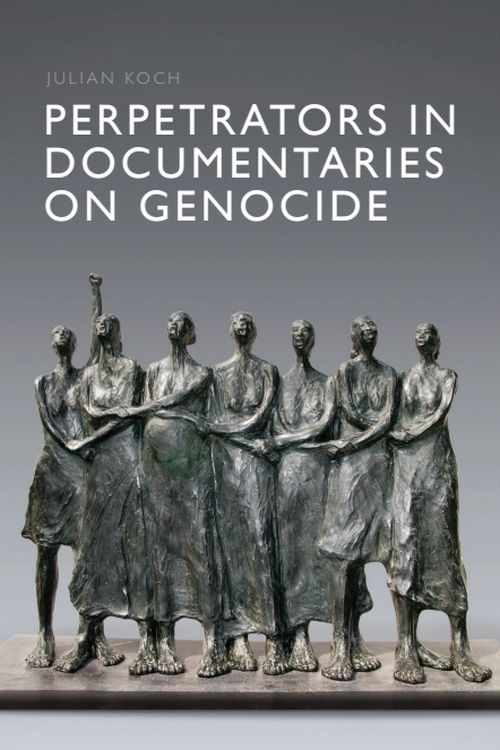
Analyses documentary representations of perpetrators and discusses why these representations matter
How we understand mass violence is shaped by a moral grammar and dictionary. Documentaries on genocide offer a profound glimpse into this explanatory language of genocide that they themselves also mold. They are nearly always the first film form to cover a particular genocide. They are also the most frequent film genre on the subject and are often funded by state or international organs (e.g. BBC, USAID) in the hopes of furthering public understanding. What emerges from my analyses of over two-hundred such documentaries, spanning seven genocides, is that genocide’s moral grammar prescribes a focus on one perpetrator and victim group.
Post-genocide historiography, especially a very public facing one, turns these into fixed and mutually exclusive categories. Yet, genocides are more complicated than the stable perpetrator and victim categories suggest and in several cases, not least the Holocaust, fail to encompass the full scale of mass violence. Until early 1942, the largest victim group of the Nazi regime was Soviet prisoners of war who were systematically starved by the German army in line with its “Hunger Plan”, aiming but ultimately failing to extinguish the envisioned tally of 30 million Slavs. Three million were to die from this policy during WWII, with nearly two million of those deaths occurring between summer 1941 and spring 1942. And yet, no documentary is dedicated to these victims. Their perpetrator, the German army, features almost exclusively as the perpetrator in the Nazi’s extermination program of Jews where they was far less involved. Its grave historical role in Nazi mass violence appears relatively diminished in documentaries.
The single perpetrator and victim group representational paradigm thus excludes other perpetrator and victim groups. It can also paint too simple a picture of the dynamics of genocidal violence. The gravity of the crime of genocide seems to call for perpetrators to have firm ideological commitments to the exterminatory program and a deep-seated, longstanding hatred of their victims.
Documentaries on the Holocaust, the Armenian and the Herero and Nama genocides have a particularly pronounced tendency to identify in the perpetrators a singular ideological exterminatory drive. This is because for all three genocides, documentaries typically focus, to the point of exclusion, on the respective main perpetrator: Hitler, Talaat Pasha and General Lothar von Trotha. Yet, further down the perpetrator hierarchy, reasons and causes for genocidal participation can be markedly pedestrian, opportunistic and ad hoc. Documentaries on the Armenian and Herero and Nama genocide suffer from a lack of representation of such low-ranking perpetrators.
On the other hand, documentaries covering the Cambodian, Rwandan, Indonesian and Bosnian genocides have relatively effectively examined the role of group dynamics, sexual gratification, pillaging and a variety of other circumstances in genocidal participation of the rank-and-file. Yet, especially in the case of documentaries on the genocide in Rwanda, the near single-minded focus on the lowly Hutu man who raped and murdered his Tutsi neighbors leaves audiences thinking that innate Hutu racism and proclivity to violence led to a seemingly spontaneous genocide. No documentary focuses on the major organizers of the genocide.
Genocides can be partial (e.g. military-age Bosnian Muslim men in Srebrenica) and stopped before wholesale extermination (e.g. in Indonesia) while still being genocides. Perpetrators are more complex than representational schemata of violent hatred and racism suggest. Indeed, in the extreme case of the Cambodian genocide, many Khmer Rouge cadre members victimized other cadres only for themselves to fall victim to the power struggles and paranoia of the regime for which they murdered.
However unpalatable their views and deeds, perpetrators are key to uncovering the causes and dynamics of mass violence. A minority of documentaries already does an exceptional job at complicating the picture of genocidal perpetration for a wider public. Yet, many more need to follow suit to generate a broad public understanding of genocide beyond simplistic categories. The Israeli and Rwandan governments both carefully cultivate a moral nimbus as survivors of genocide that, in many Western political establishments, is still remarkably little tarnished by their sponsorship and perpetration of large-scale anti-civilian violence in Gaza and the DRC, respectively.
Such a nationalization of victimhood is nourished by reductive notions of genocide with mutually exclusive and immutable perpetrator and victim categories. The non-fictional genre of documentaries with its broad audience is arguably the best placed medium to problematize the common representational paradigms of genocide.
Only a more complex representational framework of genocide can give voice to all victims, hold the full spectrum of perpetrators to account and in its nuanced approach to the past foster a public vigilance that guards against future genocides.
About the author
Julian Koch is an independent researcher primarily interested in mass violence and its representation as well as conflict and health. His broad interests also include German and French twentieth-century poetry, on which he published his first book A Poetics of the Image (2021). He completed his undergraduate degree at Maastricht University, his Masters at Oxford University and his PhD in Comparative Literature at Queen Mary University of London.