

Skip to content
  • Cultural Studies
    • French Studies
    • Gender Studies
    • Irish Studies
    • Film and TV
    • Theatre and Dance
    • Islamic and Middle Eastern Studies
  • History
    • British History
    • Classics and Ancient History
    • Cultural History
    • Natural History
    • Religious History
    • Scottish History
    • World History
  • Language and Literature
    • Modernism
    • Literary Theory
    • Pre 19th Century Literary Studies
    • Post 19th Century Literary Studies
    • Scottish Literature
    • Atlantic Literature
    • Linguistics
  • Law
    • Comparative Law
    • European Law
    • Islamic Law
    • Roman Law
    • Scots Law
  • Politics, Philosophy and Religion
    • Religion
    • Philosophy
    • Politics
    • Political Philosophy
    • Scottish Politics
    • Film Philosophy
  • Publishing

  • About Us
  • Journals
  • Books
  • SUBSCRIBE TO OUR BLOG
Edinburgh University Press Blog

No results
  • Cultural Studies
    • French Studies
    • Gender Studies
    • Irish Studies
    • Film and TV
    • Theatre and Dance
    • Islamic and Middle Eastern Studies
  • History
    • British History
    • Classics and Ancient History
    • Cultural History
    • Natural History
    • Religious History
    • Scottish History
    • World History
  • Language and Literature
    • Modernism
    • Literary Theory
    • Pre 19th Century Literary Studies
    • Post 19th Century Literary Studies
    • Scottish Literature
    • Atlantic Literature
    • Linguistics
  • Law
    • Comparative Law
    • European Law
    • Islamic Law
    • Roman Law
    • Scots Law
  • Politics, Philosophy and Religion
    • Religion
    • Philosophy
    • Politics
    • Political Philosophy
    • Scottish Politics
    • Film Philosophy
  • Publishing
  • Interview with Maggie Humm

    Maggie Humm reflects on feminist criticism, life-writing, and Virginia Woolf’s influence.

    April 17, 2026
    Read more: Interview with Maggie Humm

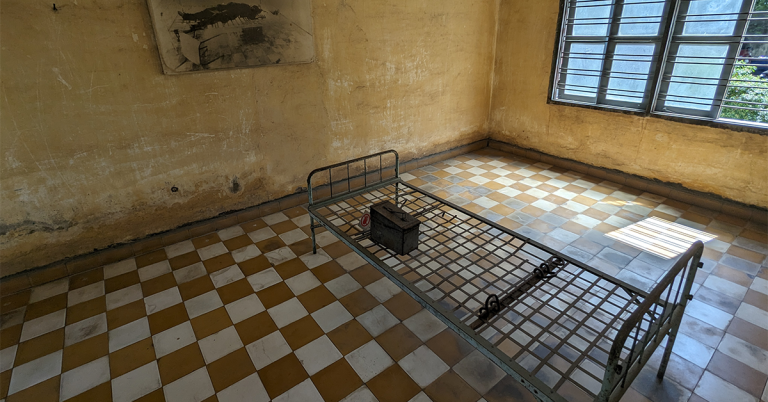
The image shows a sparse, worn room that appears to be a former prison cell. The walls are yellowed and heavily stained, with patches of peeling paint and dark discoloration near the bottom. The floor has a checkerboard pattern of tan and white tiles. In the center of the room is a simple metal bed frame with a grid base and no mattress. On top of the bed frame sits a small metal box. Attached to the frame are metal shackles, suggesting restraints were used. The room has a barred window on the right side, allowing some daylight to enter, casting shadows on the floor. The overall atmosphere feels stark, somber, and austere.

What do hundreds of documentaries on genocide say about perpetrators?

After analysing over two-hundred documentaries, Julian Koch explains how genocidal 'perpetrators' are more complex than representational schemata of violent hatred and racism suggest

  • Edinburgh University Press
  • February 24, 2026

Popular Posts

Interview with Maggie Humm

Stone gargoyle perched on Notre-Dame Cathedral overlooking the dense rooftops of Paris, with the Seine River running alongside the city and the Eiffel Tower visible in the distance beneath a dramatic, cloud-filled sky.

Q&A on French Horror

A dimly lit movie theater filled with seated audience members facing a large, brightly glowing screen. Rows of red upholstered seats extend toward the front, and the ceiling features curved architectural details with recessed panels. The atmosphere suggests a film screening in progress.

Five of the most unusual Sunday Opening conditions

Standing on the Shoulders of Giants: From William Still’s Underground Railroad Records to Digital Analysis

Beyond ‘girlboss feminism’: queering Irish women’s writing

Subscribe To Blog Via Email

Enter your email address to subscribe to this blog and receive notifications of new posts by email.

Copyright © 2026 - Edinburgh University Press | All Right Reserved. | Privacy Policy