
by Catherine-Rose Hailstone
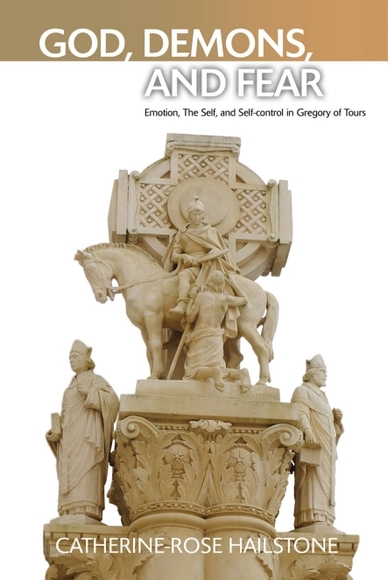
God, Demons, and Fear: Emotion, The Self, and Self-control in Gregory of Tours explores how Gregory of Tours used Christian fears to explore ethical discourse on the formation of the good and bad self.
Gregory of Tours: a late sixth-century bishop whose intellectual abilities are revealed through his references to the fears of God, the devil, and demons. From fishing to stargazing, how many of these 5 things do you know about Gregory?
1. Gregory the fisherman
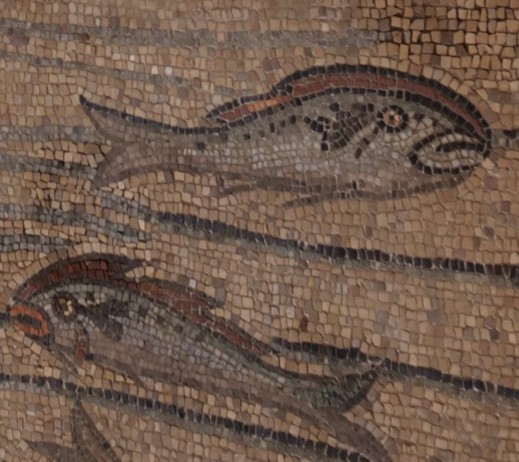
Gregory of Tours was born in Clermont-Ferrand on November 30th c.538 CE. When his dad, Florentius, became afflicted with gout for the second time during Gregory’s childhood, Gregory tells how he experienced a vision in which an unknown person asked him if he was familiar with the story in the Book of Tobit. Gregory replied that he had not read it. The person then told him the tale of how a blind father recovered his sight after his son caught a fish in the river and, following the instructions of his angelic guide, burned the entrails of the fish beneath his father’s eyes. After the person in Gregory’s vision told him to do the same for Florentius, Gregory went straight to his mother. She ordered a fish to be caught and its entrails roasted at Florentius’ bedside. When the smoke hit Florentius he was cured. This tale, told in Gregory’s text on The Glory of the Confessors (39), marks the start of Gregory’s interest in fishing and he later mentions taking some time out to do this while travelling along the banks of the river Loire in The Miracles of the Blessed Bishop Martin (2.16).
2. Fear, discipline, and control
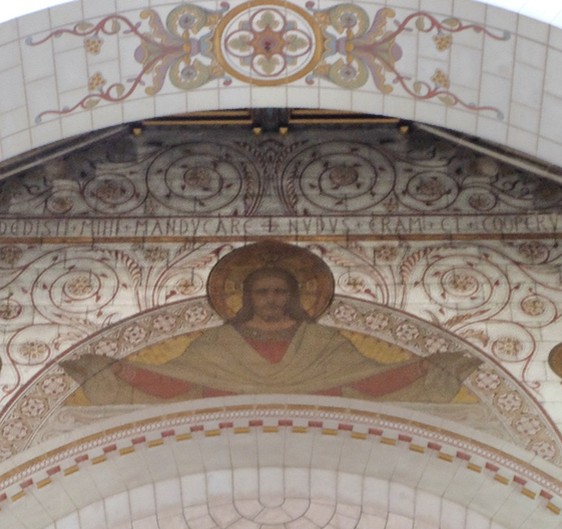
Gregory’s writings are filled with references to the fear of God or the fear of the Lord. This fear is the most frequently cited of all the fears that Gregory describes. A close reading of Gregory’s references to the fear of God shows that Gregory associated this fear with the acquisition of discipline and development of good Christian behaviour. ‘For discipline creates the fear of the Lord, the fear of the Lord facilitates the beginning of wisdom, wisdom rightly teaches us how to love God’ (The Life of the Fathers, 12). Gregory’s association and use of the fear of God to signify the presence of disciplined and good Christian behaviour in his writings, shows that he engaged with broader questions relating to the formation of the good and bad self and role of discipline and self-control in creating this. His engagement with these topics and questions points to an intellectual side to Gregory that has been touched upon but not explored in full.
3. To infinity and beyond
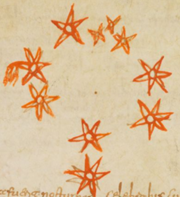
Besides fishing, Gregory was also an avid stargazer. His Ten Books of Histories contain several stories in which Gregory observes various celestial phenomena such as comets and eclipses to have appeared in the late sixth-century sky. Very often these phenomena appear as portents that foreshadow difficult events such as famines, civil wars, or royal assassinations. But the Histories are not the only place in which Gregory wrote about the stars. In a separate treatise that he called On Ecclesiastical Offices, which was later renamed to On the Course of the Stars by an unknown late eighth-century scribe, contains 30 chapters that chart the movements of the moon, sun, and other stars throughout the calendar year. While the contents of this fascinating work appear to have been created to let readers know when to perform certain liturgical offices, the astronomical detail that Gregory provides tells us that he spent a lot of time gazing up at the heavens.
4. Speaking truth to power
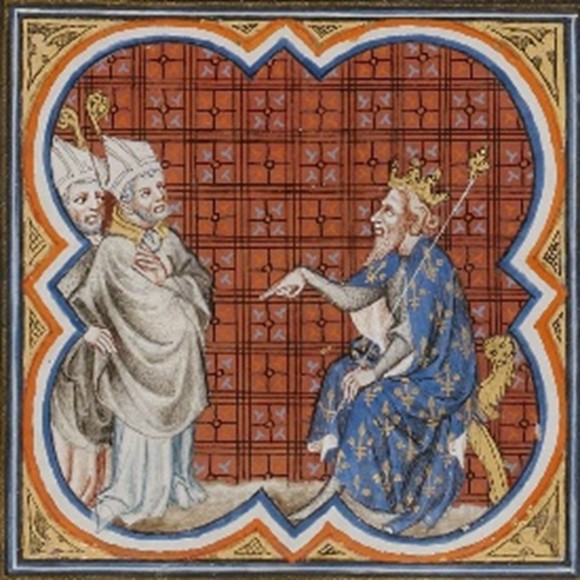
As a young boy, Gregory grew up surrounded by several role models who helped shape his knowledge of what it meant to be a good bishop. Most of his male relatives were bishops at Lyon, Clermont, or Langres and the saint Gregory most revered, Martin, served as bishop of Tours from 371 to his death in 397 CE. Martin, whose life and deeds were recorded by a man called Sulpicius Severus, was known for speaking out before those in positions of authority (e.g. Emperor Maximus). The idea that bishops were supposed to speak truth to power also rubbed off on Gregory. The two speeches that he depicts himself to have delivered to the bishops who had assembled judge Bishop Praetextatus of Rouen for breaking Church Law at the Synod of Paris in 575 CE, show Gregory urging them to put aside their fears of incurring the anger of queen Fredegund in favour of giving holy counsel to the king and supporting one of their own (Histories 5.18). In the confrontation that subsequently took place between Gregory and King Chilperic, Gregory also warned the king to act in accordance with the laws of the Church lest he bring the wrath of God down upon his head.
5. Watch out, the devil’s about

Fearing God’s judgement and punishment was not the only fear that Christians in Gregory’s day had to worry about. The fears instigated by the devil and demons also played an important role in Gregory’s understanding of Christian character development. In his life of a holy hermit named Caluppa, Gregory states that Caluppa set up an oratory in a small cave that had a stream at its base after being driven out of his previous monastery for excessive abstinence (The Life of the Fathers 11). When Gregory visited Caluppa in his cave, the hermit told him that snakes often used to fall on his head and wrap themselves around his neck. The snakes are portrayed by Gregory to be demons sent by the devil to test Caluppa’s faith by subjecting him to a fear of snakes. When Caluppa refused to leave, the devil and one of his minions then appeared disguised as two enormous dragons. When the largest dragon lifted itself up and bared its mouth, Caluppa became paralyzed with terror. Fortunately, it was only his body that was frozen. His heart and mind remained steadfast and he was able to regain control over his body by reciting the Lord’s prayer. This tale and many others like it show that Gregory associated the fears instigated by the devil and demons with the loss of discipline and self-control.

About the author

Catherine-Rose Hailstone is a Leverhulme Early Career Fellow in the Department of History at Durham University (2022-2025).