
By Stefano Maso
The way we think and approach life nowadays is rooted in Greek and Latin antiquity. There is where the belief was born that man is able, with tèchne, to translate his will into practice. Tèchne – as indeed the human will – has in principle no limit in its potential achievements; it is an expression of power. A power in the human mind and a power in the world, conceived as “willing to be modified”, shaped by tèchne. But already in the so-called Hellenistic and Roman period, the problem arose of how man was to “deal with” what he himself was creating with his own tèchne. The problem was (and is not just a matter of) “praxis” – what to do; but of how to reflect on praxis, that is, on our life.
Well, it is precisely the urgency of this “reflection” that we have lost sight of, especially in the contemporary era. We have gradually come to be content wit standing passively in the wake of what tèchne was translating into concrete, experiential, enjoyable reality. Today global economy (that is, the most contemporary version of tèchne) guides our steps in life. And global economy does now have room for much ‘questioning’: it provides only self-referential optimization models. It presumes to guarantee us the future, to remove any danger from us. Above all, it would like to preserve us from our ‘end’, even if, paradoxically, nobody doubts that life on earth is destined to disappear, as well as that the sun will collapse over the next billions of years.
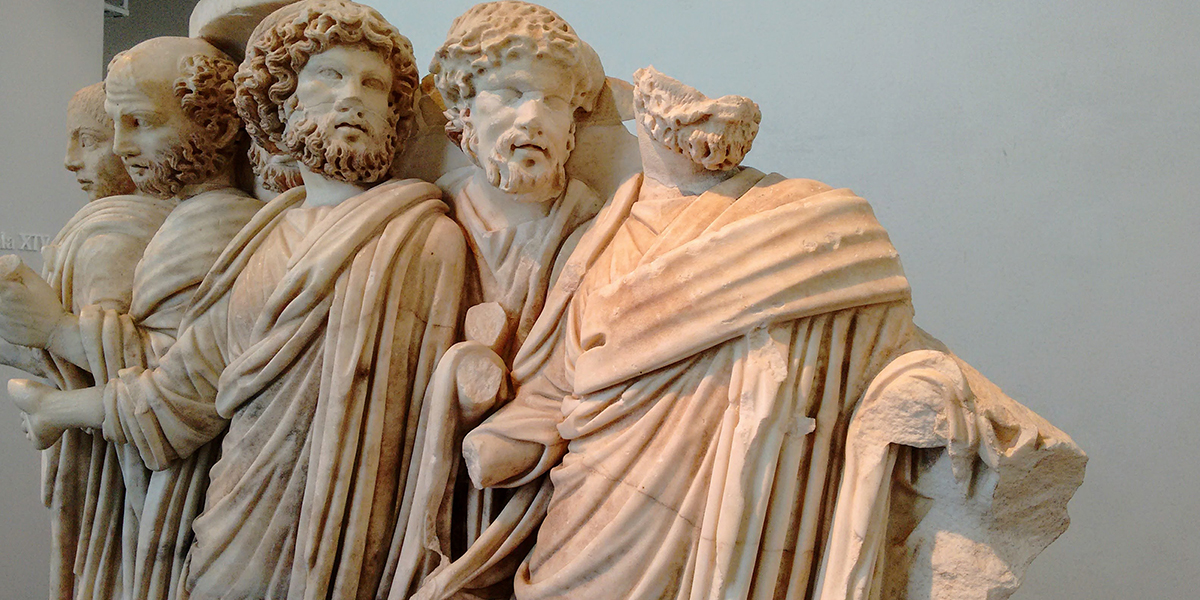
The Stoics and the Epicureans are the historically the last voices from antiquity showing awareness of what has become the course of things in a world of tèchne. (Christianity has affirmed itself by incorporating much of Stoicism and Epicureanism). Stoicism and Epicureanism are two lines of thought and action which – behind their ‘scholastic’ differences – respond to a specific human need: how to find balance between theory and practice in life? They suggest to develop phrònesis (i.e. prudentia, that is, intelligence attentive to acting) as a core intellectual virtue, so that potential shipwreck is avoided: i.e. a scenario where tèchne has no other drive than itself, pure glorious deployment of power.
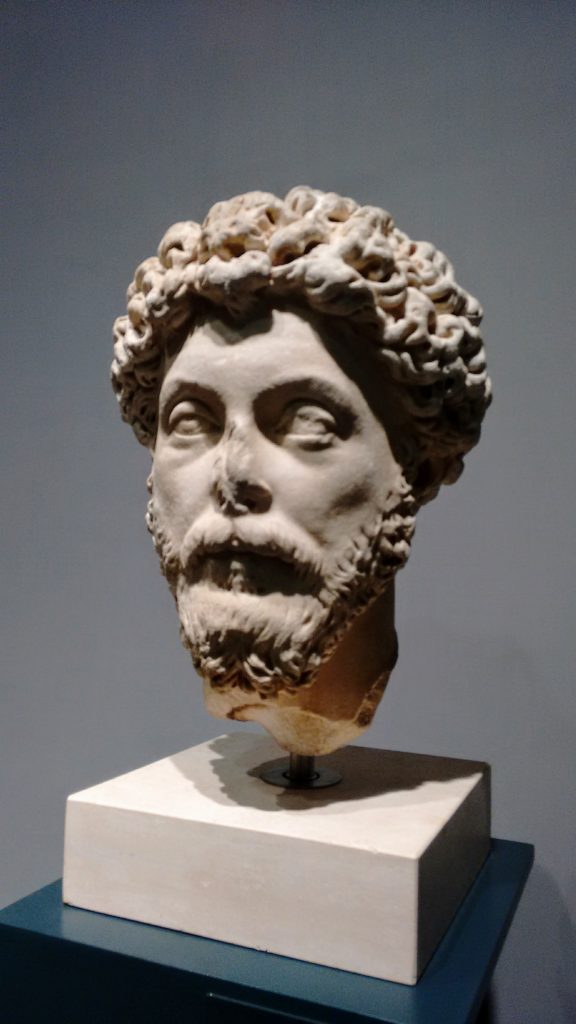
Stoicism[1] places oikèiosis, that is, the perfect understanding of our own role in natural reality, as the goal of human realisation. (òikos is, in the Greek language, the ‘home’, the environment where you live.) Oikèiosis is a perfectly ‘pure’ word, not contaminated by tèchne; it involves values such as ‘virtue’ and ‘availability’ and the ‘duty’ to keep the ‘house’ in which one lives in order. Cicero called virtus (virtue) what the Greeks called aretè (excellence), and officium the tasks that the good inhabitant of the òikos must carry out so that the entire universe will be in good order. Oiko-nomia in its original meaning and in connection with Stoic thought means “the law of the house” (ie: it concerns the useful rules for ensuring the proper functioning of the house and the environment). Mankind has gone very far since then, so as to lose the deeper meaning of ‘economics’ and having turned it into the supreme expression of tèchne.
Epicureanism[2] on the other hand places otium, that is, the best experience of oneself in one’s environment (i.e. the most radical perception of pleasure), as the goal of human fulfillment. With respect to this word too we can see an incredible evolution from its original meaning to today’s: nowadays, in the téchne‘s time, otium has become something despicable because it implies neglect of the urgency of doing and accomplishing. The dissatisfaction that accompanies our engagement in tèchne (intrinsic to it because our will is unlimited and tèchne is an expression of it) is the opposite of the satisfaction that is experienced in otium. Here, in perfect balance between desire and what the natural environment offers, Epicureanism suggested to seize happiness. We must not forget that “garden” (kèpos) is the name that Epicurus gave to his school.
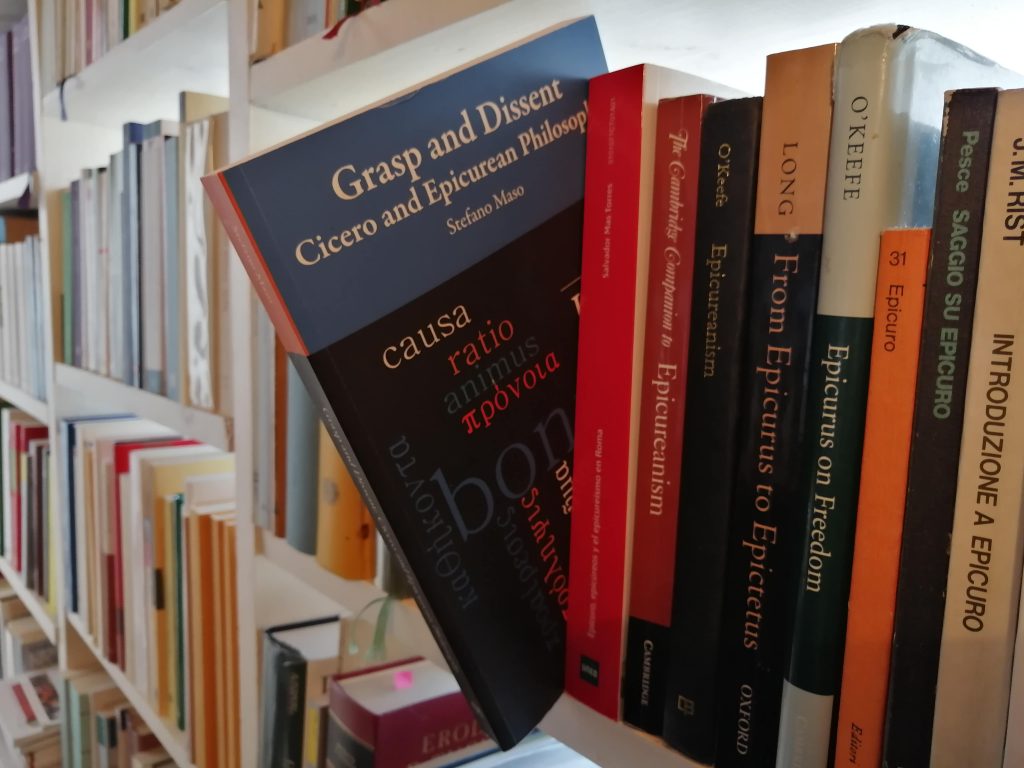
The study of classical philosophy teaches us something about the evolution of human thinking and makes us aware of our yielding submission to tèchne, which we have built but which conditions us[3].
In COVID-19’s time, looking what is happening to humanity through the lenses of the ancients and with awareness of how we have become what we are might be more helpful than ever.
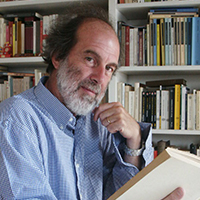
Stefano Maso is Associate Professor in Ancient Philosophy at the University of Ca’ Foscari – Venice.
His research interests concern the sophistic philosophy, Aristotle, Stoicism and ancient roman philosophy. He is preparing a new publication (under contract with De Gruyter) on Cicero as philosopher. He is co-editor of “Lexis” review and collaborates to SPIDER international project.
[1] In Le regard de la vérité. Cinq études sur Sénèque. Paris, L’Harmattan 2006, I highlighted the fundamental features assumed by the Stoic doctrine in the Roman context. T. Brennan, The Stoic Life. Emotion, Duties, and Fate. Oxford, Clarendon Press 2005, explains how to live today following Stoic ethical principles.
[2] J. Warren, in the fifth chapter of Facing Death: Epicurus and his Critics. Oxford, Clarendon Press 2004, explains how to live an epicurean life. In Grasp and Dissent. Cicero and Epicurean Philosophy, Turnhout, Brepols 2015, I highlighted the way in which Epicurus’ doctrine was implemented in Rome.
[3] My alternative way of interpreting contemporary reality is sketched in Fondements philosophiques du risque, Paris, L’Harmattan 2006.
Find out more about recent research in classical philosophy in our journal, Ancient Philosophy Today, which is published twice per year. Stefano will be appearing as a contributor in a forthcoming issue.