
-
Q&A: ‘Wladzio D´Attainville and the House of Balenciaga (1924–1948)’
Read more: Q&A: ‘Wladzio D´Attainville and the House of Balenciaga (1924–1948)’Ana Balda uncovers Wladzio D’Attainville's crucial impact on Cristóbal Balenciaga's fashion empire.


Ana Balda uncovers Wladzio D’Attainville's crucial impact on Cristóbal Balenciaga's fashion empire.

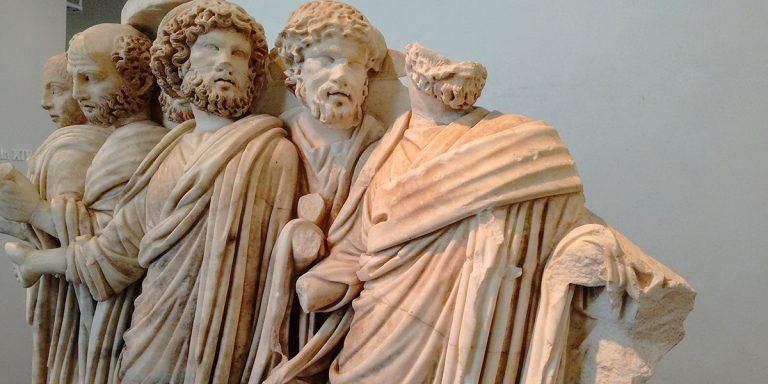
Take a peek at the book extract from the recently published Lucretius II: An Ethics of Motion by Thomas Nail. How can the fear of death lead us to unethical action? In his didactic poem De Rerum Natura, Lucretius tell…

I have always liked in French the word esprit, and this is not very surprising for a philosopher. In 2014, I wondered what Deleuze and Guattari had to say about the word esprit in A Thousand Plateaus. I possessed a…

By Heike Henderson What can contemporary techno thrillers tell us about possible future developments in the areas of surveillance, data mining and predictive technology? In my article for the newly launched journal Crime Fiction Studies, I analyse how bestsellers by…

Last year, near the centenary, Scottish Affairs published my article about the mythology surrounding the so-called ‘Battle of George Square’ on 31 January 1919. This followed another paper published shortly before, summarising the results of my searches in the archives.…

At the end of his first year of what would turn out to be thirteen years teaching at Harvard, Alfred North Whitehead wrote a letter to his eldest son, North, in which he discussed how he felt about teaching his…

Trips into history. Journeys to the future. Encounters in the present with visitors from the future or past. There are no limits with time travel stories. Some of the first telly I fell in love with as a kid was…

Even as strides toward gender equality have been made in the last century, the notion that gender is a binary divided between those who determine the social world – men – and those who need to be determined – women…

By Tom Angier Does ethics need religion? Do we need to believe in God to be good? These are standard questions in moral philosophy. Strangely, however, they are not asked about (arguably) the greatest philosopher in the Western tradition: namely,…

James Williams argues that one of the main lessons of the search for an egalitarian sublime is that exceptional achievements in sports should not be called 'sublime'.