
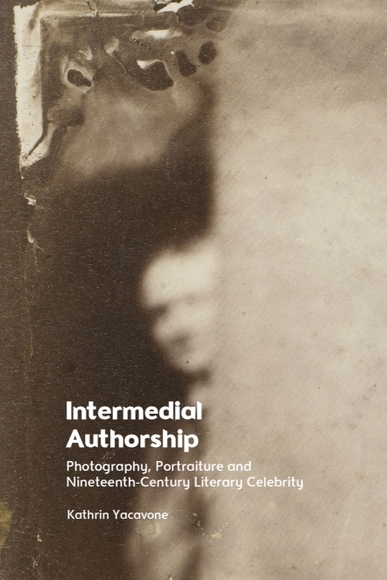
Intermedial Authorship: Photography, Portraiture and Nineteenth-Century Literary Celebrity analyses photographic portraits of nineteenth-century authors as exemplars of intermedial authorship and modern literary celebrity culture.
Tell us a bit about your book.
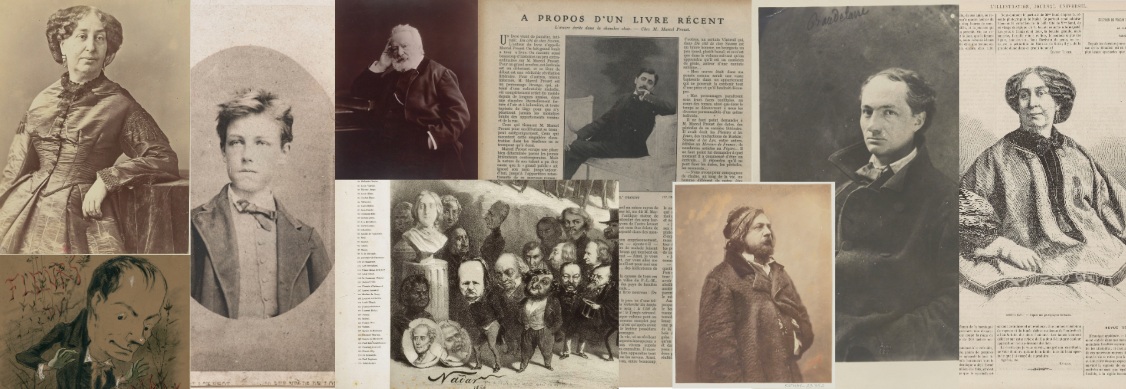
The book starts from the premise that, in modern media societies, authorship – in a narrowly defined literary sense as well as in a broader cultural context – is always ‘produced’ and received within a complex field of media relations, including visual and textual media. In our contemporary digital media environments, it is also quite common to experience literary authorship as an intermedial phenomenon, – we often know the faces of authors without even having read their works owing to their presentation as cultural celebrities in popular visual culture alongside film stars and music icons. My book traces the origins of these media phenomena through the lens of the emergence and rapid spread of the photographic author portrait in the nineteenth century. Within the increasingly visually mediatized society of the industrial age, I show that literary authors used photography to shape their ‘image’ and to evolve with the rapidly expanding modern celebrity culture of which they were a part. The book thus looks at the much discussed and contested topic of authorship through a media studies perspective and argues that it must be reconceived as fundamentally intermedial rather than just textual. This necessarily entails analyzing how images of authors actually circulated and how they were disseminated, including as frontispiece illustrations in literary works, in print journals and magazines, as freestanding, collectable images, or in so-called ‘galleries’, which were a type of serialized publication with monthly deliveries to subscribers.
What inspired you to research this area?
Genealogical narratives of origins produce their own myths and legends, but if I had to pin down an initial moment of inspiration for the research for this book, it would have to be my reading of a text by Roland Barthes. Well known for his ideas about authorship, among his last texts was a reflection on Marcel Proust, his eponymous novel In Search of Lost Time, and portrait photographs of the author, his family, friends and acquaintances that found their way into the fictional world. In this text from 1980 (but published only in 2003) Barthes contemplates the relation between an author and their work through these photographs from the famous studio Nadar. This illustrated text fascinated me and I thought that it would be worthwhile exploring Barthes’s line of thought back to its historical beginnings in the nineteenth century. Fittingly, my book now ends with a chapter on Proust, although Barthes does not feature very prominently.
What was the most exciting thing about this project for you?
The book is based on extensive archival research, which is notoriously unpredictable and potentially disappointing, if one does not find what one hoped for. However, very early on in my research, I was rewarded by exciting discoveries in photography archives and in the collections of estates of authors (e.g., Balzac, George Sand or Victor Hugo) and photographers (the Nadar collection housed in the French National Library, among others). I realised that, starting with the invention of photography in the nineteenth century, all authors’ archives contained photographs, even if they were not publicly known. The authors I looked at are all canonical and well researched from a purely literary studies angle, which made my new findings about their multifaceted entanglements with photography (as critics, collectors, and as part of photographic communities, along with being sitters for their portraits) even more surprising in a sense.
Did you get exclusive access to any new or hard-to-find sources?
Most archives I visited are public and my access was not exclusive in that sense. However, it is probably quite unusual to pursue archival research in literary or media studies. It was my background in photography history that opened my research perspectives to archival work and to historical material. I did find many documents and images during the process that will remain unpublished for the time being. Archival work always produces an enormous material surplus and even never-seen material ultimately remains unpublished.
Through the archival research, I also got into contact with private collectors and auction houses who granted me access to some hard-to-find author portraits in their original (material) form. As a researcher who is also interested in material culture studies, it was very exciting to hold original photographs in my hands that – as reproduced images – most scholars of the authors in question, including myself, know well. There clearly is an ‘auratic’ dimension to photographs as well, to evoke Walter Benjamin’s famous concept.
What’s next for you?
In my case, there were substantial gaps between the archival research, the writing of the book and its publication, and I have already been pursuing a number of other projects. However, the publication of a book also marks an end and a new beginning, in some way. The conclusion of my book is titled “Intermedial Authorship in the Era of Networked Imaging and Generative AI” and points towards my current interests relating to the cultural impact of generative AI with respect to the aesthetic category of style. But I also remain interested in photography and how current technological and medial developments recast the medium’s history in a new light. The historical understanding of media change that my book is also focused upon is extremely helpful in mapping and analyzing the current epistemological shift brought about by AI.

About the author
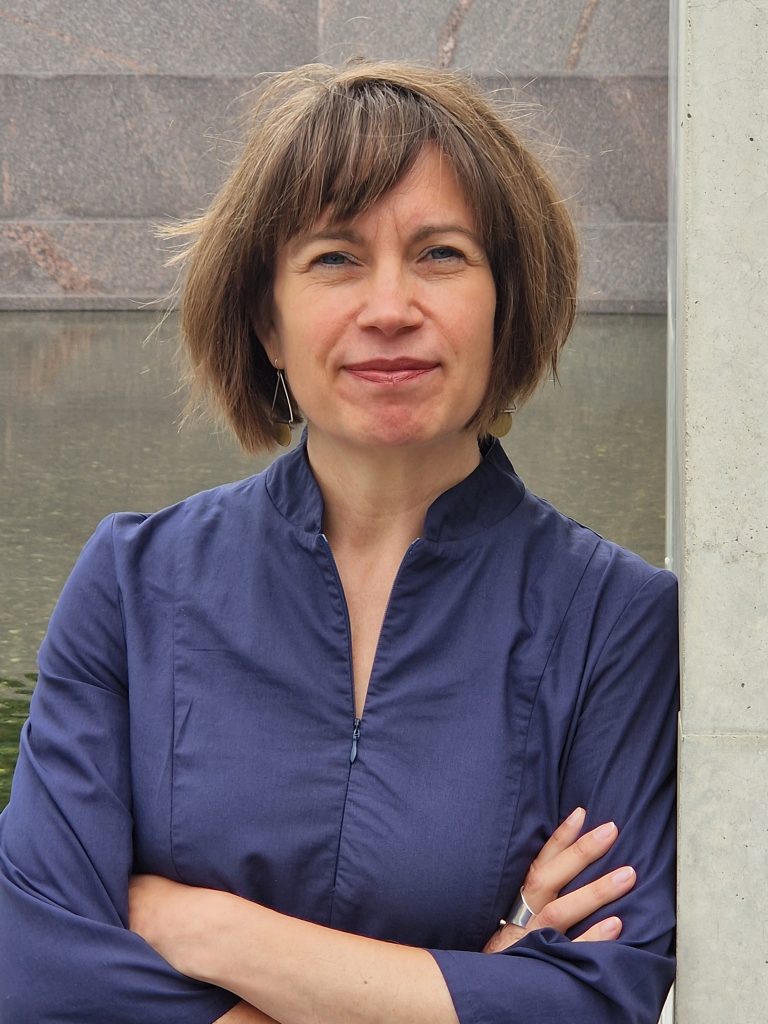
Kathrin Yacavone is currently Interim Professor in Media Studies at the University of Freiburg (Germany), and researches and teaches in the Department of Media Studies at the University of Marburg. As a media studies scholar and photography theorist with an interest in French culture, her work often concerns questions of media relations, the cultural history of photography from the 19th century to the present, and the cultural implications of generative AI.