
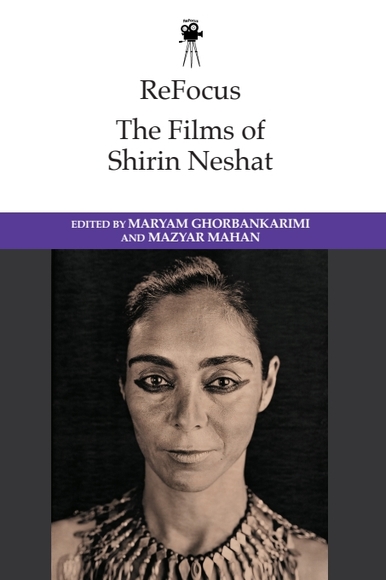
ReFocus: The Films of Shirin Neshat offers the first comprehensive study of the internationally acclaimed Iranian visual artist and filmmaker whose work bridges cinema, photography and installation art
Tell us a bit about your book
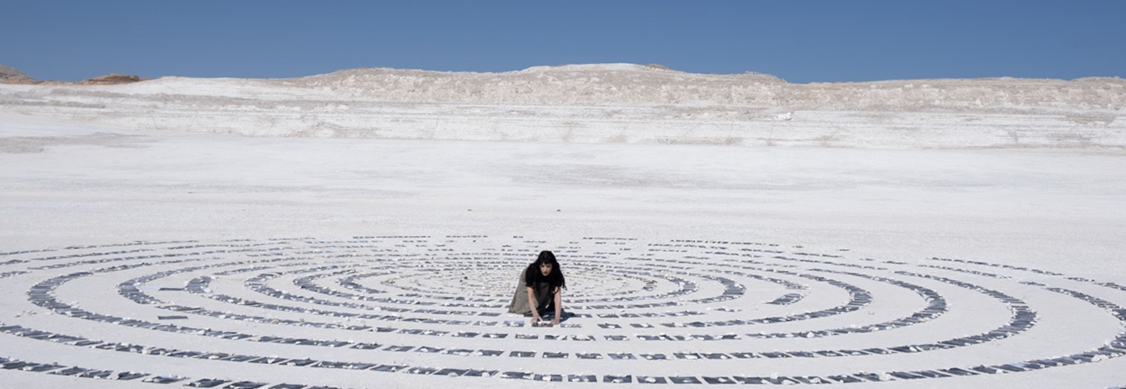
Mazyar Mahan: ReFocus: The Films of Shirin Neshat is a collection of scholarly essays that examines the work of one of the most influential Iranian artists and filmmakers working internationally. Shirin Neshat occupies a distinctive position between cinema and visual art, and her work engages with questions of gender, identity, displacement, political power, and artistic expression. The collection examines these concerns across her photography, video installations, and feature films, drawing on different theoretical and disciplinary perspectives. One of our main motivations was to reconsider how existing scholarship has approached Neshat’s work. Much of the critical discussion focuses on her relationship with Iran, her experience of exile, and her representations of Iranian women. While these questions are important, we felt there was room for a broader conversation about her artistic practices, aesthetic choices, and contributions to contemporary cinema and visual culture.
Maryam Ghorbankarimi: Having previously edited a volume on Rakhshan Banietemad, I was delighted to have the opportunity to dedicate another book to the work of an extraordinary Iranian woman filmmaker. Although Neshat and Banietemad have followed very different artistic paths, both have made remarkable contributions to how women’s experiences are represented on screen. What particularly interested me about this collection was the opportunity to examine Neshat as a filmmaker, paying close attention to her cinematic language, aesthetic choices, and the ways she uses the moving image to explore women’s experiences, power, and resistance.
What inspired you to research this area?
Maryam Ghorbankarimi: My first encounter with Shirin Neshat’s work was in 2003, as a film student at Ryerson University in Toronto, where she gave a masterclass as part of the Kodak Lecture Series. She screened several short films, including Passage (2001) and The Last Word (2003). I still remember the pride I felt as a young Iranian student in Canada, seeing an Iranian woman artist celebrated internationally. Her visual language left a lasting impression, and I could never have imagined that, over twenty years later, I would be co-editing a book about her work.
Returning to those early encounters has been particularly meaningful. In my chapter on her more recent film The Fury (2023), I revisit The Last Word, tracing the artistic and political concerns that continue to shape her work.
Mazyar Mahan: My interest in Neshat developed through my broader research on Iranian expatriate cinema. Having lived outside Iran for many years, I have been particularly interested in how filmmakers who work outside their countries of origin negotiate questions of identity, belonging, memory, and political responsibility.
Neshat is a particularly fascinating figure in this context. She has spent much of her artistic career outside Iran, while Iran continues to occupy an important place in her work. Her films often reconstruct spaces, histories, and experiences that she approaches from a geographical and political distance. This relationship between the artist, the homeland, and the conditions of production connects directly to the questions I explore in my own scholarship.
I was also interested in the tension between Neshat’s international recognition and the relatively limited scholarly attention given to her filmmaking as a whole. Although her photography and installations have received considerable critical attention, her cinematic work deserves more engagement. This gap motivated our decision to bring together different scholarly perspectives in a single volume.
What was the most exciting thing about this project for you?
Maryam Ghorbankarimi: Without a doubt, one of the greatest joys of this project has been working with Mazyar Mahan. We brought different experiences and perspectives to the book, but shared a genuine passion for Neshat’s work. What began as an academic collaboration has developed into a wonderful friendship, which I truly cherish. Another unforgettable highlight was our series of conversations with Shirin Neshat in preparation for the interview chapter. Across approximately five sessions, we had the privilege of hearing her speak so generously and openly about her work, her memories, and her creative journey. These conversations were a rare opportunity to engage with an artist I have admired for so many years, making the experience all the more meaningful to me.
Mazyar Mahan: One of the most rewarding aspects of this project was working with Maryam Ghorbankarimi. I was already familiar with her EUP volume on Rakhshan Bani-Etemad and admired her work before we started collaborating. I learned a lot from her throughout the editorial process. I particularly appreciated her generosity and openness to exchanging ideas. Over time, we developed a close friendship, and her mentorship became an important part of my experience with this book.
I also enjoyed engaging with the different perspectives our contributors brought to Neshat’s work. Reading their chapters gave me opportunities to reconsider some of my own interpretations of her artistic practice. Writing my chapter on Neshat’s feminist authorship was particularly exciting because it allowed me to explore how she constructs her artistic voice through cinema and how her approach to filmmaking engages with questions of gender and power.
About the editors

Maryam Ghorbankarimi is Associate Professor of Film Studies at Lancaster University. Her research focuses on women’s representation in Iranian cinema, transnational feminist aesthetics, and the intersections of film, politics, and cultural memory. She is the author of A Colourful Presence: The Evolution of Women’s Representation in Iranian Cinema (Cambridge Scholars, 2015) and editor of ReFocus: The Works of Rakhshan Banietemad (Edinburgh University Press, 2021). She also co-edited The I.B. Tauris Handbook of Iranian Cinema (Bloomsbury, 2024) and ReFocus: The Works of Shirin Neshat (Edinburgh University Press, 2026)

Mazyar Mahan is a Visiting Assistant Professor of Film Studies at The University of Texas at Dallas, where he teaches courses on global art cinema, transnational cinema, and film criticism. Mazyar’s research focuses on transnational and diasporic filmmaking and contemporary Iranian and Middle Eastern cinemas, and his current book project examines Iranian expatriate cinema. Mazyar Mahan’s work has appeared in Transnational Screens, Mise-en-scène, and The Spectator. He is co-editor, with Maryam Ghorbankarimi, of ReFocus: The Films of Shirin Neshat (Edinburgh University Press, 2026). Mazyar Mahan is also a filmmaker. His films, Return of the Repressed (2023), Exile Echoes (2024), and A Drop at a Time (2025), have screened at festivals in the U.S. and abroad and have won multiple awards.