
by Katherine Walker
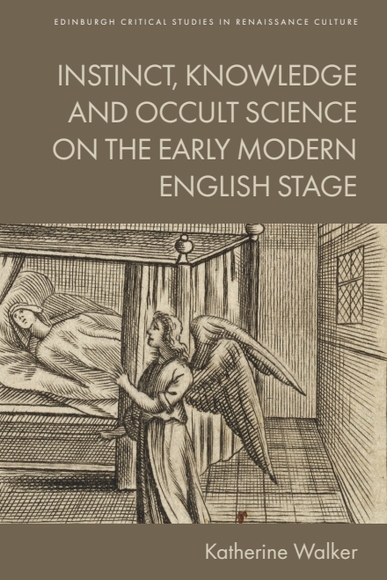
Instinct, Knowledge and Occult Science on the Early Modern English Stage traces how instinct shifted in the face of new cultural imperatives during the Renaissance.
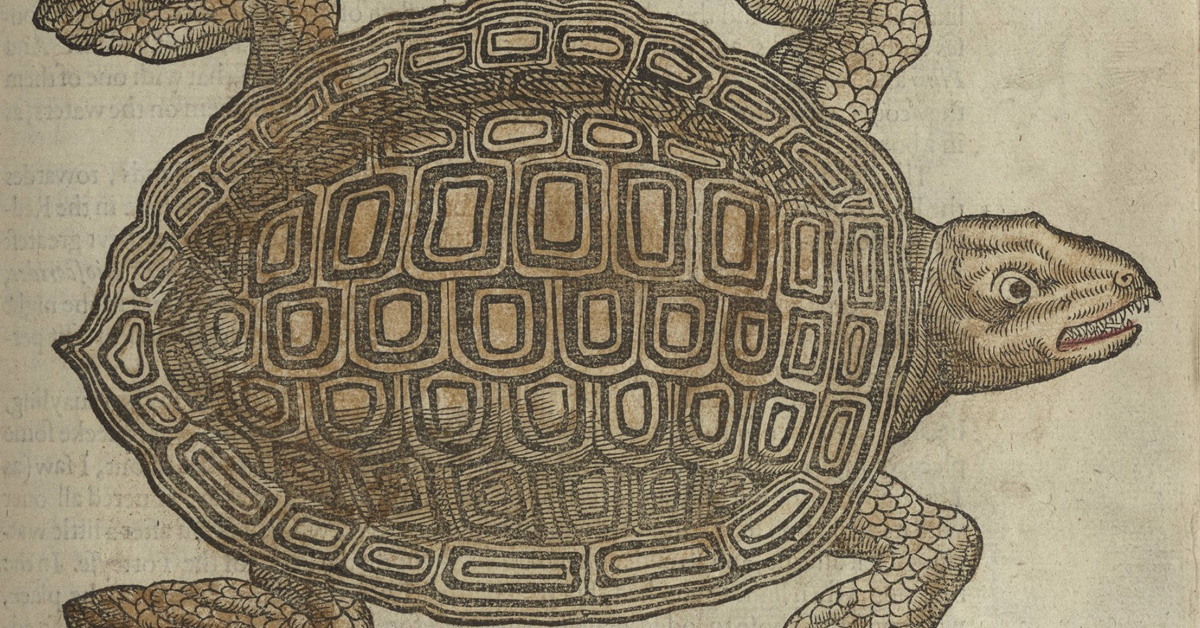
What does the word instinct mean to you? Perhaps it’s the gut feeling that something is about to happen. Perhaps you recall the image of a mother responding to a baby’s cries, or how newly hatched turtles know to head towards the sea. Maybe you think of that sizzling thriller with Michael Douglas and Sharon Stone, Basic Instinct.
Instinct was not always described as an automatic impulse that was hardwired into our bodies. During the Renaissance, instinct was a much more perplexing idea. Instead of focusing on what instinct is and what it does, in the early modern period scholars wondered: where is instinct from?
Sources of Instinct
That question wasn’t easy to answer, and responses ranged from God, the environment, the stars, and the devil. Some thought angels provided instinctive warnings to their charges. Others speculated that human intellect prevented us from the instinctive happiness that other animals enjoyed. And some claimed that witches and criminals worked through instinct to influence others.
To take one example, the author of a famous work titled The Discovery of Witchcraft, Reginald Scot, considered how guardian angels work to shepherd their charges. As Scot writes, angels have different methods:
Their Office is said to be, fore-warning the person of eminent danger, sometimes by inward instinct, sometimes by dreams in the night, and sometimes by appearing outwardly.
There are three options here, but the inward instinct that Scot cites was also thought to be present in dreams and even in the appearance of apparitions, as in Scot’s third option.
The Renaissance Magical World
Scot’s primary goal is to show how witchcraft is not truly practiced by old, persecuted women. But that doesn’t mean that Scot banishes all occult possibilities. Instead, Scot is very a much a believer in angels and demons. And both operate through instinct.
Angels and demons not only have instinct themselves, but they share it with humans. Such an idea might seem fantastic to us, but highlights something important about instinct in the early modern period—it was a pervasive and influential force, and instinct could arise from unusual sources.
These sources of instinct captivated a range of authors working in the occult sciences; not only in witchcraft texts like Scot’s, but also a variety of occult genres authors tussled with the idea that instinct was a force to be reckoned with. My recent book Instinct, Knowledge and Occult Science on the Early Modern English Stage traces these different fields to uncover how texts like almanacs, dream manuals, pamphlets on criminals, and long tomes on angels all shaped the language around instinct.
Actings Upon/With Instinct
As the book’s title claims, however, instinct was also on the stages of the Globe or the Rose. Importantly, upon the English Renaissance stage, instinct was something that actors performed. In the works of Christopher Marlowe and William Shakespeare, for example, characters speculate on why their bodies give signals that their minds cannot comprehend.
We can see this performance of instinctive knowledge at a number of critical moments, such as when the citizens of London anxiously discuss what is going to happen to their nation. As they debate what is in store for them, one of the men offers up a perceptive conclusion:
Before the times of change, still is it so:
By a divine instinct men’s minds mistrust
Ensuing dangers; as by proof, we see
The waters swell before a boisterous storm.
But leave it all to God. (2.3.43-47).
To the citizens, instinct derives from God. The divine forewarns his subjects that trouble is on the horizon, and such an upheaval will affect everyone in the nation, from the crown to the laborer.
Trusting Instincts
While today instinct might not carry the same stakes that it did for those in Renaissance England, it is still a concept that we use to think about the environment, our bodies, or the motivations behind certain actions. It was much the same in the early modern period, with the key difference that instinct was part of a whole body of occult scientific theories. It was shown repeatedly on the stage, and often it is characters who rely on their instincts who provide the most compelling insights.
Ultimately during the sixteenth and seventeenth centuries, instinct was an unstable but productive concept. Writers imagined instinct was shared among bodies. And this idea undercut the notion of human superiority over other beings. And if we owe the idea of survival instinct to later thinkers, we can nonetheless turn to the Renaissance to see how the idea of mind over matter was not always the most useful adage. Sometimes matter, of the body and its instincts, was just as useful as the mind.

About the author

Katherine Walker is an Associate Professor in the Department of English at the University of Nevada, Las Vegas. She is the author of Shakespeare and Science: A Dictionary and co-editor of the forthcoming The Handbook to Christopher Marlowe. Her work appears in journals such as English Literary History, Shakespeare and English Literary Renaissance, among others.