


by Suzanne Ferriss
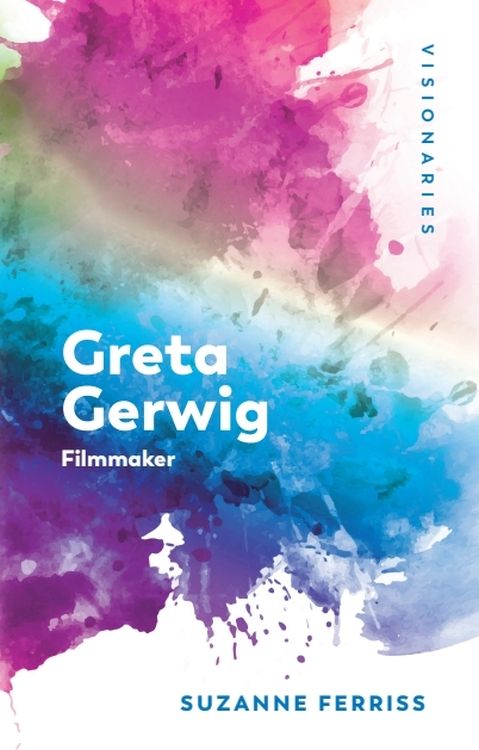
Examines the cinematic vision and worldview of director, Greta Gerwig
Greta Gerwig is the only female director whose screenplays have all received award nominations
Greta Gerwig was snubbed twice by the Academy of Motion Pictures when she was not nominated for Best Director for either Little Women (2019) or Barbie (2023). She did, however, earn a Best Director nomination for her first film Lady Bird (2017). And she is the only woman whose first three solo directorial achievements were each nominated for the Best Picture Oscar (though none went on to win the award). Like many of her peers, Gerwig has been recognized instead for her writing, with each of her feature films receiving Oscar and BAFTA nominations for their screenplays. To date, no other female writer-director can say the same. Each of her films features a female character who, like Gerwig, engages in an artistic practice: Christine McPherson imagines an alternative narrative of her life as Lady Bird, Jo March becomes a published author, and Barbie proclaims, “I want to be part of the people that make meaning, not the thing that’s made. I want to do the imagining. I don’t want to be the idea.”
Barbie may be Gerwig’s highest grossing film, but her two previous films were also major successes
In 2023, Greta Gerwig made history as the first female director to have grossed over US$1 billion in global ticket sales for Barbie. Her previous films also succeeded at the box office. A commercial and critical success, Little Women grossed over US$100 million in North America and the same globally for a worldwide total of US$218.9 million. Gerwig’s first film, Lady Bird, earned over US$50 million in the United States and Canada, and more than US$80 million worldwide, making it A24’s highest-grossing film at the time. (It still ranks among A24’s top five to date.) Gerwig may have got her start in independent film as an actress and screenwriter, but, as a director, she has achieved commercial success, even from her first film, demonstrating that art and commerce are not incompatible.
Gerwig kept the leather jacket she wore in Frances Ha
Before she directed her own films, Gerwig was hailed as “the definitive screen actress of her generation.” When she appeared in Noah Baumbach’s Frances Ha (2012), which she co-wrote, her character became an accidental fashion icon. Gerwig wore a vintage leather bomber jacket over sundresses and tights, a look she thought wasn’t “cool.” Audiences thought otherwise. Fashion is central to all of the films she has directed. Through costume, production and set design, they meticulously recreate imagined worlds that resonate with viewers in the present for what they have to say about identity and relationships in contemporary culture, particularly how our lives, especially those of women, are fashioned through clothing, décor, and architecture. Gerwig’s signature as a filmmaker is her material engagement with how women are fashioned, how they fashion themselves, and how they fashion art, including cinema, to refashion culture.
Gerwig’s favorite film is Singin’ in the Rain
An avowed cinephile, Gerwig is steeped in film history, from European art-house films to Hollywood crowd-pleasers. In Barbie, she references over forty films across seven decades of movie history in Europe and America, from its opening parody of 2001: A Space Odyssey to its Wizard of Oz-inspired ending. Her engagement with cinema is deep and thorough, from references to color to uses of music and dance. The touchstone is her favorite film Singin’ in the Rain, a film about filmmaking. Her allusions are far from superficial: Gerwig saturates the film form with references to cinema to playfully and pointedly undo gender conventions. She does the same with literary sources in Little Women, her “cubist” adaptation of Louisa May Alcott’s novel. Another female writer, Joan Didion, inspired Lady Bird, which offers an alternative to texts like John Steinbeck’s The Grapes of Wrath that have mythologized the American West.
Gerwig would rather be called a “realizer” than a director
Rather than “director,” Gerwig prefers the French equivalent, “réalisateur,” to convey the work of filmmaking. “Director,” she says, assumes that “all the stuff exists and you’re just telling it where to go.” By contrast, “the realizer seems to be a much closer description,” because “the stuff doesn’t exist. You’re sort of making it all appear out of thin air. It really only exists because you and all these people that you’ve gathered are going to realize it.” Her films showcase that they are made things; they are the material products of Gerwig and her teams of designers, captured by cinematographers and shaped by editors. Made with tangible, tactile materials—fabrics, furniture, structures—her films reflect the process of making, from creating a self to a narrative, or both at once.
About the author
Suzanne Ferriss is the author of Greta Gerwig: Filmmaker, as well as The Cinema of Sofia Coppola: Fashion, Culture, Celebrity (2021) and the BFI Film Classics volume on Lost in Translation (2025). She also edited The Bloomsbury Handbook to Sofia Coppola (2023).