


by Wayne Wong
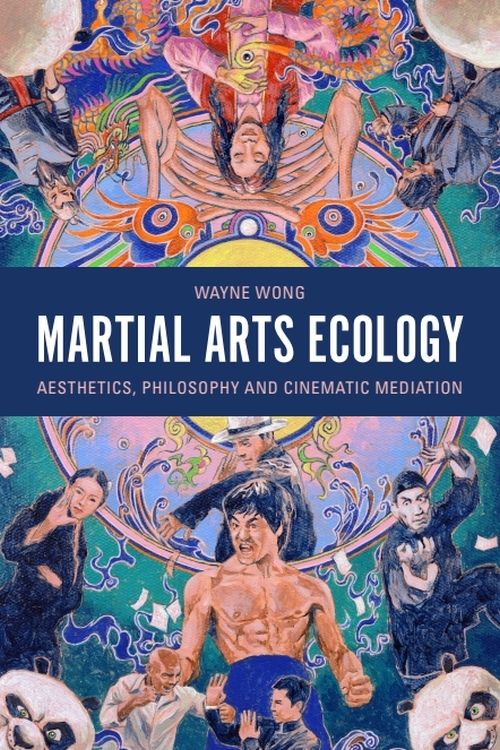
Proposes a new approach to studying martial arts cinema as part of the media ecology by locating various manifestations of tranquility in action
Martial arts cinema is often discussed through intensity. Speed, impact, authenticity, physical mastery. These are familiar ways of valuing action on screen. Yet when I began writing Martial Arts Ecology: Aesthetics, Philosophy, and Cinematic Mediation, I found myself drawn to something quieter. Moments when action slows down. When movement becomes thoughtful rather than forceful. When cinema asks us not just to watch bodies fight, but to attend to how they think, feel and relate.
This is where the idea of martial arts ecology emerges. Rather than treating martial arts cinema as a self-contained genre, I approach it as part of a wider media environment shaped by philosophy, technology, pedagogy and everyday practice. Seen this way, action cinema is not only about expression or authenticity. It is also about tranquility, ideation and mediation.
From expressivity to ideation
Much writing on martial arts cinema values expressivity. How real is the movement? How skillful is the performer? How intense is the action? These questions matter, but they are not the whole story.
Martial arts traditions across East Asia place equal emphasis on yi or ideation. This refers to intention, mental clarity and the capacity to act without excess force. In cinema, ideation often appears in subtle ways. A pause before a strike. A calm response to provocation. A fight that resolves not through domination, but through understanding.
By foregrounding ideation, martial arts ecology shifts attention away from spectacle alone and towards how cinema teaches us to inhabit movement. Action becomes a way of thinking, not just a display of power.
Tranquility as an aesthetic resource
Tranquility might seem like an odd term for action cinema. Yet martial arts films are full of quiet scenes. Training sequences. Moments of stillness. Landscapes that slow the rhythm of combat. Even digital games and animation, often assumed to prioritise speed, rely on cycles of calm and intensity.
Within a martial arts ecology, tranquility is not the absence of action. It is what allows action to mean something. It gives viewers space to reflect, to breathe and to connect movement with emotion and ethics. In a media environment saturated with noise and acceleration, these moments matter more than ever.
Martial arts ecology beyond the screen
Thinking ecologically also means thinking practically. Over the past few years, these ideas have shaped Project Sifu, a UK-based participatory filmmaking initiative working with young people. Rather than asking participants to perform martial arts at a high technical level, the project invites them to explore movement, framing and storytelling at their own pace.
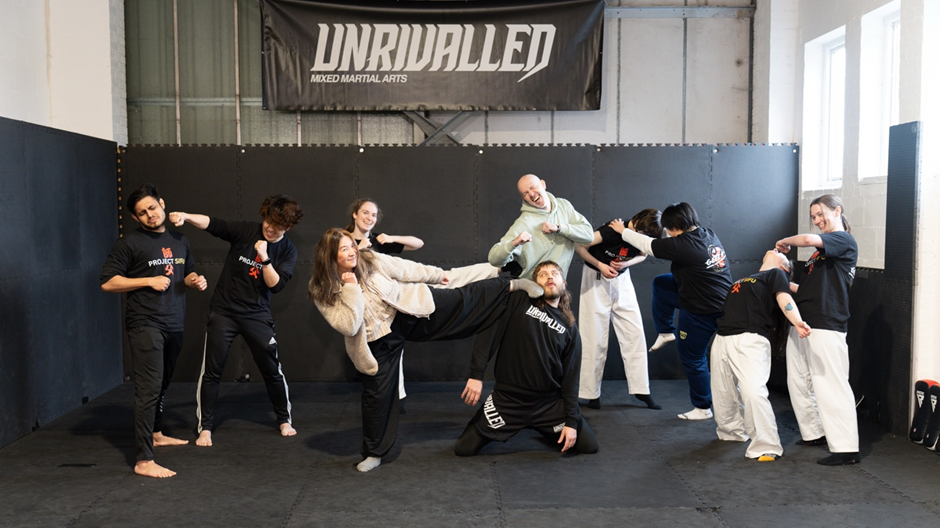
Photo © Wayne Wong
Taken as part of Project Sifu (UK-based participatory martial arts filmmaking project). Used with permission.
In workshops, martial arts cinema becomes a tool for learning and care. Participants re-enact scenes, film each other and discuss how movement feels on camera. Calm is valued as much as skill. Attention matters more than accuracy. What emerges is not training for competition, but a shared process of creative reflection.
Here, martial arts ecology becomes tangible. Cinema mediates between bodies, ideas and communities. It allows young people to see themselves differently, not as performers striving for perfection, but as collaborators exploring meaning through movement.
Why martial arts cinema still matters
Martial arts cinema continues to circulate across platforms. Films, streaming series, animation, games and short-form video. Its relevance today lies not only in nostalgia or spectacle, but in its capacity to model alternative relationships to action.
Martial arts ecology helps us see how these media forms teach us to slow down, to attend to intention and to find calm within motion. At a time when speed and productivity dominate cultural life, this is not a minor insight. It is a reminder that action can be reflective, ethical and shared.
Looking ahead
If martial arts cinema has a future beyond repetition, it may lie in these quieter dimensions. In how movement is mediated, learned and lived across different contexts. Martial arts ecology offers one way of thinking through that future.
What might it mean to take tranquility seriously in action cinema today?
About the author
Wayne Wong is lecturer in East Asian Studies at the University of Sheffield. His research focuses on the politics, aesthetics and philosophy of global martial arts and action cinema.