

by Marianna Deganutti and Sabira Ståhlberg
This special issue of Comparative Critical Studies examines the complexities of mixed languages in literary texts.
In this interview, we dive headlong into the multidimensional world of Sabira Ståhlberg, a distinguished multilingual writer known for her innovative explorations of polyglot creativity. Her work challenges conventional notions of writing by embracing literary hybridization, the practice of blending languages and linguistic elements. Sabira’s unique approaches to crafting meaning invite readers to reconsider the dynamic nature of poetry in multiple languages.
Rich Linguistic Journey
Sabira Ståhlberg’s linguistic journey is as rich and multi-layered as her writing. Growing up in a multilingual environment, she has immersed herself in numerous languages and diverse cultural contexts including those from inner Eurasia – a field she has spent a lifetime studying and also holds a PhD in. This deep lived experience with extensive linguistic fluidity forms the foundation of Sabira’s creative process, allowing her to navigate and intertwine different linguistic threads within her literary works, creating unique textual and scriptual landscapes.
Role of Ambiguity
In Sabira’s view, the reader is a co-creator of meaning: “Every reader creates their own experience and interprets my texts in their personal way.” She does not seek to control the reading process but rather to foster it, “to create space and scope for imagination and to use language(s) in a way which is enriching and electrifying”.
A crucial element is ambiguity. Sabira notes that similar words across different languages can hold diverse meanings, creating a “kaleido-scope” of interpretations. “Shake the poem and it will change meaning, form, aspect, sound, thoughts, views”, she suggests while emphasizing the dynamic nature of polyglot poetry. This ambiguity often arises naturally, though the author may subtly highlight it for specific effects.
A Successful Hybrid?
The concept of a “successful” hybrid is far from straightforward. Sabira explains that success is a subjective variable: some hybrids emerge spontaneously but others demand careful crafting to ensure that they resonate beyond the writer’s personal understanding. She often puts in “very personal or fuzzy hybrids”, although she knows that “maximum one other person in this world” will understand what she refers to.
Sabira trusts in a shared human experience, believing that even obscure references can evoke relatable emotions or memories in her readers. Our common humanity, she argues, allows for connection even across unique individual stories.
Challenging Academic Conservatism
Historically, scholars have not always embraced literary hybridization, and many still perceive hybrids as errors. Sabira challenges this view, pointing out that academic research is often constrained by nationalist policies, in contrast to the freedom of polyglot writers who are “galloping madly through the endless steppe, climbing mountains, diving into rivers and seas, and roaming at will in deep forests”.
For Sabira, interferences, inferences, mistakes and all kinds of other “strange” or “non-standard” elements are not flaws but inherent aspects of creative writing. She even embraces spontaneous “errors” as they can contribute to layered meanings, often leading to or creating interesting hybridizations.
Polyglot Poem as Woven Tapestry
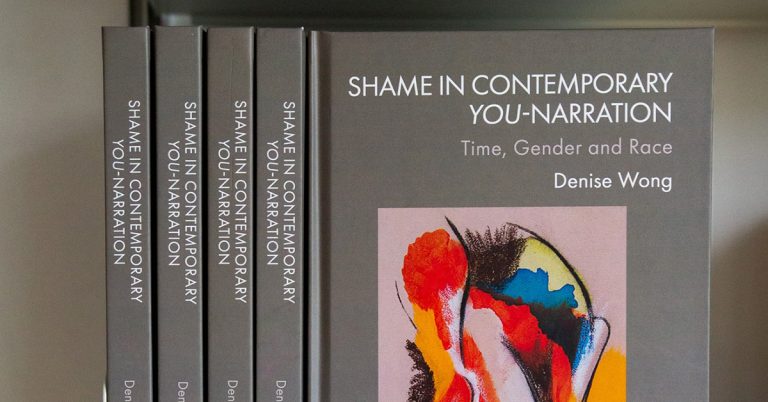
When asked how she linguistically merges disparate elements, Sabira reveals a far broader vision than binary perspectives. Her writings encompass a multitude of environmental, social, cultural, political and economic topics. The creative works, including Polyglotta Sabirica, Wan Sun, MoonSoon and tautay, demonstrate an increasing linguistic and content complexity, integrating audio, video, polyglot art, and even food recipes.
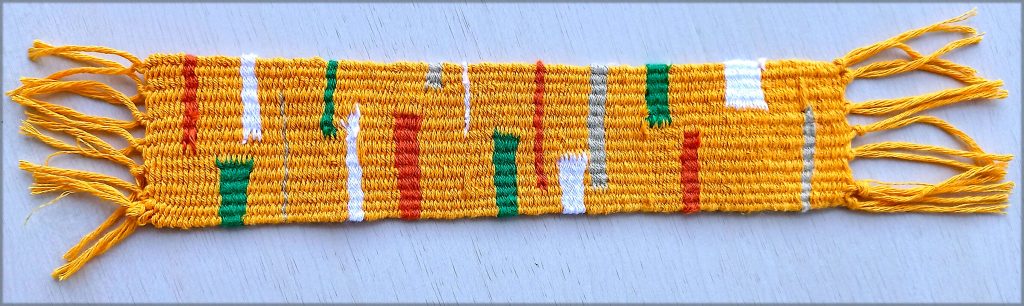
A polyglot poem, in Sabira’s view, is an “intriguing, multicoloured, -patterned and -layered silk carpet, woven with diverse techniques”. Just as brushing a carpet in different directions reveals new patterns, the readers’ understanding depends on their own perspectives, knowledge, and imagination.
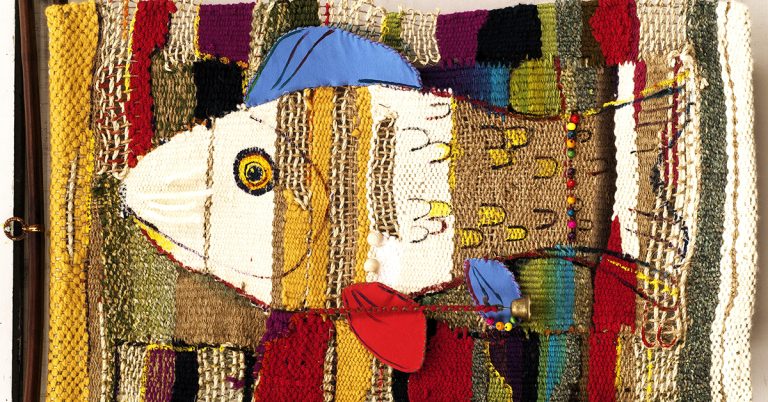
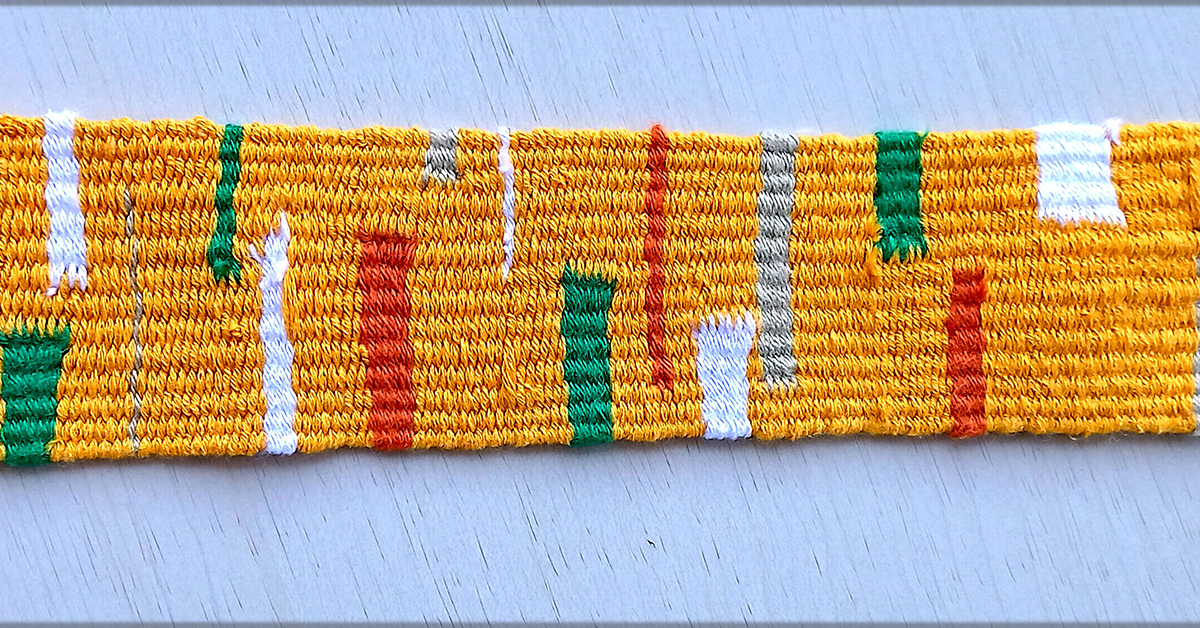
This approach should not come as a surprise: Sabira knits, weaves and makes other handicrafts, and sees a profound connection between handicrafts and writing: “One could say all my books are woven.” She describes her creative writing process as a selection of patterns and materials and setting up the warp before starting to weave line after line.
Accumulation of Meaning
Sabira firmly believes that literary hybridization increases the possibilities and quantity of creating meanings – “it is like augmented reality”. Hybrids allow for additional layers of significance and connotation, but she stresses that the ultimate depth of meaning depends on the author’s skill and complexity of thought, not just on the number of languages or the extent of hybridization.
While a present literary trend is going toward a “literature without meaning”, focusing on entertainment, multimedia and commercial success, Sabira expresses her preference for “intricacy, depth, broadness, and multiple dimensions” in texts. The conscious and automatic use of literary hybridization helps her achieve these layers, creating works offering rich rewards for those willing to embark on multilingual and multidimensional adventures. Sabira Ståhlberg writes for readers who, like her, appreciate elaborate patterns in carpets – both textual and tangible.