Skip to content
  • Cultural Studies
    • French Studies
    • Gender Studies
    • Irish Studies
    • Film and TV
    • Theatre and Dance
    • Islamic and Middle Eastern Studies
  • History
    • British History
    • Classics and Ancient History
    • Cultural History
    • Natural History
    • Religious History
    • Scottish History
    • World History
  • Language and Literature
    • Modernism
    • Literary Theory
    • Pre 19th Century Literary Studies
    • Post 19th Century Literary Studies
    • Scottish Literature
    • Atlantic Literature
    • Linguistics
  • Law
    • Comparative Law
    • European Law
    • Islamic Law
    • Roman Law
    • Scots Law
  • Politics, Philosophy and Religion
    • Religion
    • Philosophy
    • Politics
    • Political Philosophy
    • Scottish Politics
    • Film Philosophy
  • Publishing

  • About Us
  • Journals
  • Books
  • SUBSCRIBE TO OUR BLOG
Edinburgh University Press Blog

No results
  • Cultural Studies
    • French Studies
    • Gender Studies
    • Irish Studies
    • Film and TV
    • Theatre and Dance
    • Islamic and Middle Eastern Studies
  • History
    • British History
    • Classics and Ancient History
    • Cultural History
    • Natural History
    • Religious History
    • Scottish History
    • World History
  • Language and Literature
    • Modernism
    • Literary Theory
    • Pre 19th Century Literary Studies
    • Post 19th Century Literary Studies
    • Scottish Literature
    • Atlantic Literature
    • Linguistics
  • Law
    • Comparative Law
    • European Law
    • Islamic Law
    • Roman Law
    • Scots Law
  • Politics, Philosophy and Religion
    • Religion
    • Philosophy
    • Politics
    • Political Philosophy
    • Scottish Politics
    • Film Philosophy
  • Publishing
  • Q&A with Benjamin Dalton: Catherine Malabou and Contemporary French Literature and Film

    Q&A with Benjamin Dalton about his new book, which journeys through philosophy, literature, film and (neuro)science to discover how our bodies and brains transform throughout life.

    January 8, 2026
    Read more: Q&A with Benjamin Dalton: Catherine Malabou and Contemporary French Literature and Film

A brightly lit hallway lined with red numbered mailboxes or storage lockers on both sides. The walls, drawers, and lighting fixtures are all red, creating a striking monochromatic design. The polished floor reflects the light, and a white desk is visible on the left side near the entrance.

Libraries: Keepers of History and History Makers

Daniel Miele visits two Dutch universities, exploring the shared challenges between publishers and libraries.


  • Edinburgh University Press
  • October 20, 2025
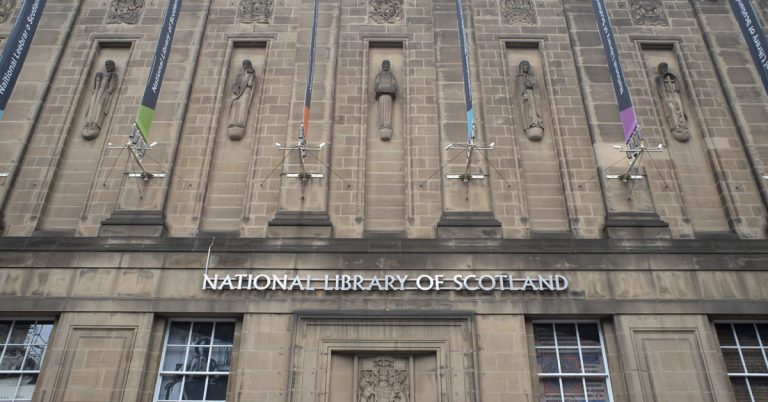
The facade of the National Library of Scotland.

A Nation Built on Books: The Role of Libraries in Modern Scotland

Scotland's National Librarian discusses the place of libraries in our cultural landscape.

  • Edinburgh University Press
  • June 18, 2024

Cultural Cooperation and Intellectual Freedom in “These Anxious and Baffling Times”

By Marek Sroka   Seventy-five years ago, Winston Churchill, in what was to become one of the most famous orations of the Cold War, declared that “from Stettin in the Baltic to Trieste in the Adriatic, an iron curtain has…
  • Teri Williams
  • April 8, 2021

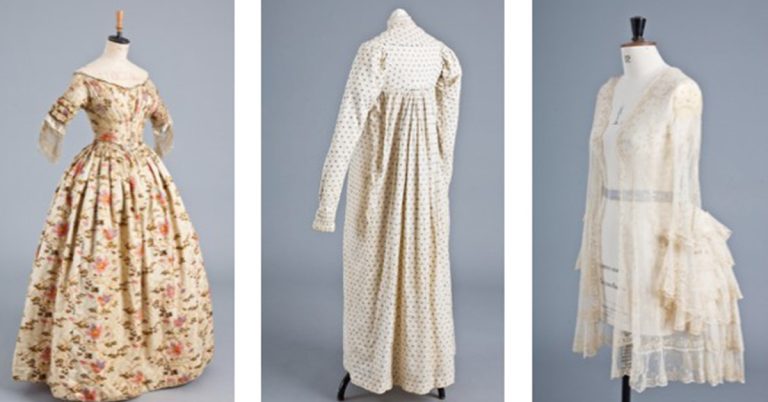
A Brief Discussion of University Art, Design and Media Archives as Catalysts for Creativity and Research

By Louise Chapman In 2012, I uncovered an array of boxes containing 177 items of dress in the School of Fashion and Textiles archives at Birmingham City University (BCU). Found in a store cupboard the assemblage included a large selection…

  • Teri Williams
  • November 12, 2020

Popular Posts

Q&A with Benjamin Dalton: Catherine Malabou and Contemporary French Literature and Film

A culturally diverse group of dancers performs among piles of books. They wear costumes with large numbers pinned to them, suggesting an audition or competition. Their movements are dynamic and physical, with one dancer holding another’s leg as others lean and bend in varied, expressive poses.

5 ways to (un)teach the canon

A detailed black-and-white illustration of several men in traditional Scottish Highland attire—kilts, plaids, and feathered caps—shaking hands in front of a small thatched cottage. A child stands nearby watching, and a crowd of villagers looks on from behind. Trees arch overhead, and one man carries bagpipes slung over his shoulder.

Jacobitism and Conceptions of Ethical Colonialism

The Scottish flag blows in the wind against a blue sky, with light white clouds

A country that cares: the rocky road to transforming Scotland’s social care system

How Vocatives in Lebanese Arabic Reveal the Subtle Art of Address

Subscribe To Blog Via Email

Enter your email address to subscribe to this blog and receive notifications of new posts by email.

Copyright © 2026 - Edinburgh University Press | All Right Reserved. | Privacy Policy