

by Detlef von Daniels
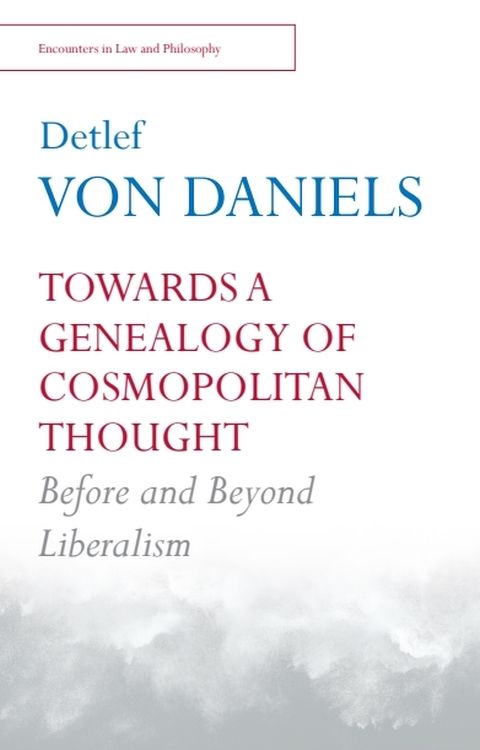
Uncovers the hidden roots and future pathways of cosmopolitan thought in an age of fragmentation and reorientation
Tell us a bit about your book.
Ideally, it would not have been a book but – like most essays in political philosophy – a political pamphlet with just two lines: ‘Do not try to save your courage! Do not wait for better times!’ (Wolf Biermann). Unfortunately, it became a bit longer.
The book begins with a rather uncomfortable observation: liberalism seems to be losing ground, and cosmopolitanism, once its intellectual spearhead, is hardly leading the charge. Meanwhile, illiberal and populist narratives are flourishing, especially in the digital arena. What is to be done? Another theory of justice? Another defence of universal values? I suggest something less fashionable: a journey into the past. Not to seek consolation in better times, but to understand how we got here and perhaps rediscover some forgotten paths still worth exploring.
Along the way, Martin Heidegger turns out to be an unexpectedly influential figure behind challenges to liberalism from both the right and the left. His appropriations of antiquity and even Kant, however, are not the last word. Instead, Kelsen’s theory of law emerges as a sober antidote that gives rise to two models of post-foundational thought.
What inspired you to research this area?
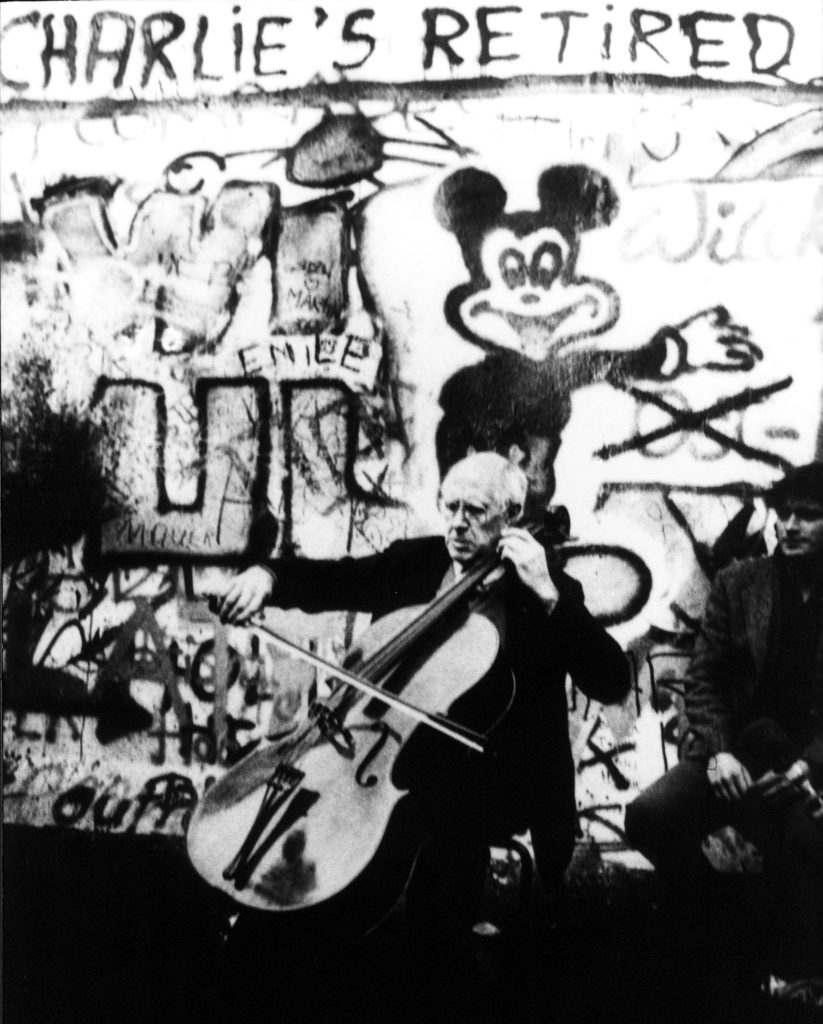
Mstislav Rostropovich performs some pieces by Bach at Checkpoint Charlie in celebration of the new freedom for East Berliners and in memory of those East Berliners who died trying to gain that freedom.
Emmett Lewis, Jr. / ©Stars and Stripes
I experienced the fall of the Berlin Wall and the subsequent wave of political, economic and social liberalisation across Europe. Although I was working in other areas at the time, I already felt a certain unease about the triumphant liberalism that dominated parts of academic discourse. By the time of the first Trump presidency, at the latest, it had become clear that we could no longer presume to have reached a ‘cosmopolitan plateau’ from which all other approaches could be judged and condemned. The emergence of a multipolar world order, populist challenges and postcolonial critiques have only reinforced these doubts. Having the German philosophical tradition in mind – and its historical failures despite the legacy of Kant and the Enlightenment – I was well aware that maintaining a critical stance would require a more comprehensive response, reaching beyond a narrowly conceived liberal tradition.
Did you discover anything particularly strange or surprising?
Kant is often hailed as the godfather of the liberal tradition, who unfortunately did not live another 200 years to dispel any doubts regarding liberal cosmopolitanism (whether this was Kant’s project is another question). I was surprised to realise that, towards the end of his life, he had a keen sense of a certain kind of critique, one that hails Plato and presumes direct insight into being in order to weaponise it against all critical philosophy. As the criticism was raised by a second-rate scholar (Schlosser) and Kant’s answer was rather ironic, the exchange is not widely known. However, the problems we face nowadays, with tech bros – like Schlosser – playing the philosopher to run (or ruin?) the free world, were already there. So, I agree: Kant did die too early.
Did your research take you to any unexpected places or unusual situations?
Literally, yes. This might come as a surprise, as I hardly left my desk.
However, at some point I realised that I had to turn to literary fiction to show the pragmatic presuppositions of philosophy. To put it in ordinary terms: not just philosophers but theories, too, live in the political world. Rather than developing this argument theoretically, e.g. with regard to legal pluralism, I introduced a fictitious character from Jonathan Littell’s novel The Kindly Ones, a pre-eminent linguist who uses the advance of the Wehrmacht to study an ethnic community whose members speak an Iranian language, practise the Mosaic religion and live according to the customs of the Caucasian mountain peoples. Even though he is well aware that the simplistic racial logic of the Nazis is spurious, he and his theories become part of the machinery of extermination.
I should add that the uplifting side of the pragmatic presuppositions requires artistic representation as well. The example of Franz Jägerstätter, portrayed in Terrence Malick’s film A Hidden Life, shows that standing up for one’s convictions requires, at some point, not another argument but an existential decision.
What’s next for you?
I would like to explore in greater depth a fragment by the ancient Greek poet Pindar, which I have also mentioned at the end of the book. Pindar writes that ‘Law, the king of all, / of mortals and immortals, / guides them as it justifies the utmost violence / with a sovereign hand’ and refers, by way of exemplification, to Heracles’ unwarranted cattle raid. These lines have been interpreted throughout the centuries, in antiquity by Herodotus and Plato, in more recent times by Carl Schmitt and protagonists of a belligerent, multipolar world order – but also by the German poet Friedrich Hölderlin. The idea is not to find the one right interpretation but to show how poetry and a specific register of philosophy might help to bridge apparently irreconcilable camps. So it is Hölderlin’s tower in Tübingen against Mar-a-Lago. We will see which lasts.
About the author
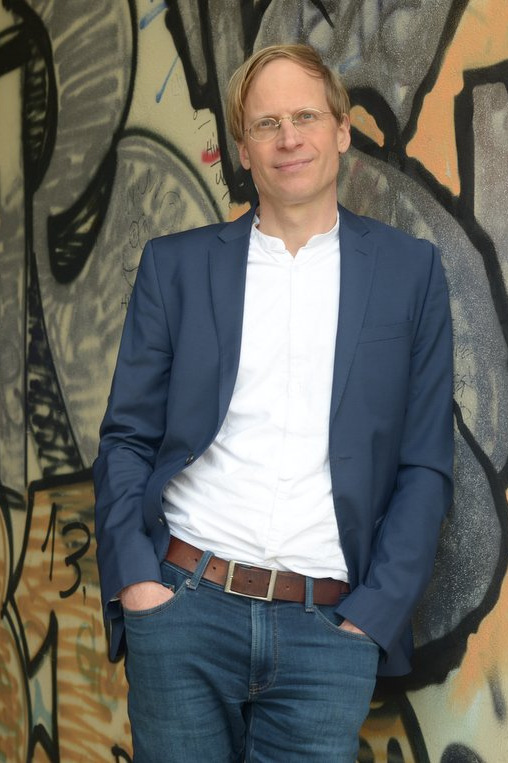
Detlef von Daniels is a political philosopher based in Berlin, working at the intersection of the history of political thought and legal philosophy. His research combines historical interpretation with systematic philosophical criticism, focusing on the historical presuppositions of liberalism and cosmopolitanism. He teaches the history of German philosophy at Freie Universität Berlin (FU-BEST).