
By Murtaza Shakir
Murtaza Shakir is the author of ‘Al-Mashhad al-Juyūshī: A Symbol of Triumph and Devotion‘ in the latest issue of the Journal of Late Antique, Islamic and Byzantine Studies.
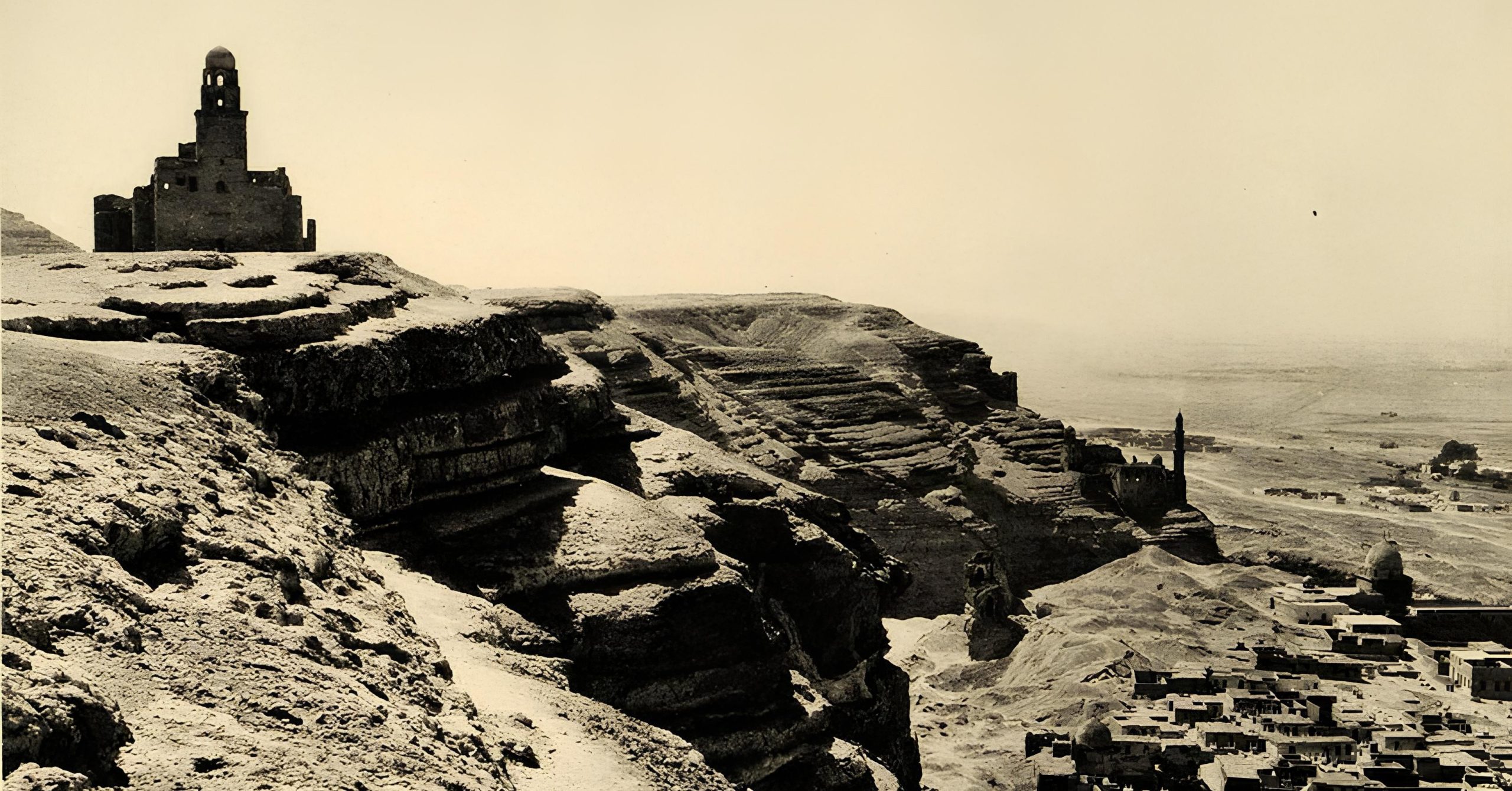
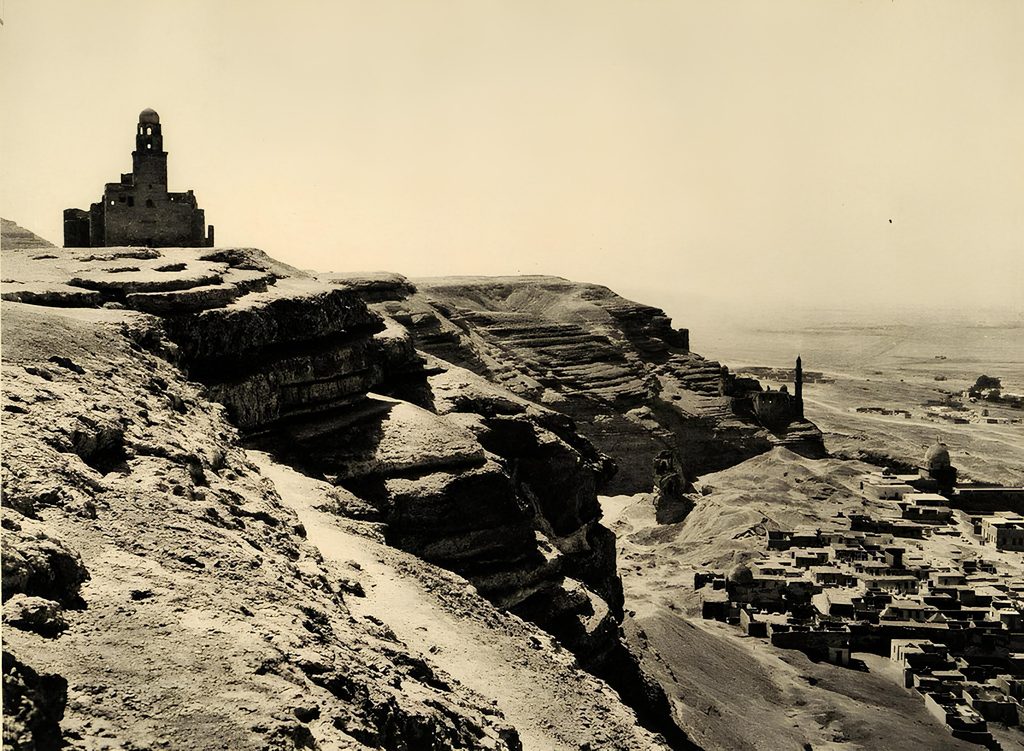
When we visit a medieval monument, we often admire its beauty before asking why it was built. Yet some buildings reveal their deepest meanings only when we look beyond their walls. One such monument is al-Mashhad al-Juyūshī, perched high on Cairo’s Muqaṭṭam hills. At first glance it appears to be a small Fatimid masjid. Look more closely, however, and it becomes clear that it tells a much larger story about power, memory and faith.
This is precisely what makes Fatimid architecture so fascinating. It was never simply about constructing impressive buildings. Architecture could communicate political ideas, preserve collective memory and express religious values—all at once.
Where Power Met Piety
Al-Mashhad al-Juyūshī was commissioned in 1085 by the Fatimid commander and vizier Badr al-Jamālī. By then, Egypt had endured years of political instability, military rivalries and famine caused by repeated low Nile floods and widespread rebellion. Badr was appointed to restore order, and his military and administrative reforms helped stabilize the Fatimid state.
Most accounts describe al-Juyūshī as a commemorative monument celebrating these achievements. But the building deserves to be understood in a broader way. Rather than merely marking a military victory, it reflects how Fatimid architecture transformed historical events into enduring messages about governance, devotion and authority.
Reading architecture like a text
One of the most remarkable features of Fatimid monuments is that they invite us to read them almost as carefully as we read manuscripts. The inscriptions at al-Juyūshī are not decorative additions. They were carefully selected and positioned to shape how visitors understood the monument. Qur’anic verses emphasizing worship, righteousness and victory appear alongside inscriptions identifying Badr al-Jamālī’s role as a servant of the Fatimid Imam-Caliph rather than an independent ruler.
These inscriptions work together with the building’s design. The monument overlooks Cairo from an elevated position, making it visible across the surrounding landscape. Its commanding location reinforces the message conveyed by its texts: stability has been restored, and legitimate rule once again watches over the city.
Seen this way, Fatimid architecture becomes a form of public communication, where stone and script speak together.
A Building with Many Lives
Scholars have long debated the original purpose of al-Juyūshī. Was it a masjid? A shrine? A memorial? A watchtower? Perhaps even an observatory? The answer may not be limited to a single function.
Its prayer hall clearly identifies it as a place of worship. Its commanding hilltop location also provided an ideal vantage point overlooking Cairo. Meanwhile, its inscriptions repeatedly commemorate victory, loyalty and divine assistance. Rather than choosing between these interpretations, we might understand the monument as deliberately combining them.
In medieval Islamic societies, buildings often served several purposes simultaneously. Religious devotion, public memory and political symbolism were not separate categories but complementary aspects of the same architectural vision.
Why inscriptions mattered
Modern visitors sometimes assume that monumental inscriptions were intended only for educated elites. Yet in the Fatimid world they were part of a much broader culture of communication.
Public sermons and ceremonial gatherings helped people become familiar with the ideas reflected in the inscriptions. While they were not direct explanations of the texts carved into buildings, they provided the intellectual and spiritual context needed to appreciate their meaning. In a way, architecture became part of an ongoing conversation between rulers and society.
Looking beyond the stones
Today, al-Mashhad al-Juyūshī continues to overlook Cairo, surviving earthquakes, political change and the passage of nearly a thousand years. Its restoration has preserved not only an important monument but also an opportunity to rethink how we approach Islamic architecture. Rather than asking only what a building was, we might also ask what it was trying to say.
For me, this shift changes the way we understand monuments like al-Juyūshī. They become more than surviving examples of medieval craftsmanship. They become historical documents, preserving ideas about authority, memory, spirituality and community in architectural form.
Perhaps that is one of the greatest lessons of Fatimid architecture: buildings can preserve not only history, but also the ideals that shaped it.
Further reading
Read the full article in the Journal of Late Antique, Islamic and Byzantine Studies: Al-Mashhad al-Juyūshī: A Symbol of Triumph and Devotion
About the author
Murtaza Shakir is a Lecturer in Islamic and Arabic Studies at Aljamea-tus-Saifiyah (Mumbai), whose work explores Fatimid architecture, Islamic epigraphy, and the relationship between architecture, memory and religious thought.