
By Leila Rahimi Bahmany
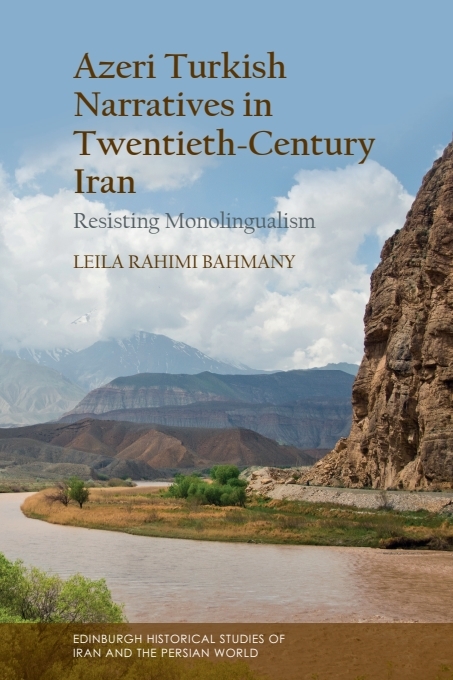
This book explores Azeri Turkish literature and offers insights into the ideas of centralism, monolingualism and nationalism in twentieth-century Iran.
In August 2026, the book received the Nemati Book Honorable Mention at the Fifteenth Biennial Iranian Studies Conference at Utrecht University.
Tell us a bit about your book.
My book explores the world of Azeri Turkish narratives through short stories, memoirs, and novels published in Iran from 1944 to the end of the 20th Century. Azeri Turkish (also known as Azerbaijani, Azeri, Azari, or, in Iran, Türki/Türkcə) is an Oghuz Turkic language spoken across Central Eurasia, the Caucasus, and the Middle East. While Azeri Turkish prose has roots stretching back centuries, this era marks the emergence of a modern literary movement and the growth of a published tradition.
Whether you are passionate about world literature, fascinated by cultural history, or simply curious about stories from beyond the mainstream, this book is a gateway to a literary tradition that has long been overlooked. These stories are set against a backdrop of political upheavals and social transformations in Iran, including the rise of Pan-Turkist ideologies, the push for Persian monolingualism, Aryanist ideas, and a focus on pre-Islamic Iranian heritage. Major events, such as the Soviet occupation of Iran, the brief autonomous Azerbaijan People’s Government (1945–46), the 1979 Revolution and the Iran–Iraq War, gravely influenced the role of Azeri Turkish and other non-Persian languages. The book invites readers to explore not only the art of storytelling, but also the powerful themes of identity, language, and belonging that run through these narratives.
What inspired you to research this area?
It all began with an invitation that changed the course of my research and, in many ways, my perspective. While I considered myself a scholar of Persian literature, a colleague approached me about contributing to a collection on minority cultures in Iran. I started exploring narrative works in Azeri Turkish, a journey that felt both daunting and exhilarating. Despite Azeri Turkish being my mother tongue, I had almost no experience reading it, especially since I was raised in Tehran. My early attempts were slow and sometimes frustrating, but the stories quickly captivated me.
I was struck by how vibrant and significant these works are. I also felt a profound responsibility, and even regret, that such powerful voices had remained in the shadows. Discovering them transformed my research interests and my understanding of Iranian literature, culture and politics. It’s a reminder of how minority literatures can upend and expand our collective narratives.
Did you discover anything particularly strange or surprising?
Absolutely, studying this literature was a series of revelations. Many of the works challenged ideas I had long taken for granted and upended the worldview I thought was comfortably stable. This process forced me to revisit and revise my understanding of Iran’s literature, history, politics, and culture. For instance, Gəncʿəli Ṣabaḥi’s memoir My Bygone Days (Ötən günlərim, 1993) shows how seemingly incidental things such as being born in a certain place or the love of one’s mother tongue can shape a life, bringing unjust lifelong suffering. Sabahi’s account is one of humiliation, persecution, imprisonment, torture, and exile—endured for birthplace and language. Yet he turned these hardships into powerful narratives written in his beloved mother tongue, bearing witness to injustices and aiming to challenge them.
The greatest reward has been personal transformation. Immersing myself in these narratives brought humility and excitement, and revealed how much there is to learn and unlearn. One shocking example for me was learning that, contrary to the common perception that the dissident, anti-centre tone found in much of this literature signals separatism or opposition to the central government, a far more nuanced reality runs through it. While minority languages and literatures can sometimes be politicised for that end, their core is rooted in a deep sense of place, belonging, and loyalty to the broader national community as much as to the local. Rather than promoting division, these works celebrate patriotic nativism, a strong attachment to Iran and an unyielding insistence that its diverse cultural traditions form part of a shared Iranian identity. They remind us that embracing local cultures and differences can strengthen, rather than weaken, national unity.
Did you get exclusive access to any new or hard-to-find sources?
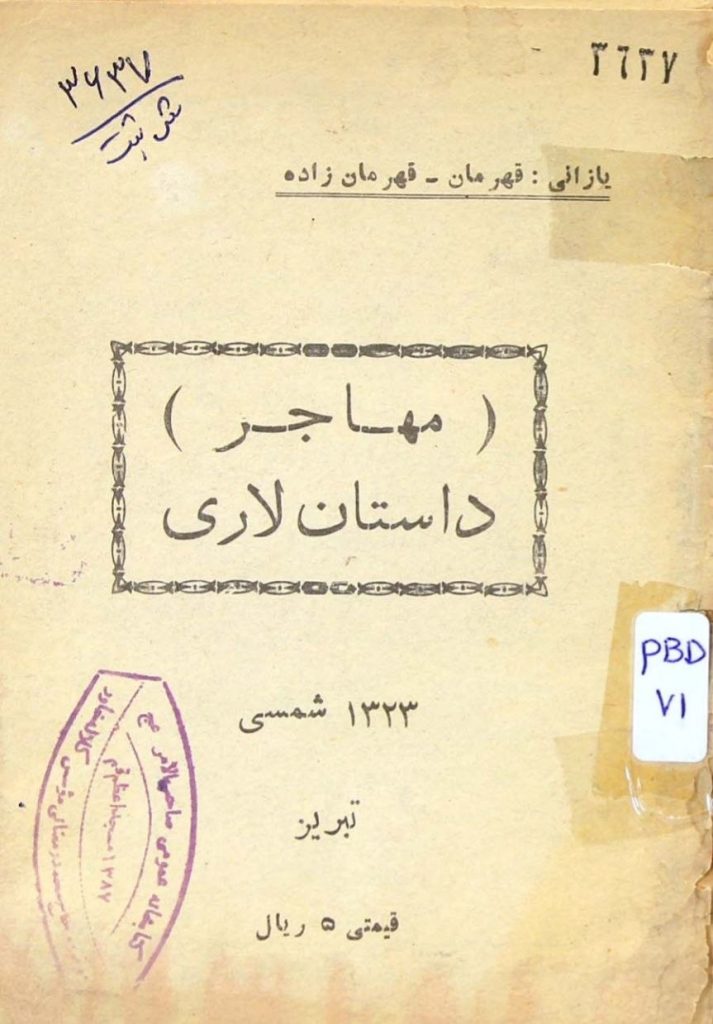
Certainly. Nearly all the sources I examined and presented in my book are fresh discoveries, not only for Western scholarship, but also for the broader fields of Persian and Turkic literary studies. These works are hard to find. Most were published by small presses in Turkic-speaking regions like Tabriz, making them nearly invisible. Few readers seek them out, so they rarely appear on bookseller sites or in library catalogues. One of my most exciting discoveries was a slim, thirty-one-page book from 1944: The Stories of Immigrants (Mühacir dastanları) by Qəhrəman Qəhrəmanzadə. Published in Tabriz, it’s the first known modern narrative prose in this language printed in Iran. For years, it was thought lost—possibly destroyed during the 1946 Azeri Turkish book burnings—and is only mentioned in a few sources, sometimes under the wrong title. To my surprise, I found a copy tucked away in a library in Qom city.
What’s next for you?
Looking ahead, I remain committed to studying the literature of Persian and Azeri Turkish in Iran. Comparative and world literature have taught me that by examining connections and contrasts, we can discover new insights and keep our research vibrant and relevant. Ultimately, this journey has helped me make better sense of my own identity and the world around me—and I hope it encourages others to celebrate the richness of diverse voices in scholarship and beyond.
About the author
Leila Rahimi Bahmany serves as Guest Professor of Iranian Studies at Ludwig Maximilian University of Munich (LMU). Her research focuses on Persian literature, Turkic literature of Iran, and comparative literature. She examines the ways in which literature reflects and addresses social, cultural, and political tensions within the Iranian context.

- Public domain: https://ishiq.net/kitab/37208/%D9%85%D9%87%D8%A7%D8%AC%D8%B1-%D8%AF%D8%A7%D8%B3%D8%AA%D8%A7%D9%86%D9%84%D8%A7%D8%B1%DB%8C-%D8%AF%D8%A7%D8%B3%D8%AA%D8%A7%D9%86%D9%87%D8%A7%DB%8C-%D9%85%D9%87%D8%A7.html ↩︎
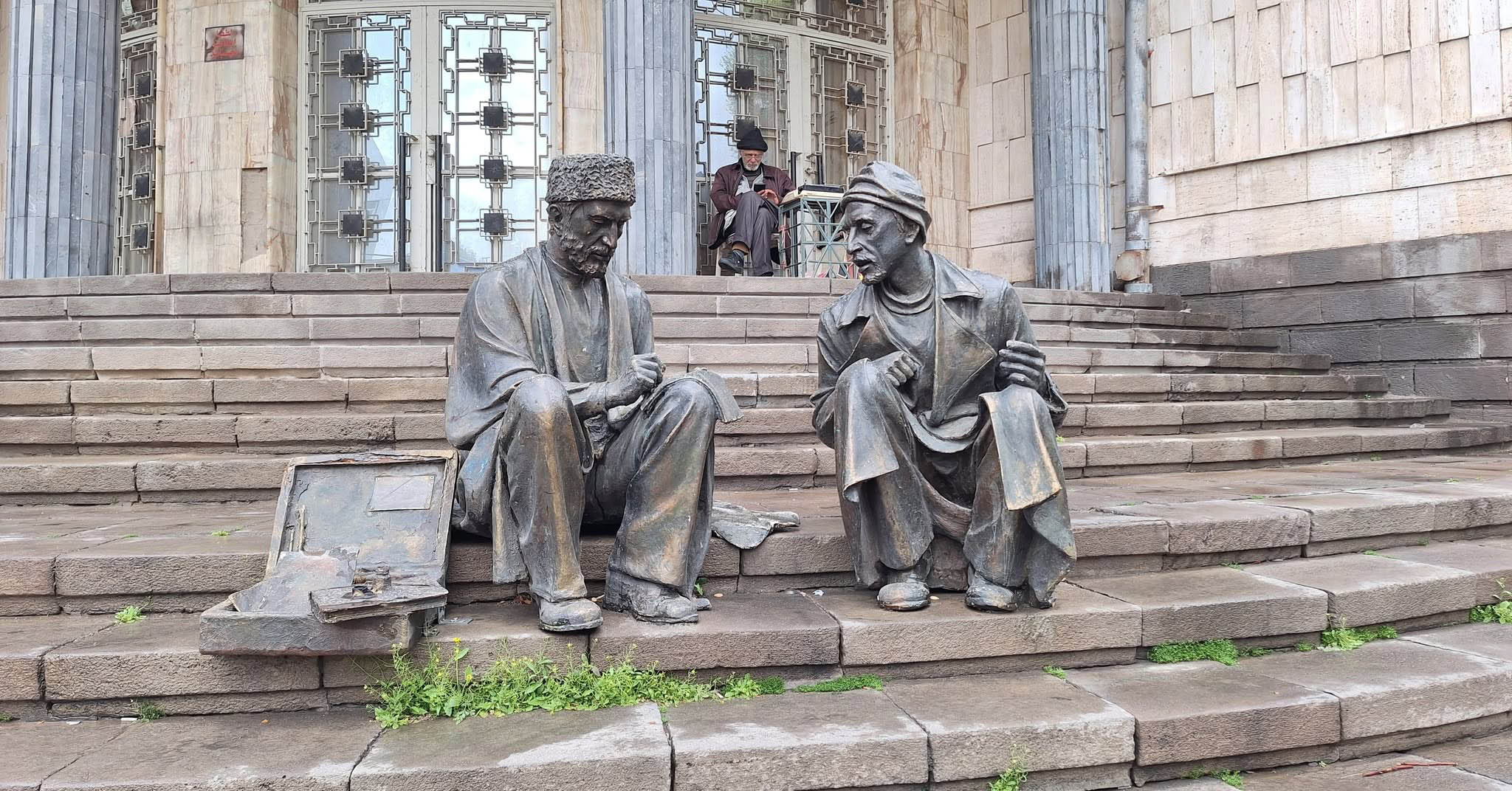
Featured image: Writing a Petition, a statue by Unis Razmi, at the steps of the General Directorate of Finance Affairs of East Azerbaijan Province, Tabriz. Photograph by Leila Rahimi Bahmany, Tabriz.