

by Melany Cruz
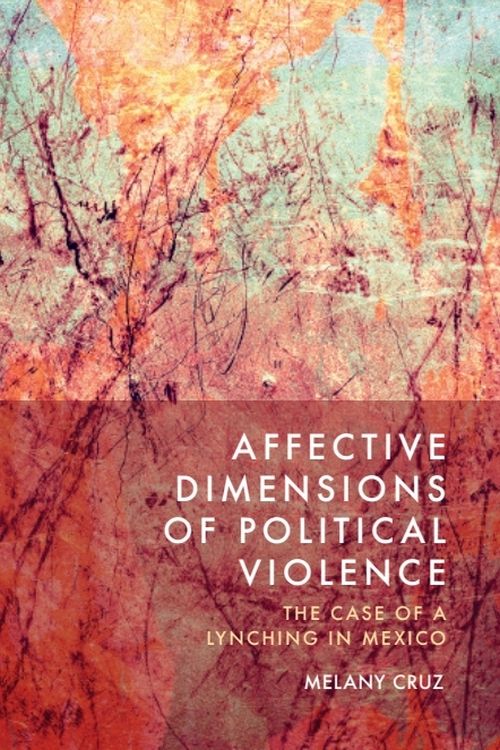
Investigates the role of emotions in politicising forms of violence that are often dismissed as apolitical
In San Juan Ixtayopan, Mexico, a crowd gathered in the town square and took justice into its own hands. Three men accused of kidnapping were lynched in full public view, in an event broadcast live across the country. The images were shocking. The dominant reaction was to describe the violence as barbaric, irrational or criminal. But what if lynching was examined, not only as a crime, but as a political act?
Across parts of Latin America, lynching persists in communities marked by insecurity, inequality and fragile institutions. It is often analysed as a breakdown of law and order. Yet, this framing misses something crucial: lynching directly challenges the foundation of modern political authority, which is the state’s monopoly on violence.
At the heart, a simple claim lies, that only the state can legitimately use force and only it can adjudicate justice through law. Lynching shatters that claim. When a crowd seizes, judges and executes a suspect, it does more than commit a crime. It disputes the state’s authority to define justice itself. In some cases, this is not even a calculated protest. It can amount to a collapse of politics as usual. Anonymous crowds cannot be easily prosecuted. Extreme cruelty cannot be neatly explained. Legal systems struggle to reassert control. The state, built to regulate violence, finds itself unable to contain it.
Lynching is political because it strikes at politics’ core.
Yet its political character does not lie only in contesting state power. It also lies in how people think and feel their way into action. Scholars, journalists and politicians often mention ‘anger’, ‘fear’ or ‘anxiety’ when describing lynchings, but these are treated as background noise, emotional excess rather than political substance. That is a mistake. Lynching is not simply an emotional eruption. It is a collective judgment. Communities interpret events – rumours of kidnapping, histories of impunity, daily experiences of insecurity – and reach conclusions about what justice requires. The feelings involved are intense, but they are not apolitical. They reflect shared evaluations of legitimacy and abandonment.
In this sense, lynching signals not only a crisis of justice, but a crisis of legitimacy. When communities believe the state cannot guarantee safety or fairness, emotions such as fear and anger become politically charged. One scholar has described lynching as a ‘ritual of citizen frustration’ (Mendoza Alvarado, 2008, p. 46): a public assertion of the right to peace and security when institutional channels appear closed. The act is violent, but it is also communicative. It says: ‘if the state will not act, we will.’ There is a third dimension that makes lynching political: it addresses an audience, working as a form of moral interpellation. It calls out not only to the state, but to other political actors and communities. Its brutality forces a reckoning. It asks who is responsible for insecurity, for poverty, for impunity. It exposes the lived experience of structural violence – often described as ‘poor against poor’ – and makes it visible in the most extreme way.
This is what makes the politics of lynching so ambiguous. It contests the state’s monopoly on violence, yet in doing so it can also empty politics of its institutional meaning. When violence replaces law, the space for negotiation, accountability and rights contracts. At the same time, lynching expands the boundaries of what becomes politically discussable. It reveals the fractures beneath the surface of fragmented states.
Understanding lynching as political does not excuse it. On the contrary, it sharpens the urgency of addressing it. If we dismiss lynching as mere criminality or irrational rage, we overlook the deeper failures it exposes, fragile institutions, structural inequality and eroded trust. Lynching is a brutal mirror. It reflects what happens when the promise of justice collapses and communities no longer believe that the state can – or will – protect them. To confront it seriously, we must see it not only as violence, but as a stark political statement about the limits of governance itself.
About the author
Melany Cruz is a Lecturer in International Politics at the University of Leicester.