

By Marta Domínguez Díaz
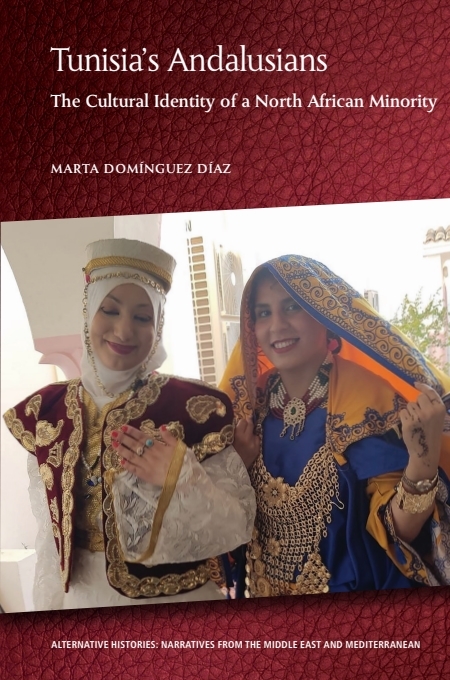
Explores the cultural identity of the Andalusian community in post-revolutionary Tunisia.
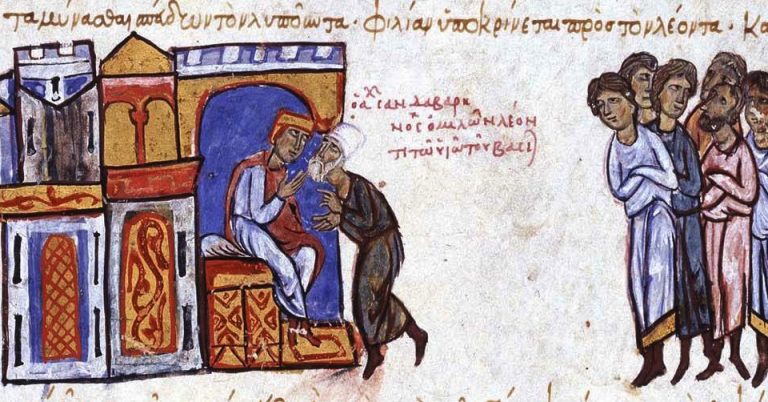
During the medieval and early modern periods, Muslims and Jews of the Iberian Peninsula faced persecution and were compelled to choose between conversion and exile. As a result, they formed one of the largest diasporas of their time, with many finding new homes in the Maghreb. A recently awarded ERC project seeks to investigate these questions. Let’s have a look to what we already know about Jews and Muslims of Iberian origin in the Maghreb and what is yet to be known.
Different timings, shaped by a single project of Christianisation. The expulsions of Jews and Muslims from the Iberian Peninsula are often told as two separate stories. In reality, they make much more sense when seen as connected episodes in a single longer process of religious homogenisation pursued by Iberia’s Christian rulers. The political circumstances and social pressures behind each wave of exile changed over time but responded to the same rationale, an ambition to turn Iberia into an exclusively Christian polity, a project which was never fully achieved. Exiles maintained contacts across the Mediterranean, sustained family and commercial ties, and in some cases even returned to their places of origin.
The northern Maghreb was a major meeting point. The destinations of expelled Iberian Jews and Muslims did not always overlap. Livorno, for instance, became home to a thriving Sephardic Jewish community, thanks to the protections Jews were offered, making it an attractive place for them to settle. In Tangiers, a thriving Sephardic community lived alongside mostly Riffian Muslims, not among Andalusians, and in several Tunisian towns, Andalusian Muslims lived with families of Turkish origin, not Jews, being given with them, land on which to settle, and even tools and seeds to cultivate it. More often than not, however, Iberian Jews and Muslims ended up in many of the same places, in towns located in the northern Maghreb, which absorbed the largest influx of these refugees.
They were minorities with distinct cultural character. Both Sephardic Jews and Andalusian Muslims constituted separate minority groups in the Maghreb, through distinct legal and social configurations. For Jews, minority status was defined by the dhimma system, which imposed on them significant legal restrictions. Andalusian Muslims, although sharing the faith of their Muslim hosts, were initially regarded as a separate group, but not a legally subordinate one. In the Ottoman provinces of the Maghreb, they retained their own distinct communal leadership and preserved particular cultural traits, well into the colonial period. Both communities developed rich and recognisable cultural repertoires in music, architecture, and specialised crafts. Crucially, these traditions were not confined to their own circles. Sephardic-Andalusian music became emblematic across North Africa; elements of Sephardic liturgy shaped Jewish practice more broadly; and Andalusian styles of dress, including their distinctive hats, were adopted by a wide range of social groups.
Groups of Iberian origin gravitated towards one another. Sephardic Jews and Andalusian Muslims often settled side by side. In Testour, a town founded by Andalusian Muslims in the early seventeenth century, a Jewish quarter was later incorporated into the urban fabric. In Oran, a city largely inhabited by Andalusian Muslims, the devastating earthquake of 1790, which claimed around 3,000 lives, marked the end of Spanish rule. The Dey subsequently ordered the city to be repopulated by Sephardic Jews who settled there alongside their new Andalusian neighbours. This pattern of shared settlement appeared across the region. However, proximity did not guarantee harmony. Rather, coexistence was fraught oftentimes with social volatility and hardship. For Sephardic Jews, this included well documented periods of persecution and legal discrimination. Andalusian Muslims were not the sole architects of these discriminatory attitudes but were neither immune to the broader anti-Jewish attitudes of the majority.
They were both integrated and excluded, though to different degrees, and over time Jews (of all ethnic backgrounds) faced comparatively greater discrimination than Andalusian Muslims. Neither group dispersed widely upon arrival; instead, both clustered in the northern coastal cities, forming significant demographic blocs. Sephardic Jews were a large minority, Andalusian Muslms often the local majority. Both groups were deeply embedded in the political and economic life of the Maghreb. Andalusian Muslims served as court advisers, jurists, scholars, artisans, and peasants. Sephardic Jews could act as translators, diplomats, commercial intermediaries, financiers, or craftsmen; in Morocco, Jewish merchants dominated maritime trade until the late nineteenth century. And yet both communities were internally diverse: some members rose to elite positions, while others remained poor and vulnerable, periodically facing discrimination. Viewed through a microhistorical lens, this demographic and social complexity invites us to reconsider how a “minority” status functioned in practice, revealing varied experiences of integration, adaptation, and exclusion.
***
While a lot is already known about Muslim-Jewish interactions in North Africa, historians have long theorised that a shared Iberian heritage might have forged unique, hitherto little understood cross-religious bonds. And yet, we still lack the granular, everyday evidence of how these affinities functioned in practice and if they were or not pervasive. We see for instance, glimpses of this connection in the economy, through joint artisanal guilds and commercial partnerships, but the true depth, frequency, and quality of these relationships remain elusive. Furthermore, the massive Jewish exodus of the twentieth century fundamentally reshaped the Maghreb’s social fabric, and it also had a lingering impact in the fading collective memory of a shared Hispano-Maghrebi world, something that represents a critical but still insufficiently understood chapter of modern North African history.
Historically, the story of the Maghreb’s Andalusians was often treated as a closed book by the late 1700s. In writing the book Tunisia’s Andalusians, however, I found a much more enduring legacy, one in which Sephardic Jews also played a vital, often ignored role. To explore these deep-rooted connections further, the ERC Maghrib-Bridges project (2027–2031) will bring together a global team of researchers that will work across multiple languages and regions. From North Africa to the rest of the Mediterranean and to the Americas, our mission is to uncover the shared lives and complex relations between Sephardic Jews and Andalusian Muslims in the Maghreb, finally giving voice to an essential piece of Mediterranean history that has remained in the shadows for too long.
About the author
Marta Dominguez Diaz BA Barcelona, MA & PhD SOAS, London, is the ERC CoG 2025 Principal Investigator of the project Maghrib-Bridges and Senior Lecturer in Islamic Studies (Anthropology) at the University of St Gallen. She has previously held research and teaching posts at SOAS (London) and the Woolf Institute (Cambridge) and has collaborated with the Religious Studies Department at the University of Vienna. Her research interests include Sufism (North-African and European), cultural identities and ethnicity in North-Africa, Islam in Europe, Ritual Studies, Embodied Religion, Comparative Religion and Muslim-Jewish Relations. She has published a number of academic articles, is the author of Women in Sufism Female Religiosities in a Transnational Order (Routledge), and of the recent monograph Tunisia’s Andalusians: the Cultural Identity of a North African Minority (Edinburgh University Press).

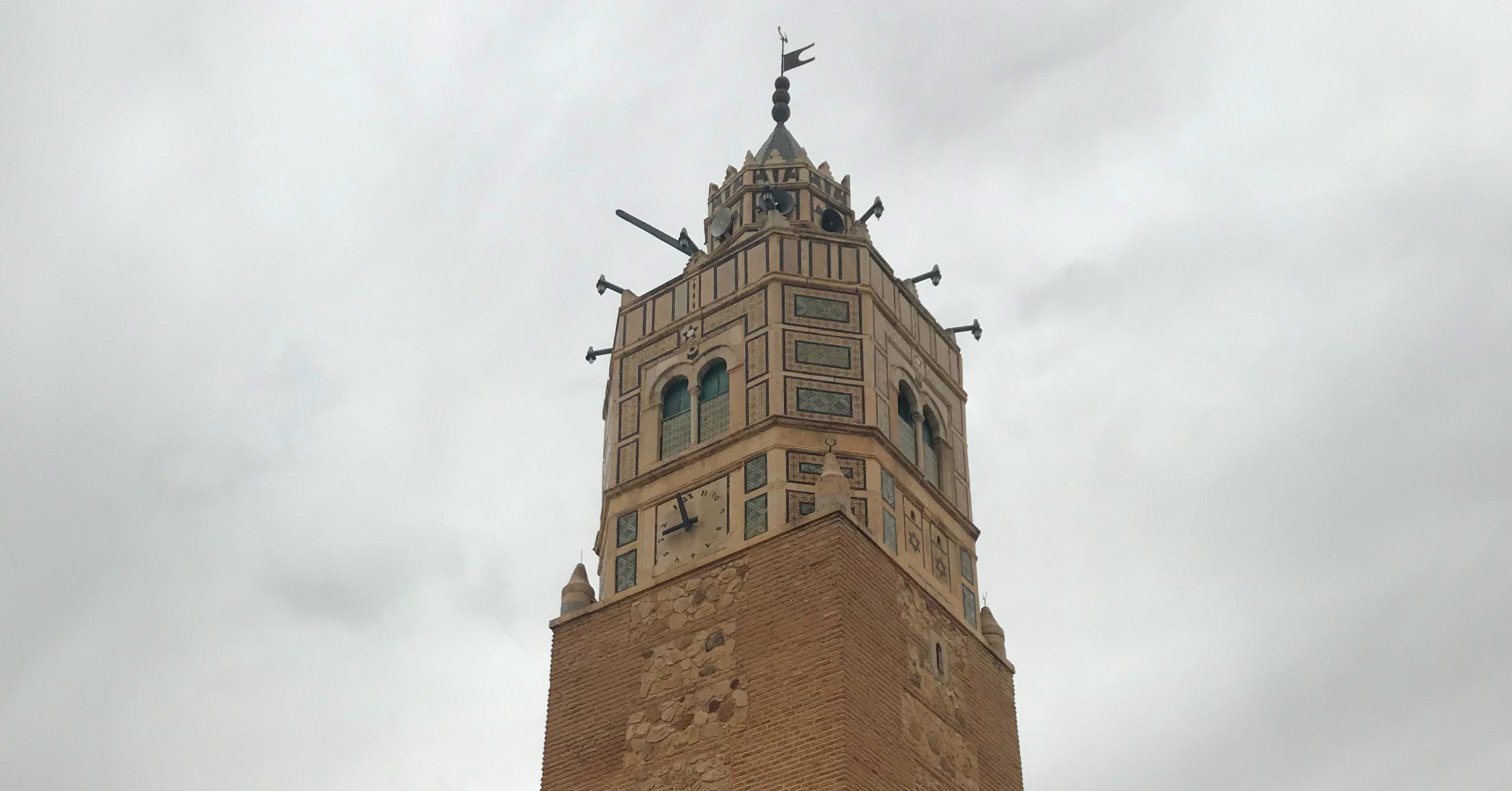
Header image: Andalusian Muslim architecture in the Maghrib sometimes includes Jewish motifs; UNESCO-listed minaret in Testour, Tunisia, adorned with Stars of David. Source: author’s photo, April 2019.