


By Miguel José Paley
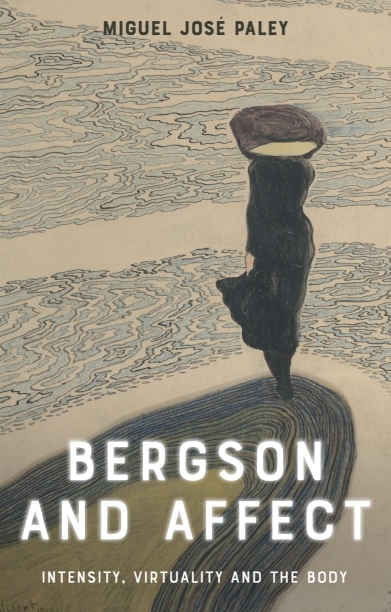
Miguel José Paley is the author of Bergson and Affect. This book presents the first detailed study of Bergson’s philosophy of Affect.
1. Duration

The central insight of Bergson’s philosophy deals with our experience of time. For him, the source of most philosophical problems results from a misunderstanding of what time is and how it is lived. As he describes in his Essai, when we understand the nature of time as a series of separate instants, as mathematical formalization often does, we miss the fact that our experience is essentially continuous.
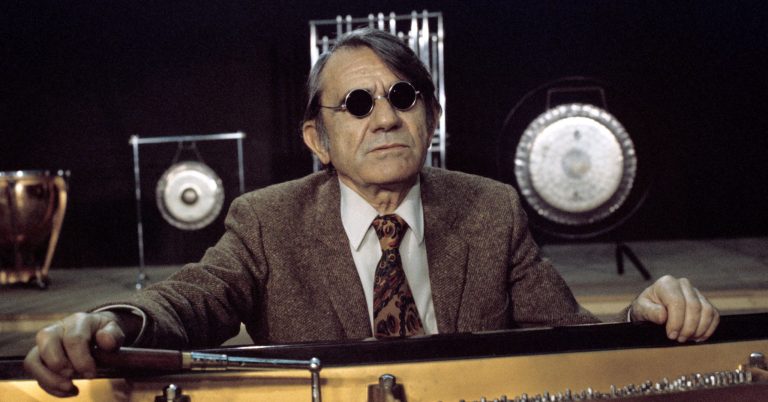
Rather than being a series of dots on a line, temporality is more like a melody. In a melody, a series of tones come together over time to form a certain musical phrase. Depending on its notes, each melody will have a certain quality: think of the happiness of a nursery rhyme or the longing sadness of a funeral march. Bergson asks us to think of what would happen if we were to change the pitch or duration of any one note in the melody. Should we do this, we would immediately notice that it is the quality of the whole melody that has changed, not just that of one individual note.
That is to say that, lived temporality cannot be understood as a series of discrete instants (or notes) but rather must be seen as what Bergson calls a “heterogenous multiplicity.” It is a continuous process in which all moments continually affect each other, past, present, and future.
Temporal experience is thus not only continuous but also deeply affective. There is a quality to how we experience the passage of time. Like Bergson’s graceful dancer, we often anticipate the future, preparing our lives for what we know will come. At other times, events surprise us, the unforeseen is jarring and upsetting. Regardless of the circumstance, our relationship to time is essentially qualitative and deeply affective.
2. The Body
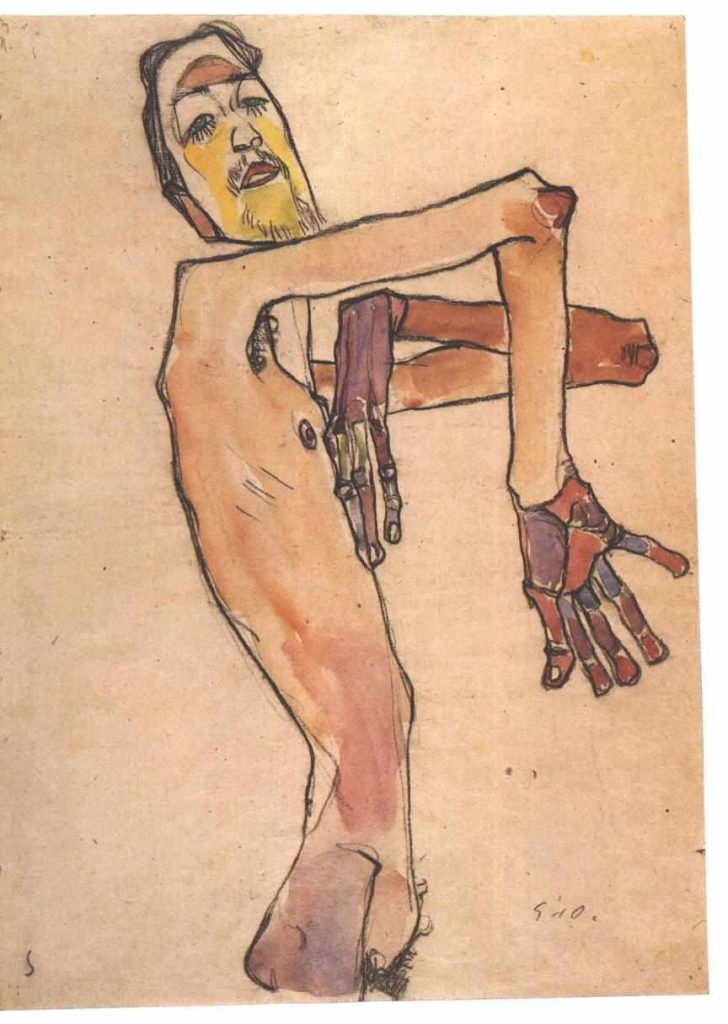
In spite of what some of Bergson’s readers suggest, for him the Body is also in duration. For, just as our psychological lives are marked by things like the feelings of grace and surprise, so our embodied experience is marked by pains and pleasures. And for him, these affects are themselves deeply temporal.
According to Bergson, we are not machines that process information or data. Like all natural organisms, we function instead with an eye to biological utility. Things like pain are thus not something like a “scientific report” on the body. They are, rather, warnings. The feeling of pain is the body’s way of anticipating a dangerous future and demanding a change. In this and many other ways, the body is also essentially affective.
3. Morality

Affectivity also plays an important role in Bergson’s social thought. As described in his later work, morality should be understood sociobiologically rather than intellectually. The function of morality, that is, is the preservation of closed groups and forms of life.
As societies evolve, they develop implicit norms which pressure agents to act in certain ways. Things like shame and fear prevent anti-social behavior and possibly destructive conflict. Affectivity and morality are thus conservative in this double sense. They maintain social cohesion while enforcing order and discipline.
4. Mysticism
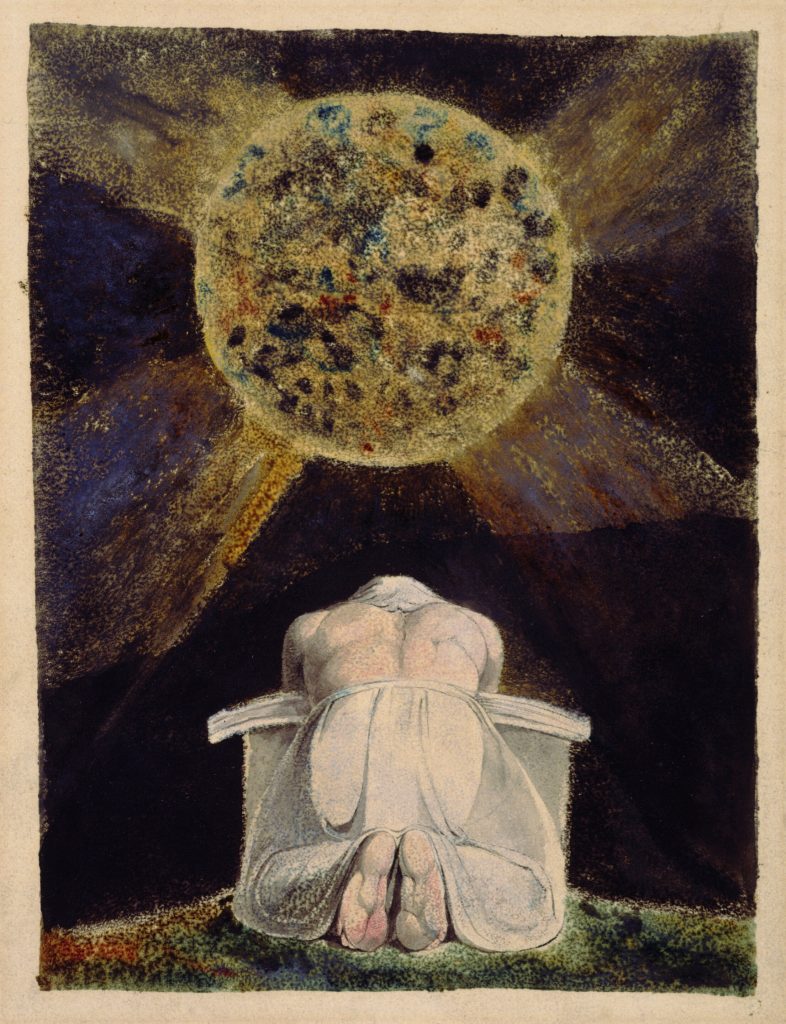
At its highest intensity, however, affectivity can also be transformative. Bergson writes of mystics, those people who manage to make direct contact with the principle of life in a profound way. In these rare occasions, what the mystic finds is that life is itself affective at its core. This is what the Christian mystics describe with the term “Love.”
This life force or elan vital, an impetus for creation, evolution, and expansion, is eventually understood to be a movement towards intensity of feeling. When the mystic makes contact with this force, they are themselves transformed and deeply inspired. Their life becomes a part of this drive. They inspire society to break free from closed forms of morality and to love universally. Human spiritual progress is in this way also deeply affective.
5. Selfhood

Ultimately, my book argues that for all these reasons and more, affectivity is perhaps the central feature of subjectivity. It is, in some sense, what makes us who we are.
Bergson understands human beings as a multifaceted, intermingling process. This process is, in large part, affective. Continually changing, the process relates to itself in various ways. It can find what my book calls various levels of “synchronization.”
Most of the time, we are rather unsynchronized. We simply “go with the flow” and live automatically, habitually. This is, however, by no means a defect. It makes life easier.
But sometimes, in moments of great intensity, when facing a life defining decision or moment, the entirety of our being is synchronized. Through affective processes, the self explodes onto the scene. It is only in these deeply affective moments that we are truly free. It is in these moments that we are most truly ourselves.
About the author
Miguel José Paley is a Postdoctoral Fellow at the Faculty of Philosophy of the Pontificia Universidad Católica de Chile. His research explores the ideas of affectivity, subjectivity, and the body with particular focus on the thought of Henri Bergson and phenomenology.

Featured image: Woman at the Shoreline, 1910 by Léon Spilliaert; Public Domain