

by Tatjana Sandon
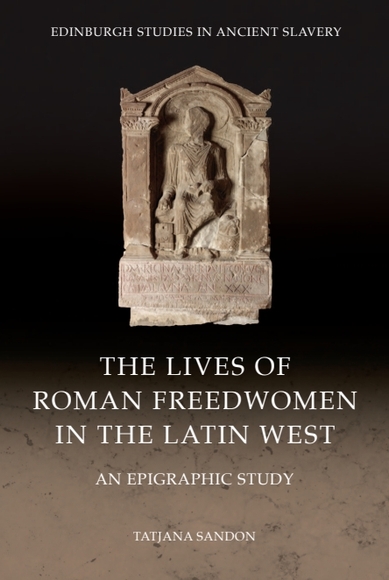
The Lives of Roman Freedwomen in the Latin West: An Epigraphic Study is an epigraphic analysis of the lives of female ex-slaves in the west of the Roman Empire.
If I ask you, reader, to name any woman from ancient Rome, you will probably say Livia, Agrippina or Julia Domna. I am quite positive no one will think of Cornelia Venusta, Nostia Daphne or Iulia Sophia. You may wonder who these women were, and why you never read about them in history books. The truth is that very little survives about ordinary Romans – and even less has been written about them.
Why Roman freedwomen?
Among Rome’s vast population of “ordinary” people, two groups were especially neglected, or inaccurately portrayed, by ancient authors: enslaved people and women. The Lives of Roman Freedwomen in the Latin West focuses on those who belonged to both categories: Roman libertae. A freedwoman was someone who had spent part of her life in slavery but was later granted, or able to obtain, freedom.
Modern scholarship on Roman women has traditionally centred on elite figures, while studies on slavery often privilege the experience of enslaved men. Freedwomen, who shared aspects of life with both freeborn women and enslaved men, occupied a unique and often overlooked position. The double flaw of being women and (ex-)slaves shaped a set of legal and social expectations specific to them. A targeted study is therefore crucial to give these women the attention they have long lacked.
Why rely on epigraphic evidence?
Today, learning about someone’s life is as simple as typing their name into a search engine. Not so for people who lived 2,000 years ago. To reconstruct their stories, we first need a name, and ancient people left surprisingly little information about non-famous individuals. Literary texts rarely mention ordinary Romans at all.
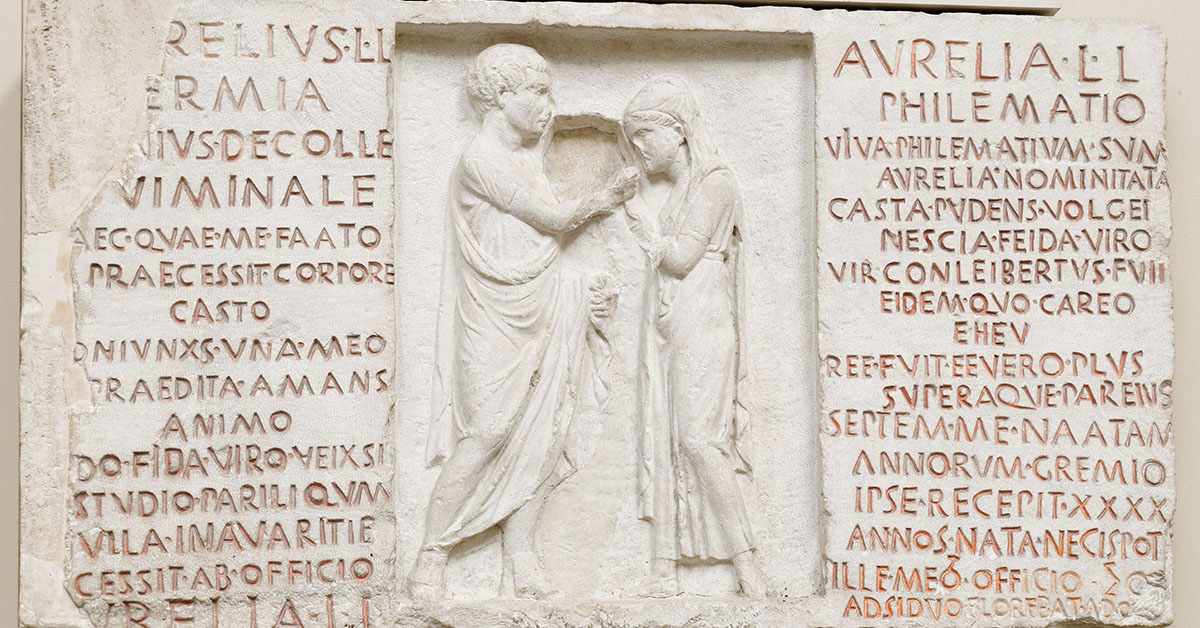
So where do we find them? In inscriptions, especially funerary ones, but also votive and honorary monuments. Unlike modern gravestones, which usually record only names and dates, Roman tombstones preserve rich details: family relations, professions, religious beliefs, life events and acts of generosity. By analysing these inscriptions, we gain a broad picture of freedwomen’s experiences and can compare them with those of freeborn women and freedmen.
What is the most interesting aspect to reconstruct in the life of a Roman freedwoman?
For me, the most fascinating aspect is their family life. Many funerary monuments reveal small family microcosms intertwined with others: partners, parents, children, grandparents, but also patrons, enslaved individuals and fellow freedpeople. The modern nuclear family did exist in Rome, but it was surrounded by wider networks and small communities that lived and supported each other.
These families could also be fragile, especially when they included enslaved relatives who could be sold or moved at a master’s convenience. Many enslaved men and women worked tirelessly to gain freedom and reunite their families. A good marriage – “marrying up” – could dramatically improve a freedwoman’s social standing, while also offering advantages to her husband, especially when her labour or connections strengthened the family economy. Inscriptions reveal an intricate world of relationships that went far beyond blood or legal ties.
What was the typical life of a Roman freedwoman?
Can we say that modern women have a “typical” life? Probably not, and the same applies to Roman freedwomen. Many shared experiences such as marriage and motherhood, and all of them lived through both enslavement and freedom. But countless variables – the city they lived in, their household, economic circumstances and opportunities – shaped their destinies in different ways. Rather than a single “typical” life, we see thousands of individual stories: the many lives of Roman freedwomen.
Take Nostia Daphne, a freedwoman who lived in the city of Rome and ran a hairdressing shop, assisted by her freedwoman Nostia Cleopatra. Or Carpeia Rustica and Caleia Capella, two freedwomen in Laus Pompeia, modern Lodi in Italy, who reached a notable position in local society by marrying a father and his son – both members of the municipal elite. Or, even more moving, Maria Daphne, a freedwoman from Lugdunum (modern Lyon), who died at the very young age of eighteen; at the time of her death, she had been married to her patron for six years.
Their voices, brief as they are, show just how diverse these lives could be.
By restoring their voices, we are reminded that Roman history was not shaped only by emperors and elites, but also by the countless (freed)women whose ordinary lives built the extraordinary – and profoundly contradictory – world of Rome.

About the author
Tatjana Sandon is a historian of Roman social life specialising in women, slavery and epigraphy. She completed her PhD in Classics at the University of Edinburgh. The Lives of Roman Freedwomen in the Latin West is her first monograph.