

by Harry Lewis
Winner of the first Scottish Historical Review Early Career Researcher Article Prize
Situates Blackwood & Cathcart within an earlier and less-developed phase of Scottish engagement with the British Empire, marked by the fraught imperial politics of the Caribbean.
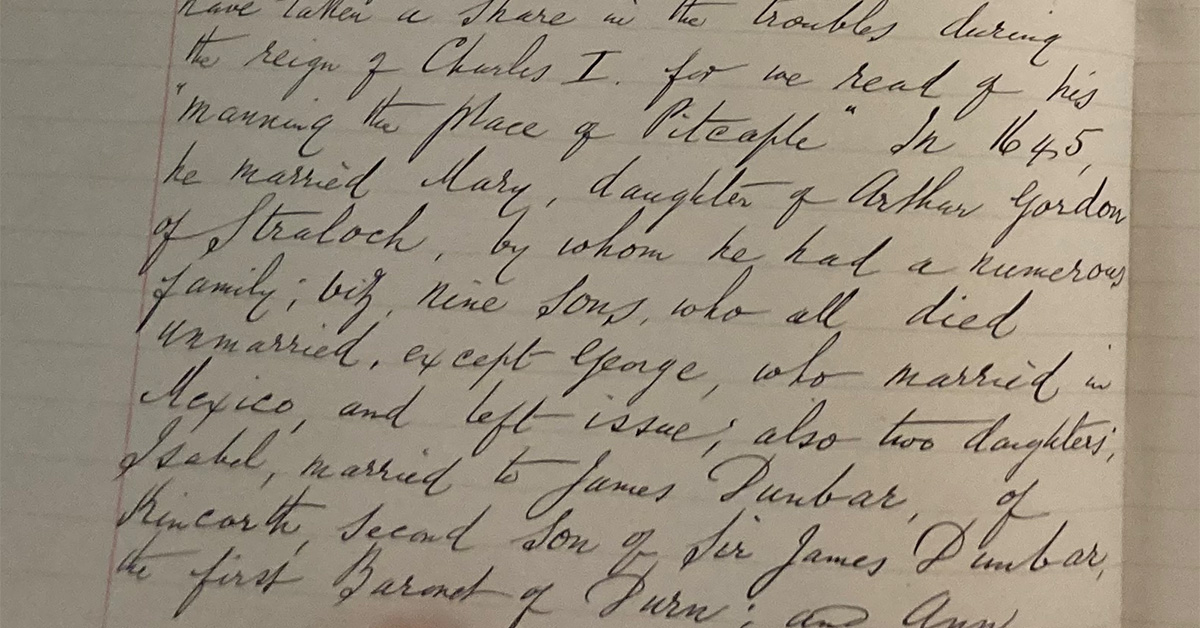
‘Edinburgh to ‘Incatan’: Scottish Subcontractors, the South Sea Company and the Caribbean Frontier, 1707–1741’ is the outgrowth of a somewhat different project. Undaunted by the antiquated system of requesting and viewing manuscripts at the National Records of Scotland, I read the surviving papers of one George Abercromby of Birkenbog, the son of a Banffshire heritor, while researching the lives of the Jacobite diaspora in the Caribbean. Like many families whose lands were subject to forfeiture proceedings in the aftermath of the Jacobite risings, the Abercrombys of Birkenbog sought careers in the British empire; a process in which those often characterised as the ‘losers’ of history sought to restore their social credibility and fortunes through the ruthless exploitation of the natural world and their fellow man.
George Abercromby sailed to Jamaica, where he was employed as a doctor by a Scottish partnership called Blackwood & Cathcart. Abercromby’s letters revealed his activities for the company while posted to Mexico, and offered a glimpse into a largely unexplored area of Scots’ activities as traders in enslaved persons following the Parliamentary Union with England in 1707.
University of Aberdeen Special Collections
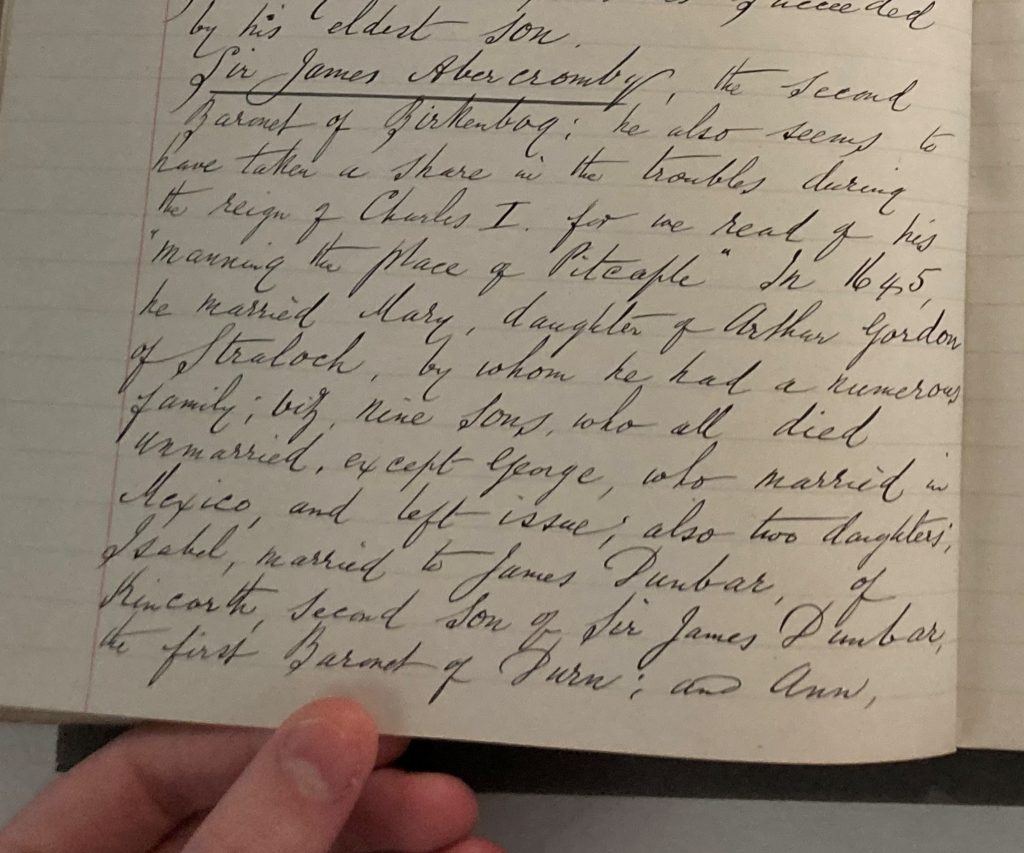
Abercromby’s letters, which continue into the 1760s and chart his permanent relocation to Mexico, sparked my interest in his employer, Blackwood & Cathcart, and the company’s role in the wider history of Scots in the transatlantic slave trade. Histories of this phenomenon typically start towards the middle of the eighteenth century, when surviving source materials have allowed historians to reconstruct in detail much of the Scottish role in the slave societies of the Americas, particularly within the British Empire. Blackwood & Cathcart did not fit neatly into these narratives, however. Their activities took place well over a decade earlier, and were notable in being a subcontracted venture of the infamous South Sea Company. As part of this, Blackwood & Cathcart operated outwith British imperial borders, in the Yucatán peninsula, and thus found themselves subject to the vagaries of Anglo-Spanish competition. Moreover, while many of the South Sea Company’s stations traded enslaved African captives for silver bullion mined in Spanish America, Blackwood & Cathcart traded for logwood, a varied (if reportedly short-lasting) dyestuff used throughout early modern Europe.
With the contours of Blackwood & Cathcart’s operations and history established using archival records found in the major archives of Edinburgh and London, I endeavoured to quickly publish my findings; only to learn from some attentive reviewers that my essay was as uninsightful as the case study was unique. As readers of the essay keen enough to trawl through my ‘workmanlike’ prose* and into the footnotes will find, I later encountered valuable documents in a number of regional and international archives.
(*A genuine description one reviewer used to describe my work for a different publication)
The original Archivo General de Indias
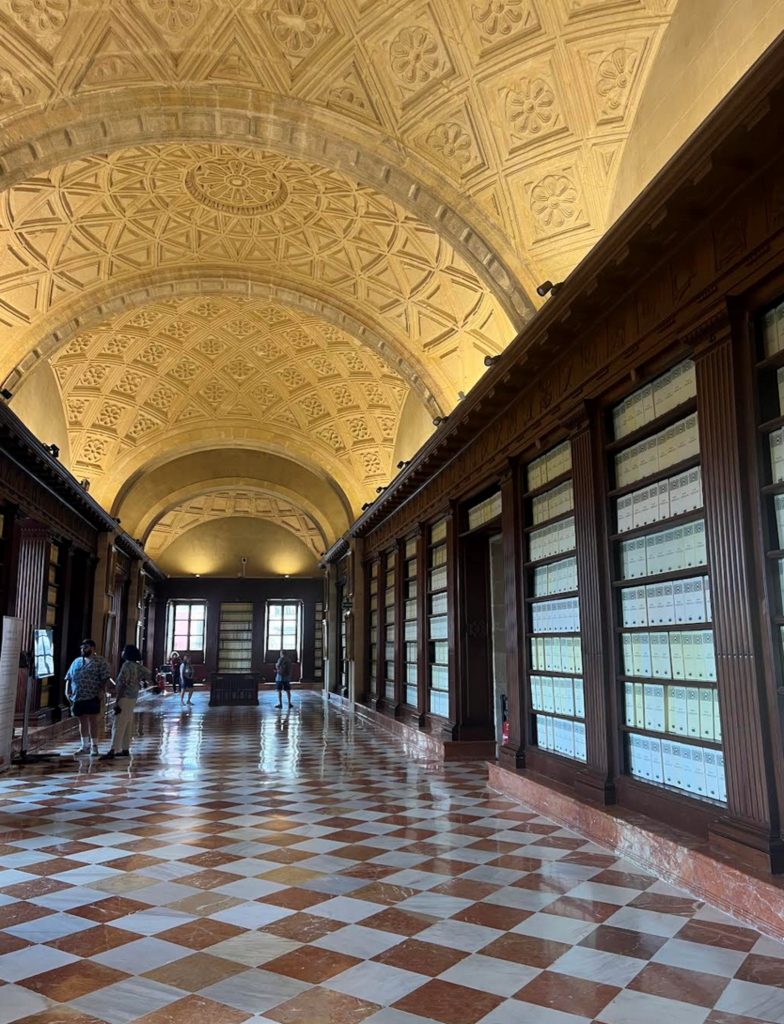
My limited grasp of the Spanish language and a willingness to sign my name to some official looking documents was enough to gain access to the Archivo General de Indias in Seville, Spain. From there, I was able to find a number of records detailing the fraught position of logwood cutters in the Yucatán peninsula in the period Blackwood & Cathcart operated.
In 2024, I found myself in Kingston, Jamaica, all thanks to a Royal Historical Society Research Grant and a lightning storm that burnt down part of the Barbados National Archives housing records that I had aimed to consult for my forthcoming book. After scouring the National Library’s card catalogues, I came across several letters demonstrating the surprising degree to which Blackwood & Cathcart’s employees became involved in the British expedition against Spanish America following the collapse of the company’s trading operations in 1739.
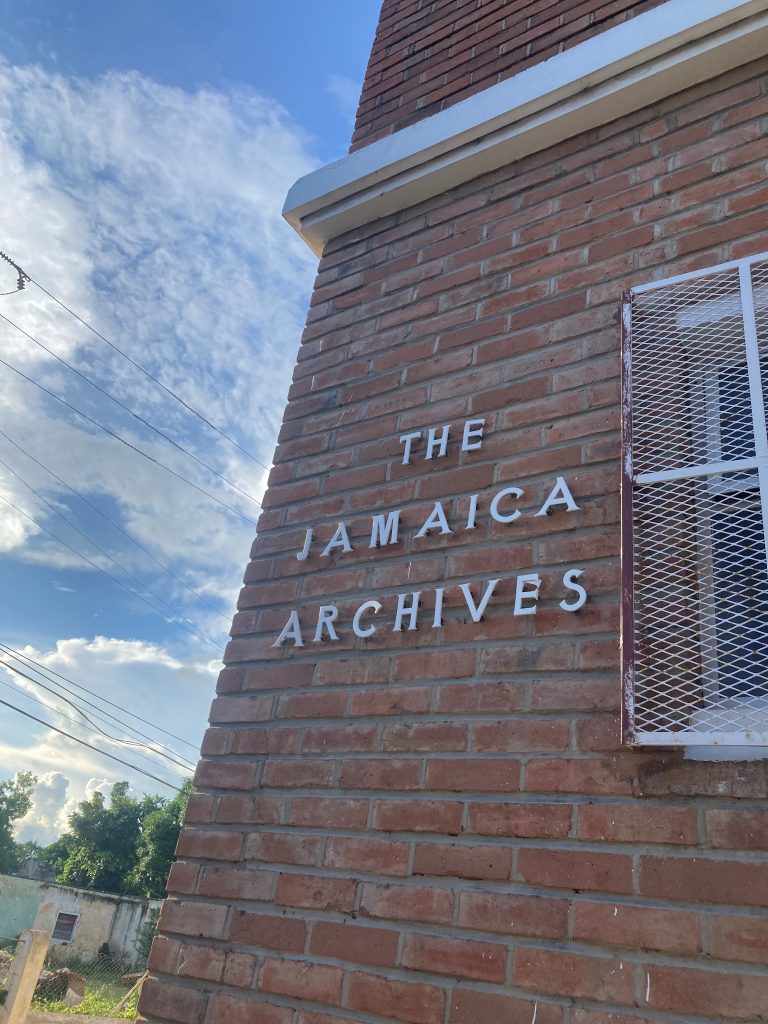
Meanwhile, at the Jamaica Archives and Records Department in Spanish Town, the scale of Scottish involvement in the institution of slavery was made brutally apparent across hundreds of mouldering manuscript pages, with Scottish settlers recalling their homeland by imposing the names of Scottish castles, towns and even glens on both the island’s landmarks and its captives. While researching at the Falkirk Archives in Callendar House and further smaller archives in Glasgow and Edinburgh, a more detailed picture eventually emerged that brought out Blackwood & Cathcart’s evolving integration into a wider imperial mission, and how this itself formed part of Scotland’s entanglement with the structures and ambitions of the British Empire in the Caribbean.
The Jamaica Archives and Records Department
Although the personal history of George Abercromby’s imperial adventuring forms a small part of the overall essay, the larger history of Blackwood & Cathcart explored within this work challenges a number of assumptions over the time, place and significance of Scotland’s role in the British Empire and the transatlantic slave trade.
I am delighted to have won the first Scottish Historical Review Early Career Researcher Article Prize and I would like to think that this essay opens new avenues within the field. For all the frustrations and at times troubling source material associated with this type of research on inter-imperial histories, I hope that future scholarship in this area pushes far further than I have, and explores the role of Scots in the early modern Atlantic through its abundant archives.
About the editor
Harry Lewis received his PhD from the University of Edinburgh. The author would like to extend his thanks to the attendees at the 2022 conference of the Scottish Association for the Study of America, Professor Robert Patch and the anonymous reviewers at The Scottish Historical Review for their help with this article.