
By Hannah Hassani and Said Reza Huseini
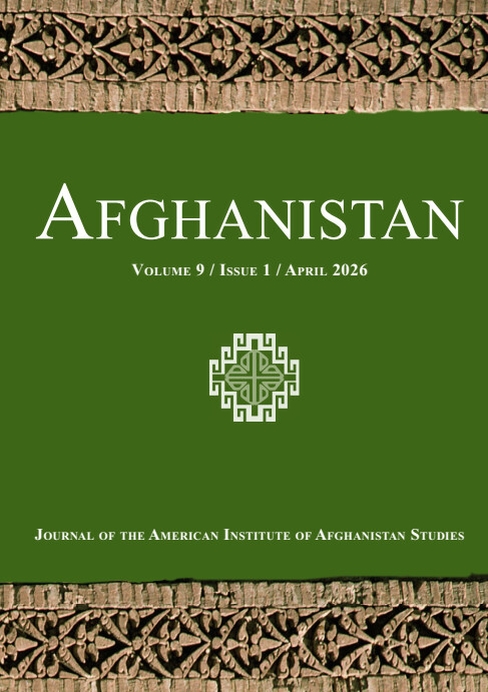
Hannah Hassani and Said Reza Huseini are the guest editors of Afghanistan: A Neglected Reality, the latest special issue of the Afghanistan journal.
In this project, the collaborators ask two questions: Why did the Afghan government fall in August 2021? And how did the international community and Afghanistan’s political elites fail? The eight articles in this collection offer different attempts to answer these questions.
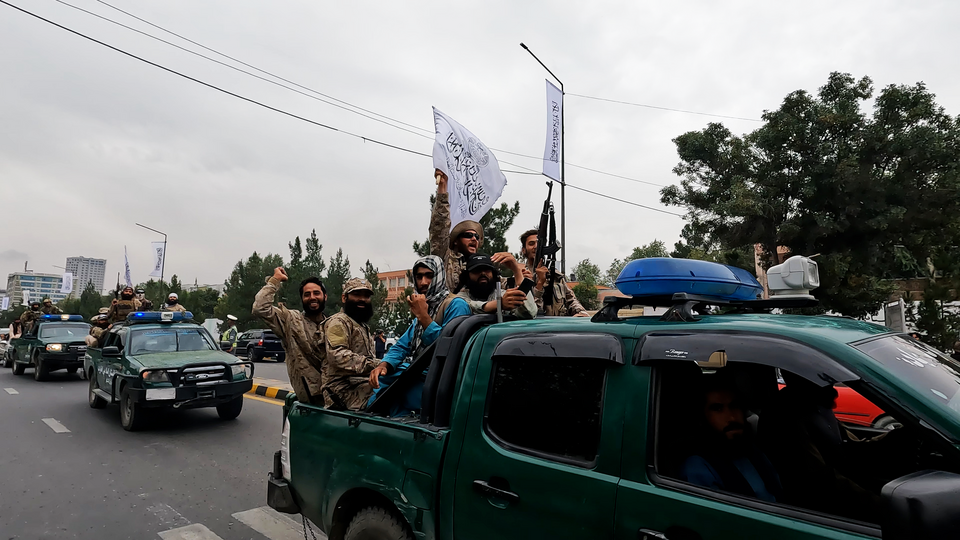
Five years have passed since the Islamic Republic of Afghanistan collapsed and fall of Kabul to the Taliban. Harrowing scenes dominated news headlines worldwide in the August of 2021. This was especially in Western countries, who were the main supporters of that government.
It is also five years since Afghanistan almost entirely disappeared from the news headlines in Western countries. Afghanistan has become a forgotten issue, irrelevant. How has this happened?
Afghanistan is no longer a priority
At a superficial level, the world’s attention has shifted to other headlines. After powerful images of the fall of Kabul, successive conflicts in Ukraine, Gaza and Iran have taken Afghanistan’s place in the news. The attack on and ensuing war with Iran not only caused regional damage but also put pressure on the global economy. We have yet to see its full impact. In addition, the geopolitical and economic rivalry between the US and China has intensified. In Europe, internal issues and the impacts of the Iran war have exacerbated the economic situation. Meanwhile, ultranationalism in the age of social media has impacted political parties’ competition for power, shifting people’s attention toward domestic issues. Afghanistan is no longer a priority.
A failure to take responsibility
More fundamental and specific to Afghanistan, however, is that to accept failure and take responsibility for the consequences that affected the lives of millions of people requires sincerity and temerity, neither of which has been shown by those involved. President Ashraf Ghani may have issued an apology after fleeing the country but he and his cabinet have yet to explain how, as the country’s highest political authority, they failed to prevent this tragedy. External parties have similarly failed to take responsibility.
Trying to understand what went wrong in Afghanistan
Of course, the silence from the top has not stopped the ink from flowing from the rest of civil society. Since August 2021, scholars, politicians, diplomats and activists have attempted to explain what went wrong in Afghanistan. State and non-state organisations have organised major conferences from Tehran to Vienna, Uzbekistan to China. A plethora of articles and books, combined with the multi-state events, have enhanced our understanding of the social and political situation in Afghanistan before and after the state breakdown. They have addressed a range of themes such as internal and regional security issues, border security, religious extremism, economic dependency, the opium trade, corruption, human rights, ethnic rivalries and alternatives for the Taliban.
However, these studies mostly took a top-down view positioned within the frameworks of international relations and geopolitics. This has left little room to analyse the particular historical, cultural and shared ethnic, religious and linguistic features of Afghanistan. Because the internal situation has been neglected, we have not assembled a complete picture of the catastrophic failure. No one has been able to explore the root causes. We have been deprived of the lessons that could have been learned.
Bringing attention back to Afghanistan
What is missing in the literature is a systematic analysis of the failure of state-building in Afghanistan as an interconnected internal and external process. ‘Afghanistan: A Neglected Reality‘ is an open-access, special issue themed issue of Afghanistan that aims to fill that gap. It posits a set of simple but critical questions that it answers first from international and then local perspectives.
- What led to the dramatic collapse of the Afghan government in August 2021?
- How did the international community, especially its most powerful member, the United States, fail in Afghanistan despite having all the necessary resources and local and regional support?
- How did the political elites in Afghanistan fail to direct global support to stabilise the country?
By pairing the local and international, this issue also seeks to provide a missing link between the various groups that study and wish to improve Afghanistan. It may surprise some readers that the complex region of Afghanistan has no geographic home in area studies, for example. Is it part of Central Asia, West Asia or South Asia? Or, to project the issue into history, should we see it as an interlocutor space that connected these regions throughout time?
Reconnecting academics and policymakers
The Afghanistan described by policymakers does not necessarily resemble anything discussed by academics. This divide has prevented the formation of a common ground for an inclusive dialogue between the two groups.
A simplified view of Afghanistan often dominates policymaker discourse, overshadowed by colonial and Afghan nationalistic interpretations. They characterise Afghanistan as an ‘ungovernable’ tribal society. They suggest a strong, centralised government to control it.
Meanwhile, academics, especially social anthropologists and historians, have a different view of Afghanistan and its unique characteristics. Its geographical and climatic conditions, together with its inhabitants’ adaptive responses to their environment, have formed an inherent historical resilience. This region has always been a shared space for a multitude of linguistic and cultural groups living together, which has formed its multifaceted cultural identity. Its connectivity to neighbouring regions once made it part of a common cultural and economic zone. Scholars have written for years about this region’s local forms of governance and a decentralised political structure that developed over the last two millennia. They also suggested that only this form of political structure, which has deep roots in the region, can bring peace and stability to Afghanistan. They warn that the continuation of a strong, centralised government prevents people’s participation and leads to corruption and violence, an issue we have witnessed since the establishment of modern Afghanistan in the late nineteenth century.
The special issue of Afghanistan attempts to bridge this divide by taking an interdisciplinary approach. Bringing together the views of historians, social anthropologists, international relations experts, diplomats and human rights activists, it explains how and why this state breakdown occurred in Afghanistan. It shows the potential benefits that can be found in an inclusive and interdisciplinary approach to understanding complicated terrains like Afghanistan.
About the authors
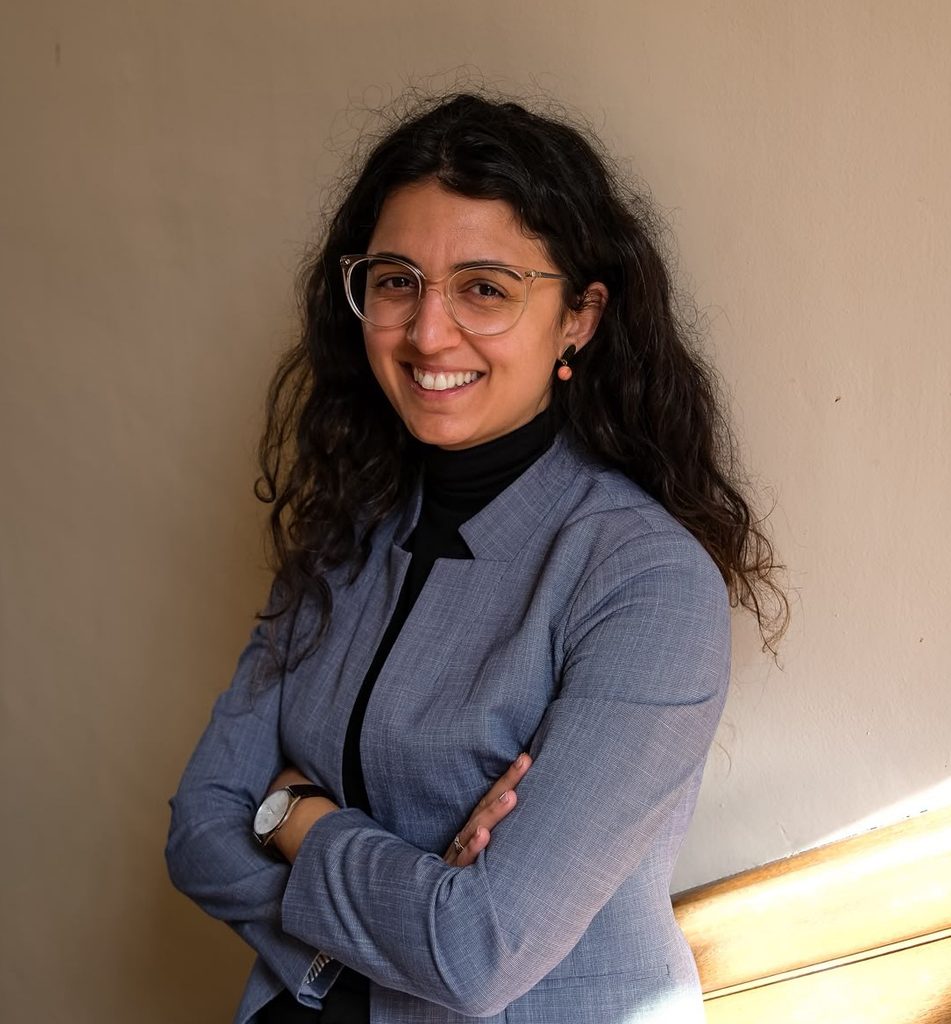
Hannah Hassani is a PhD student in the School of History and the Institute of Iranian Studies at the University of St Andrews. Her doctoral thesis examines the transformation of the Iranian bureaucracy between the Qajar and Pahlavi periods (ca. 1906-1966). Her research interests include the modern Middle East (from c. 1850 onward), administrative history writ large, and late modernisation. She holds two MPhils from the University of Cambridge: one in Middle Eastern Studies where she received the Soudavar Scholarship and was a Cambridge Trust Scholar, and the other in Economic and Social History. She completed her Bachelor’s in Economics and International Affairs (magna cum laude) at the George Washington University.
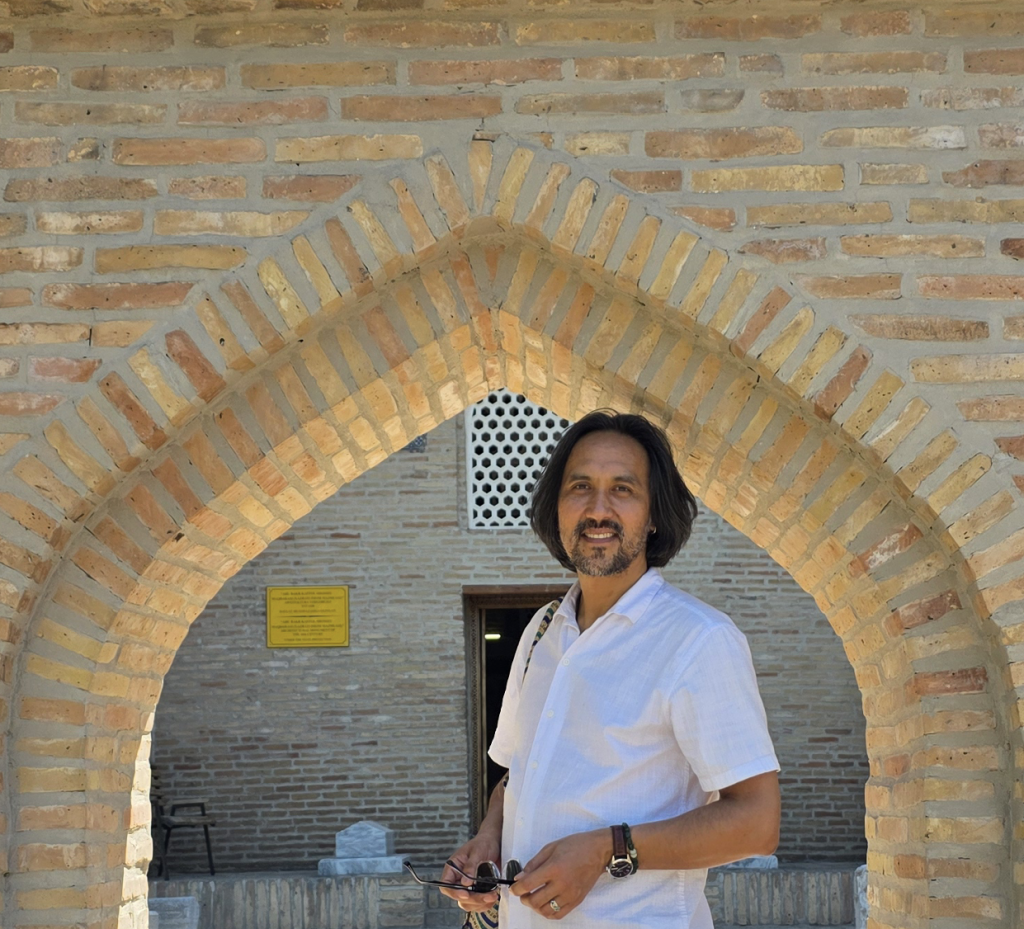
Said Reza Huseini specialises in Persianate and Islamic history, with a particular focus on the connected histories of Central Asia and North India from Late Antiquity to the early modern period. His research takes a longue durée and connected historical approach, drawing on a wide range of documentary and literary sources in Bactrian, Sogdian, Middle Persian, New Persian, and Arabic. He is particularly interested in tracing long-term patterns of intellectual, political, and cultural exchange across the Persianate world.
Reza graduated from Jawaharlal Nehru University in New Delhi, where he studied the history of medieval Central Asia and early modern India. He subsequently continued his studies at Leiden University, where he completed a second MA and wrote a thesis on millennialism in Mughal India. He later joined the European Research Council project Embedding Conquests at Leiden and completed his PhD on the eighth-century Arab conquests in Bactria.
More like this