

by Maijastina Kahlos
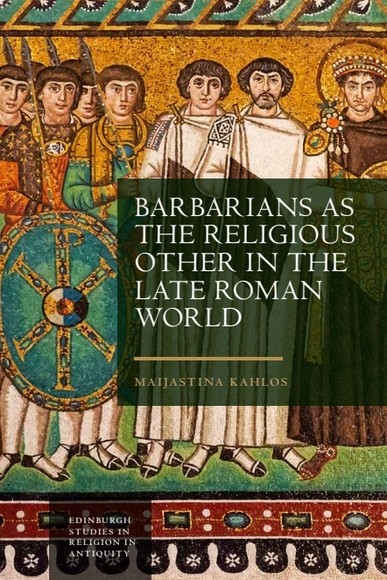
Barbarians as the Religious Other in the Late Roman World explores the connection between the looming spectre of the barbarian and what it meant to be Roman in Late Antiquity
Tell us a bit about Barbarians as the Religious Other in the Late Roman World
My book examines how Roman identity was redefined during two major transformations of Late Antiquity: the Christianisation of imperial power and the collapse of the Western Roman Empire.
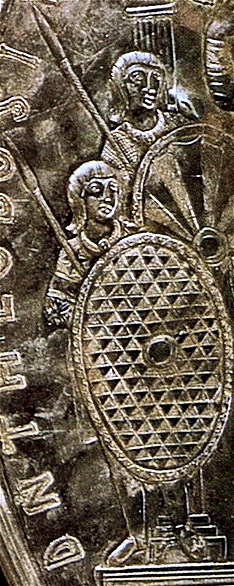
To understand this, I look at how Roman and post-Roman writers used the figure of the “barbarian” to articulate their own ideas of what it meant to be Roman. The book is therefore ultimately more about the Romans themselves than about any “barbarians”. These writers were reflecting on what it was to be a good Roman, a loyal imperial subject, a good Christian, and so on. When Romans talked about “barbarians”, they were often really talking about themselves. Late antique writers loved drawing boundaries. But what happened when those boundaries started to shift under their feet?
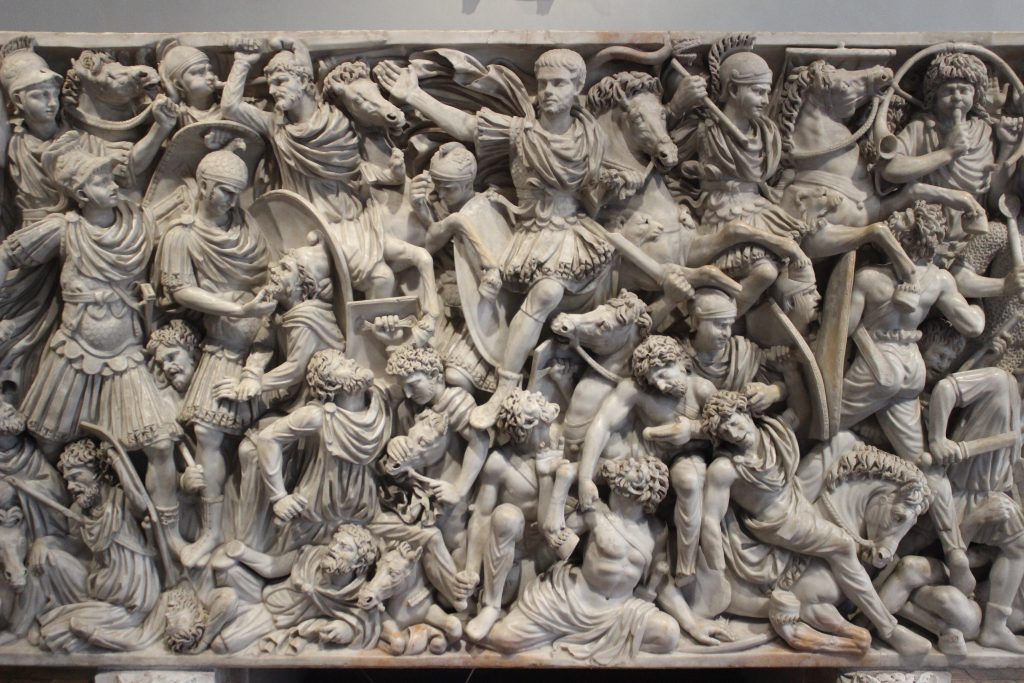
Religious identity emerged as a key marker of Romanness. The term “barbarian” (meaning non-Roman) illuminates how religious, political and cultural boundaries continually shifted. I focus on how groups such as Goths and Vandals were employed in religious disputes between the fourth and sixth centuries: first in debates between Christians and polytheists (“pagans”), and then in the rivalries between Christian churches (Nicenes and Homoians, often labelled “Arians”). All these religious conflicts were deeply entangled with the political struggles of the time.
What inspired you to research this area?
In my earlier work, I explored religious “otherness” in the late Roman world. I studied how, in changing historical circumstances, different religious groups – Jesus followers/early Christians, polytheists/non-Christians (called “pagans”), Jews, and dissenting Christians (labelled “heretics”) – were depicted in Greco-Roman literature.
The next step was to turn to ethnic others – non-Romans or “barbarians”. I soon realised that religious and ethnic reasoning were intriguingly intertwined in late antique thought.
Did you discover anything particularly strange or surprising?
Late Antiquity – the fourth to the sixth centuries – is always full of surprises! I still find myself astonished when I read the sources closely. Nothing there is exactly what it appears at first glance. We modern observers tend to categorise people and assume they act according to neat norms of religion, nation, class, or gender. But late antique individuals continually elude those expectations.
In my book I try to approach people of the past as complex individuals with many aspects and faces, not merely as representatives of institutions, religions, tribes, or social groups. The sources reveal a late Roman world as multifaceted and dynamic as our own. The fourth to sixth centuries were an age of big claims and even bigger polemics. Behind the noise lies a far more complicated world.
Has your research in this area changed the way you see the world today?
My research reminds me how similar rhetorical dynamics were at play in the late Roman world and in our own. I see echoes of late antique polemics not only in political rhetoric but also in the shouting matches of social media. Identity politics is not new. The Romans mastered it long before social media discovered it. Differences – social, political, ethnic, religious – can be stressed or softened depending on what is politically useful.
Late antique writers often equated religious difference (polytheism and Christian dissent) with “barbarism”, but they were also quick to downplay those differences when it suited their aims. Working on this material has made me more alert, even sceptical, about such rhetorical manoeuvres today, especially moralising language across the political spectrum. What matters is often not the argument or action itself, but who is speaking or acting.
Late antique Christian writers frequently employed tactics like guilt by association – if you socialise with a heretic, you count as one – or the insistence that “if you are not with us, you are against us”.
What’s next for you?
I am working on several projects (perhaps too many!) that continue to explore encounters between Romans and non-Romans. One focuses on slavery in Late Antiquity and the Early Middle Ages, viewed through the lens of ethnicity. I examine how fourth- to sixth-century Christian writers reflected on whether certain ethnic groups, such as the Goths, were thought naturally suited to enslavement. Another project investigates women as ritual experts and religious dissidents, especially women labelled as heretics or practitioners of magic. Yet another project, and one I find particularly exciting, is a book on Serena, the most influential woman of the Western Empire at the turn of the fifth century CE.

About the author
Maijastina Kahlos holds the title of Docent at the University of Helsinki and is a Principal Researcher at the University of Lisbon. Her research focuses on migration and mobility in the ancient Mediterranean world, slavery, Graeco-Roman religions, women, and the Christianisation of the late Roman Empire and the post-Roman world.