

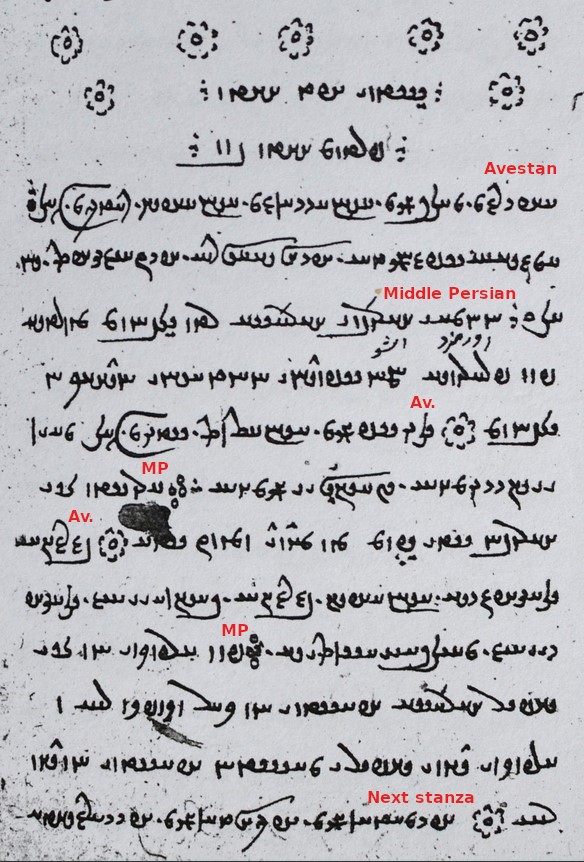
On translation and exegesis in the Zoroastrian religious tradition
The oldest layers of the surviving Zoroastrian texts are in Avestan language and commonly dated to the middle of the second millennium BCE. Exact dates and circumstances of composition, however, remain uncertain, so that little is known about the socio-political context from which these texts emerged. After two millennia of oral transmission, the texts were finally committed to writing, at a time when the language must have no longer been in active use.